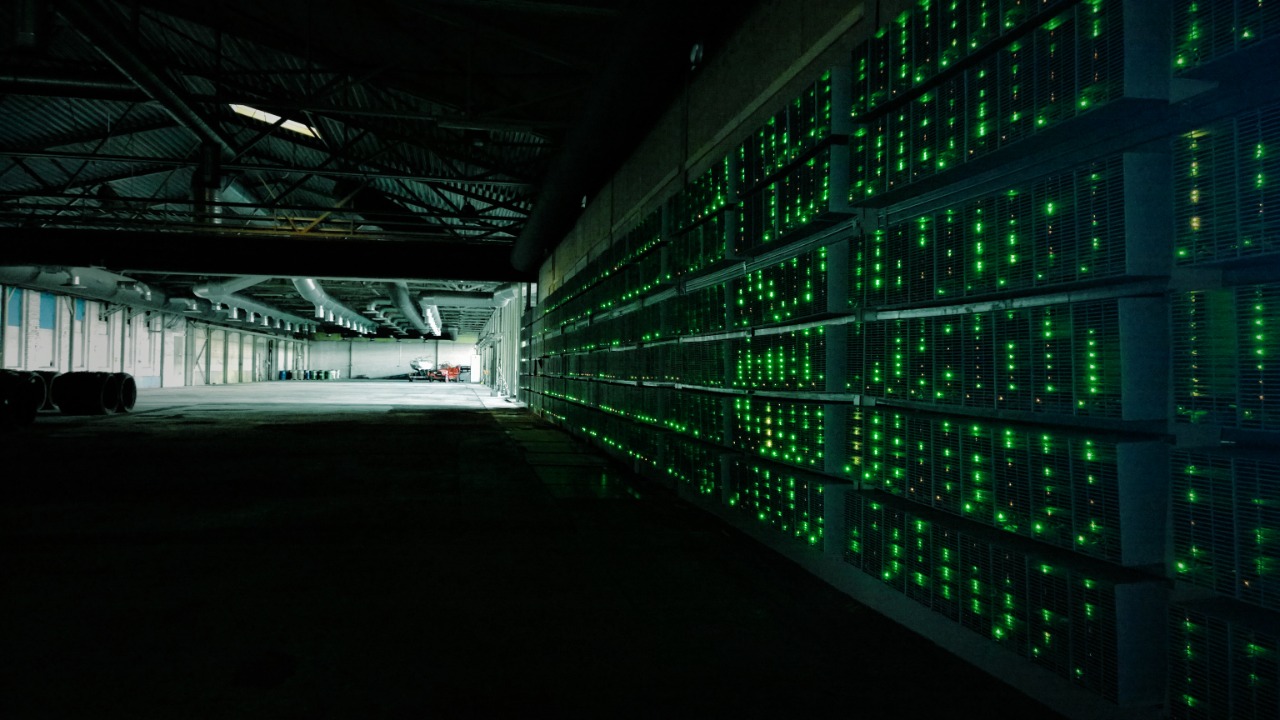
Mining Bitcoin to generate roughly $20,000 a year is possible, but it now looks less like a side hustle and more like a small industrial project. Profit depends on stacking efficient machines, cheap power, and careful risk management in a market where competition and volatility can erase sloppy calculations.
To hit that income target, I have to think in terms of net profit after electricity and other operating costs, not just the coins coming in. That means building a realistic model of hardware output, power prices, and network difficulty before I ever plug in a miner.
What $20,000 a year from Bitcoin mining really means
The headline number sounds straightforward: earn $20,000 a year by running machines that solve cryptographic puzzles and collect rewards in Bitcoin. In practice, that figure has to be understood as net income after paying for power, hosting, and maintenance, because mining profitability is usually presented as what is left once electricity is accounted for. Guides that walk through $20,000 scenarios stress that anyone chasing that number needs a solid understanding of solving cryptographic puzzles and the economics around them, not just a shopping list of machines.
That distinction matters because many profitability tools already subtract electricity costs when they show annual returns. When a calculator lists a specific Profitability per Year (USD): $1,193 for a given Model, it is describing estimated net profit under assumed power prices, not gross revenue before expenses. To reach $20,000 in that framework, I would need a fleet of machines whose combined net output approaches that figure, which immediately raises questions about capital outlay, hosting capacity, and whether my local electricity market can support that scale.
How Bitcoin mining economics work in 2025
At its core, mining is a competition to add new blocks to the Bitcoin ledger and collect rewards. Miners who successfully validate blocks receive the current Bitcoin block reward plus transaction fees, a structure explained in detail by Argo, where They note that the current bitcoin block reward will keep declining over time until roughly 21 million bitcoins have been mined. That shrinking payout means each machine earns less per unit of computing power as the years go by, unless Bitcoin’s price or transaction fees rise enough to compensate.
On top of that structural decline, the network keeps getting harder to mine. Data on Bitcoin Average Difficulty show a Basic Info level of 149.30 for the indicator known as BAD, reflecting how much computational work is required to find a block. A higher difficulty figure means each terahash of power earns fewer satoshis, so any plan to earn $20,000 a year has to assume that the same hardware will produce less Bitcoin over time unless I keep upgrading or adding machines.
Hardware, hash rate and the scale needed for $20,000
Mining income is ultimately a function of how much computational power I control and how efficiently I run it. The key metric is Hash Rate, the measure of how many cryptographic guesses a machine can make per second. A higher hash rate increases the chances of successfully contributing to block validation, but only if it comes from hardware that converts electricity into hashes more efficiently than older rigs.
Profit calculators that list the Top 5 Bitcoin Mining ASICs 2024 show how this plays out in dollars. In that table, each Model is paired with a hash rate and a Profitability per Year (USD): $1,193, which, as noted earlier, represents estimated net profit after electricity at a given power price. If one high end machine nets about $1,193 a year under those assumptions, I would need roughly 17 similar units running under comparable conditions to approach $20,000 in net income. That scale immediately turns a home mining dream into a small data center project, with all the noise, heat, and infrastructure that implies.
The brutal math of electricity costs
Electricity is the single largest operating expense for miners, and it is where many $20,000 dreams fall apart. Analysts who warn people to Remember That Mining Takes Power For a reason point out that mining requires an enormous amount of electricity and that the price of power is often the difference between profit and loss. At regular residential rates, running a bank of ASICs 24 hours a day can be not just unprofitable but practically impossible without tripping breakers or drawing the attention of a utility.
Power prices also vary wildly by region and customer type. One analysis of subsidies notes that In Texas, residential ratepayers paid an average of 18.10 cents/kWh while some large scale crypto miners accessed power at rates as low as 5.2 cents per kWh. A separate look at Bitcoin’s energy footprint notes that the nationwide average is about $0.125 per kilowatt hour, about 50% higher than what the industrial sector pays. If I am paying close to the residential average, my net profit per machine will be far below the $1,193 figure assumed in many calculators, which often use cheaper industrial or hosting rates as their baseline.
Choosing the right environment and strategy
Given those power dynamics, the first strategic decision is where and how to run the hardware. Some miners colocate their rigs in industrial facilities or specialized hosting centers that can negotiate lower rates and handle the heat and noise, while others try to leverage unusually cheap local power, such as hydroelectric surplus or off peak wind. Analysts who ask whether Bitcoin mining is still worth it emphasize that the rewards from mining different cryptocurrencies can vary dramatically, and that Bitcoin miners in particular face more factors to consider than in years past, from regulatory scrutiny to grid stability.
Profitability guides that tackle the question Is Bitcoin Mining Profitable are blunt that the answer is “maybe” and that it is complicated. They stress that it is increasingly difficult for hobbyists but still viable for professional miners who can secure low cost power and the most efficient hardware. Another overview that frames Bitcoin mining as still profitable in 2025 notes in its Quick Summary that success really comes down to electricity prices and the most efficient hardware. For someone targeting $20,000 a year, that means thinking like a professional from day one, even if the operation starts in a garage.
Risk, volatility and why $20,000 is never guaranteed
Even with the right hardware and cheap power, mining income is tied to Bitcoin’s price, which is notoriously volatile. Academic work on the risk return trade off of Bitcoin notes that, Secondly, there is potential for profit by implementing an investment strategy that takes advantage of Bitcoin’s high volatility if it is suitably designed. That same volatility cuts both ways for miners, because a sudden price drop can turn a previously profitable setup into a money losing one overnight, especially if power contracts are fixed but revenue in Bitcoin terms falls.
There is also the question of opportunity cost. Analysts who ask whether crypto mining is still worth it point out that some investors may be better off simply buying and holding Worth Bitcoin rather than sinking capital into hardware that depreciates and may become obsolete. Mining can be a way to dollar cost average into Bitcoin holdings using electricity instead of cash, but for a target like $20,000 a year, I have to weigh whether the same money and effort might generate a better risk adjusted return through direct exposure to the asset or other strategies that take advantage of its volatility.
Turning the numbers into a realistic plan
When I put all of these pieces together, the path to $20,000 a year looks less like a simple formula and more like a layered business plan. I would start by modeling revenue using current difficulty levels, such as the Basic Info figure of 149.30 for Bitcoin Average Difficulty, and then plug in my actual power price instead of the optimistic assumptions in many calculators. From there, I would scale the number of ASICs based on net profit per machine, remembering that a single top tier unit with a Profitability per Year (USD): $1,193 implies a fleet of more than a dozen rigs to reach my income goal.
I would also build in buffers for rising difficulty, potential drops in Bitcoin’s price, and hardware failures, treating the $20,000 target as an average over several years rather than a guaranteed annual paycheck. Ultimately, the reporting on mining in 2025 converges on the same point: Bitcoin mining is still profitable for those who combine efficient hardware, low power costs, and a clear understanding of risk. For anyone willing to think like an operator instead of a hobbyist, that combination is what turns the idea of making $20,000 a year mining Bitcoin from a slogan into a serious, if demanding, business plan.
More From TheDailyOverview
- Tennessee loses $2.6B megafactory and faces major layoffs
- Retired But Want To Work? Try These 18 Jobs for Seniors That Pay Weekly
- What to do with your pennies after the U.S. stops minting them
- Home Depot CEO warns of a troubling customer trend in stores

Cole Whitaker focuses on the fundamentals of money management, helping readers make smarter decisions around income, spending, saving, and long-term financial stability. His writing emphasizes clarity, discipline, and practical systems that work in real life. At The Daily Overview, Cole breaks down personal finance topics into straightforward guidance readers can apply immediately.

