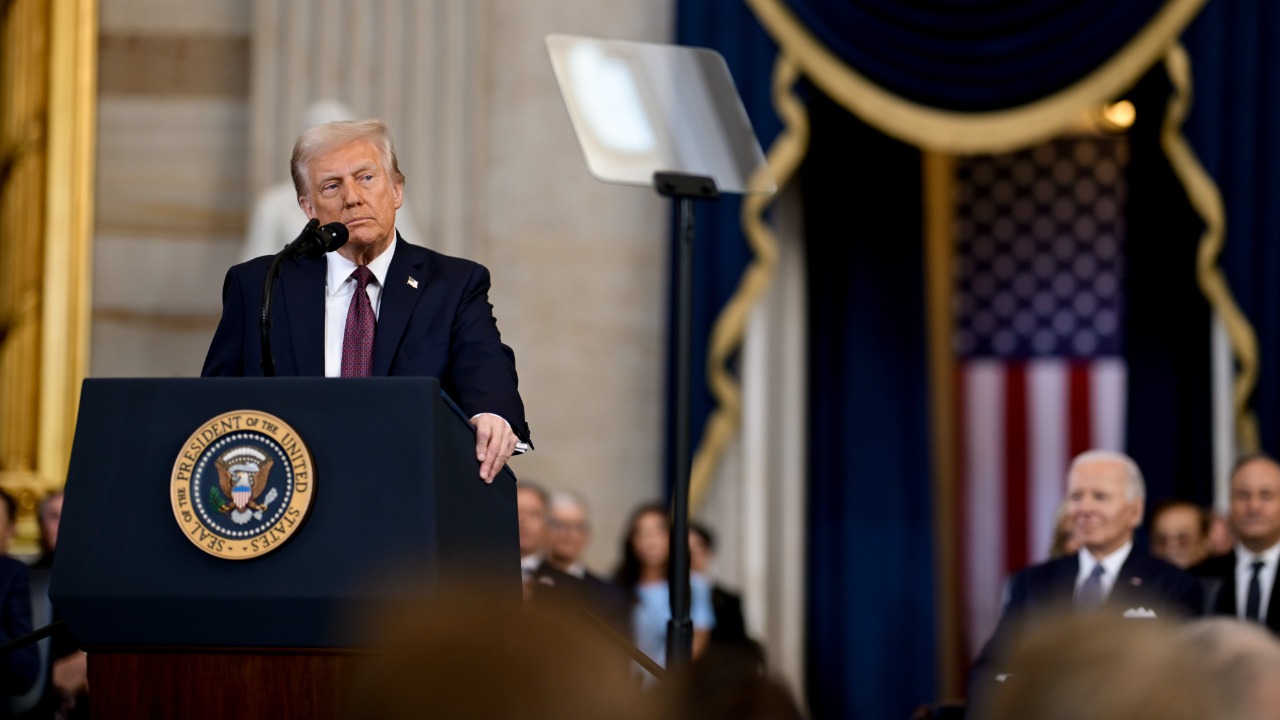
In a bold move to redefine America’s industrial landscape, President Donald Trump announced a $150 billion manufacturing investment initiative aimed at revitalizing the nation’s manufacturing sector. This ambitious plan, unveiled in Milwaukee, Wisconsin, seeks to counter China’s dominance in global supply chains by reshoring semiconductor and electronics production. With commitments from industry giants like Foxconn and Intel, the initiative promises to create over 100,000 jobs across key states, including Ohio and Pennsylvania, marking a significant step in Trump’s vision of economic nationalism.
The Genesis of the $150 Billion Pledge
The announcement of the $150 billion manufacturing initiative took place at the Fiserv Forum in Milwaukee, Wisconsin, where Trump revealed the commitment from a consortium including Foxconn and Intel. This initiative builds on the 2017 Foxconn deal, which initially promised 13,000 jobs in Racine, Wisconsin. Trump emphasized the transformative potential of this new pledge, stating, “This $150 billion manufacturing win defines America’s future,” and linked it to his broader goal of reshoring 2 million jobs from China by 2028. The role of Wisconsin Governor Tony Evers was crucial in facilitating the revived Foxconn project, which had scaled back from its original $10 billion to $672 million but now integrates into the broader $150 billion framework.
Key Players and Their Commitments
Foxconn, under the leadership of Chairman Young Liu, has renewed its pledge to invest $10 billion in Wisconsin facilities focused on AI servers and semiconductors. This investment is expected to create 1,500 direct jobs and an additional 10,000 indirect jobs, as detailed in the July 2024 agreement. Intel, led by CEO Pat Gelsinger, is contributing $20 billion for new fabs in Ohio, aiming to produce advanced chips and employ 3,000 workers starting in 2025. These commitments underscore the strategic importance of domestic semiconductor production in reducing reliance on foreign supply chains.
Additionally, TSMC’s $65 billion expansion in Arizona, while indirectly tied to Trump’s policy influence, highlights the broader industry trend towards domestic manufacturing. CEO C.C. Wei has committed to creating 20,000 jobs, although the project faces delays due to labor shortages. These investments collectively represent a significant shift towards strengthening the U.S. manufacturing base, with potential long-term benefits for the economy.
Economic Impacts on Swing States
The $150 billion initiative is poised to have substantial economic impacts on key swing states. In Pennsylvania, job creation projections include 50,000 positions from the revival of steel and auto manufacturing, supported by U.S. Steel’s $3 billion Mon Valley works upgrade announced in May 2024. This resurgence is expected to bolster local economies and provide much-needed employment opportunities in regions historically reliant on manufacturing.
Ohio stands to benefit significantly from the initiative, with $14 billion allocated for battery plants by companies like LG Energy Solution. This investment is projected to generate 10,000 jobs in areas still recovering from the 2008 recession. Fiscal incentives, such as the proposed 25% tax credit for U.S.-made goods under Trump’s Agenda 47, are anticipated to add $500 billion to GDP by 2030, according to a Heritage Foundation analysis. These measures aim to create a more favorable business environment for domestic manufacturers and stimulate economic growth.
Challenges and Criticisms
Despite the ambitious scope of the $150 billion initiative, it faces several challenges and criticisms. The original 2017 Foxconn project fell short of its promise to create 13,000 jobs due to regulatory hurdles and market shifts, drawing criticism from Wisconsin Democrats. Environmental concerns have also emerged, particularly regarding the water usage of the Ohio Intel fabs. Local activists in New Albany have raised potential mitigation costs of $100 million, highlighting the environmental trade-offs associated with large-scale manufacturing projects.
Bipartisan skepticism further complicates the initiative’s prospects. Senate Minority Leader Chuck Schumer warned in June 2024 that the plan risks $50 billion in subsidies without enforceable labor standards. This criticism underscores the need for careful oversight and accountability to ensure that the initiative delivers on its promises without compromising labor rights or environmental standards. As the initiative progresses, balancing economic growth with sustainable practices will be crucial to its long-term success.
More From TheDailyOverview
- Dave Ramsey says these two simple questions show whether you’re rich or poor
- Retired But Want To Work? Try These 18 Jobs for Seniors That Pay Weekly
- IRS raises capital gains thresholds for 2026 and what’s new
- 12 ways to make $5,000 fast that actually work

Grant Mercer covers market dynamics, business trends, and the economic forces driving growth across industries. His analysis connects macro movements with real-world implications for investors, entrepreneurs, and professionals. Through his work at The Daily Overview, Grant helps readers understand how markets function and where opportunities may emerge.