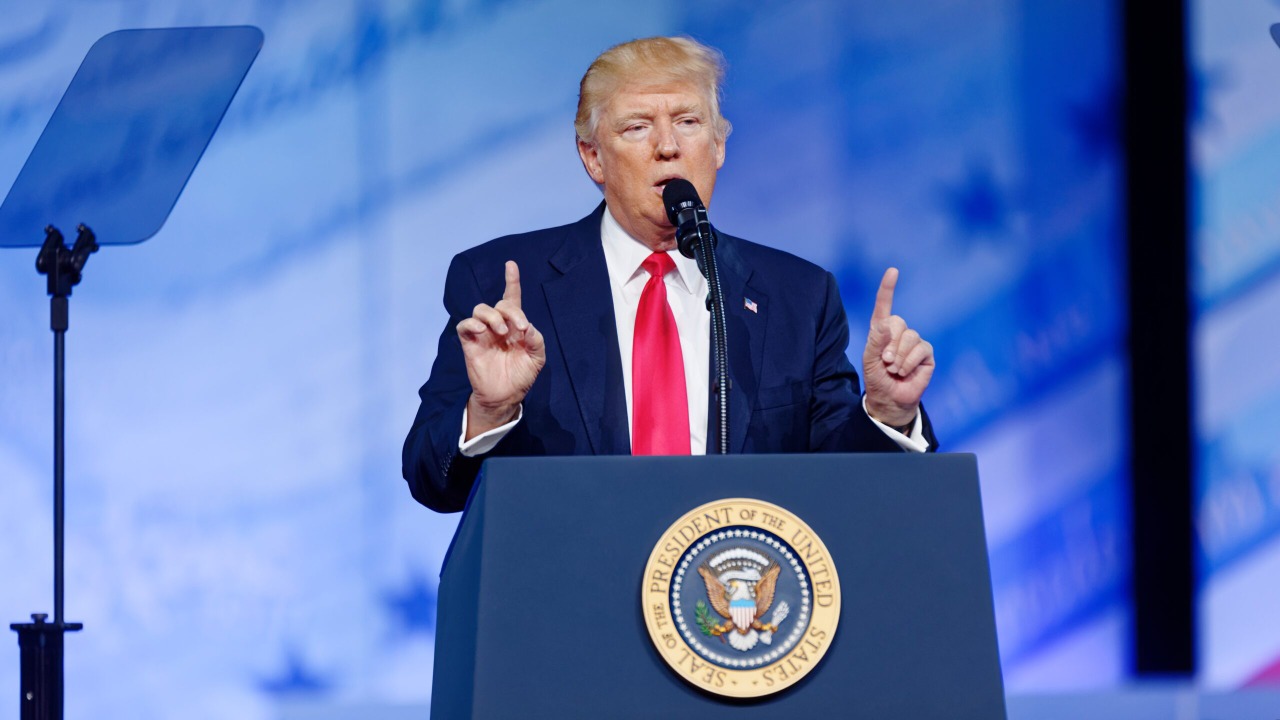
President Donald Trump signed a proclamation establishing a temporary import surcharge under Section 122 of the Trade Act, setting a 10% tariff on imports that takes effect at 12:01 a.m. ET on February 24, 2026, and runs through 12:01 a.m. ET on July 24, 2026. The statutory cap under Section 122 is 15%, leaving room for an increase that could rattle equity markets and, by extension, the retirement savings of millions of Americans. For anyone with a 401(k) tied to broad stock indexes, the timing and scope of this surcharge raise a direct question: how much damage can a five-month tariff do to a nest egg?
What the Surcharge Actually Does
The White House proclamation frames the surcharge as a response to what it calls “fundamental international payments problems.” The legal basis is Section 122, a Cold War-era provision that allows the president to impose a temporary import duty of up to 15% for 150 days without congressional approval when the nation faces balance-of-payments pressure. The initial rate is 10%, but the 15% ceiling means the administration retains the authority to ratchet the levy higher within the surcharge window, a possibility that markets must price in even if it never materializes.
The balance-of-payments rationale leans on official data from the Bureau of Economic Analysis, which published U.S. international transactions figures for the fourth quarter and full year 2024. That report covers the goods and services balance, primary income, secondary income, and current-account balances, all of which the proclamation explicitly invokes as evidence of external strain. Whether those numbers justify emergency tariff action is contested, but the legal text treats them as the foundation for the surcharge, effectively turning a dense statistical release into the trigger for a policy with immediate consequences for equity valuations and retirement portfolios.
Stocks Fell, Then Trump Claimed a Rally
The immediate market reaction cut in one direction. According to the Associated Press, U.S. stocks dropped after the tariff escalation, with investors pulling out of positions and dumping shares in sectors exposed to trade risk, including companies seen as vulnerable in the next wave of global competition. That kind of single-session move can show up quickly in 401(k) account balances, because many employer-sponsored retirement plans hold index funds that track the S&P 500 or similar benchmarks. A broad equity decline on a tariff headline can translate into lower balances for passive savers who have no say in the timing.
Yet on the same day, February 24, 2026, Trump highlighted stock market gains and touted the overall strength of retirement accounts, even as his administration’s tariff announcement was contributing to volatility. The dissonance matters for savers trying to interpret their quarterly statements. A president can emphasize intraday rebounds or point to prior rallies, but the practical reality for a worker checking a 401(k) balance is that tariff-driven drops are real losses on paper. For households already anxious about inflation, mortgage costs, and job security, the spectacle of a White House celebrating markets while introducing a new drag on corporate earnings only adds to the confusion about how safe their retirement savings really are.
The Legal Uncertainty That Magnifies the Risk
Section 122 has rarely been used, and its application here sits within a broader legal fight over presidential tariff authority. Previous rounds of litigation over earlier tariff programs have already reached the Supreme Court, with companies seeking refunds and arguing that the executive branch overstepped statutory limits. Those disputes have not fully resolved the boundaries of presidential power, leaving investors to speculate about whether new trade actions will ultimately stand or be pared back. The current surcharge, because it is explicitly time-limited and framed as an emergency response, tests a different corner of the law but still depends on how courts interpret Congress’s original delegation of authority.
The legal backdrop matters for 401(k) holders because it introduces a second layer of volatility beyond the economic impact of the tariff itself. If courts eventually narrow presidential tariff power, markets could rally on the expectation of lower trade barriers and more predictable policy. If judges uphold broad executive authority, the administration could push the surcharge toward the 15% statutory cap or layer additional actions on top of it, extending the period of uncertainty. Either outcome would move equity prices sharply, and retirement savers sitting in index funds would absorb the swing. The five-month surcharge window, ending July 24, 2026, overlaps with the Supreme Court’s typical end-of-term decision calendar, meaning both the trade policy and its legal status could shift within weeks of each other, compounding the risk for anyone planning to retire this summer.
How the Data Connects Tariffs to Your 401(k)
Most coverage of tariffs focuses on consumer prices: higher costs for imported goods at the store shelf. But the 401(k) channel is arguably faster and less visible. When equity indexes drop on a tariff headline, account balances fall before any price increase reaches a checkout counter. To understand the scale of what is at stake, it helps to look at the official economic data that underpins both the policy and the business response. The BEA’s industry-by-industry economic snapshots show how sectors tied to global supply chains contribute to output and employment, illustrating why a broad import surcharge can ripple through manufacturing, technology, and consumer goods companies that dominate major stock indexes.
On the trade side, the BEA’s international country facts detail where U.S. imports originate and how large bilateral deficits or surpluses are, while more granular balance tables break down flows of goods, services, and income. Pairing those figures with the import-value tallies in Customs and Border Protection’s trade statistics gives a clearer sense of how much of the corporate sector’s revenue depends on cross-border commerce that could be hit by the surcharge. For a 401(k) investor holding a broad index fund, that exposure is baked into the portfolio: if tariffs squeeze margins for import-heavy firms or prompt retaliatory measures abroad, earnings expectations fall, valuations compress, and the value of retirement accounts declines even if the saver never changes a single investment election.
What This Means for Retirement Savers
Workers in their 20s and 30s have decades to recover from short-term drawdowns, and a temporary tariff shock can even present a long-run opportunity if they continue contributing regularly while prices are lower. For Americans in their 50s and 60s, however, a sustained period of tariff-driven volatility poses a sharper problem. Many are already shifting from stocks to bonds, or planning systematic withdrawals from their 401(k)s and IRAs. If the surcharge coincides with a market slump, these investors may be forced to sell holdings at depressed prices to fund living expenses, locking in losses that a younger saver could simply ride out. Because the surcharge is explicitly time-limited, some near-retirees may choose to delay large withdrawals until after July if they can, but that is not an option for everyone.
Retirement savers cannot control trade policy, but they can control how exposed they are to short-term shocks. The current surcharge highlights the importance of diversification across asset classes, maintaining an adequate cash buffer for near-term spending, and regularly reviewing whether a portfolio’s risk level still matches its owner’s time horizon. It also underscores why paying attention to seemingly abstract releases from agencies like the BEA and CBP is not just an academic exercise: those numbers inform the policies that move markets, and markets, in turn, determine the size of the balances that will fund life after work. For now, the best most 401(k) participants can do is avoid panic, understand that tariff headlines may inject extra volatility into statements over the next five months, and make any adjustments based on long-term goals rather than day-to-day swings driven by a temporary import surcharge.
More From The Daily Overview
*This article was researched with the help of AI, with human editors creating the final content.

Grant Mercer covers market dynamics, business trends, and the economic forces driving growth across industries. His analysis connects macro movements with real-world implications for investors, entrepreneurs, and professionals. Through his work at The Daily Overview, Grant helps readers understand how markets function and where opportunities may emerge.

