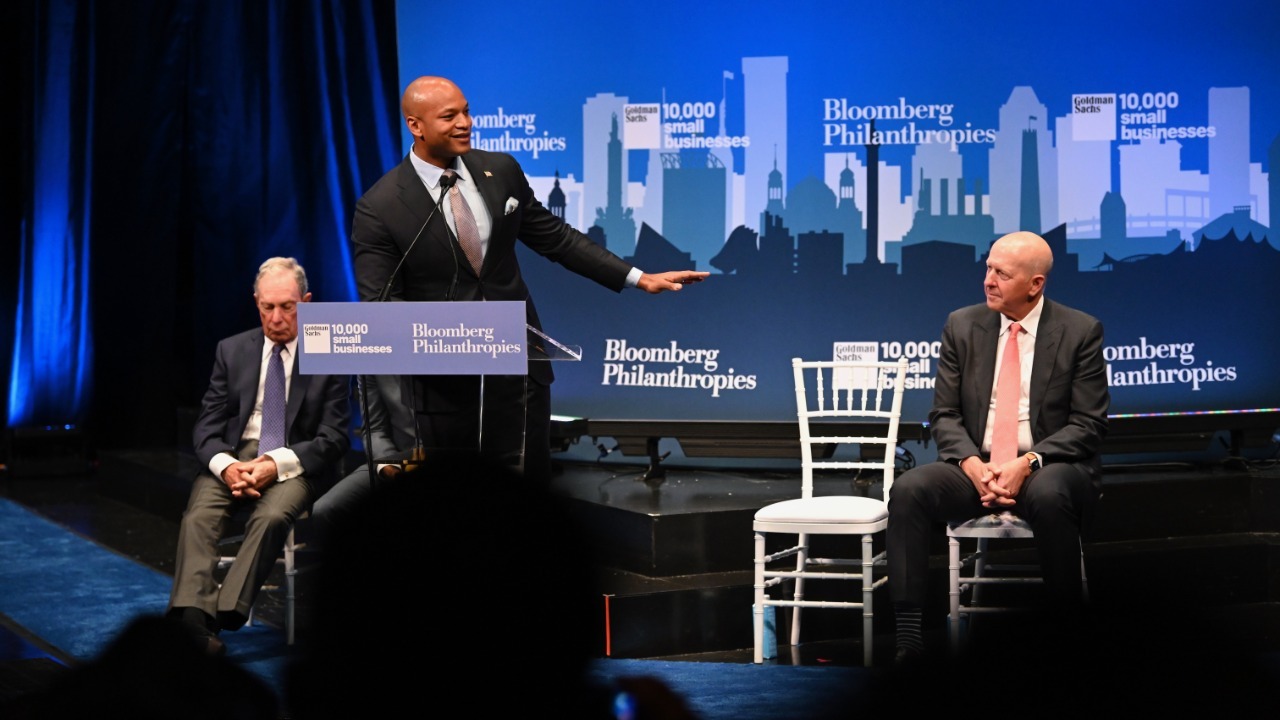
Goldman Sachs has run the numbers on artificial intelligence and work, and the result is more complicated than a simple jobs apocalypse. The bank’s analysts warn that automation will trigger real disruption and a fresh wave of layoffs, yet they also argue that the long term looks more like a reconfigured labor market than a wasteland where humans “go the way of horses.” I want to unpack how those two ideas can both be true, and what they mean for workers staring down the next decade of AI.
The ‘horses’ fear meets a softer forecast
The most arresting image in the current AI debate is the suggestion that Humans could eventually be sidelined the way horses were after the arrival of the car, a comparison that has circulated widely in discussions of how far automation might go. When Goldman’s analysts dug into the data, they framed their work around that anxiety, then reported that they were “pleasantly surprised” by how limited the permanent damage to employment looked in their models, even as they acknowledged that the transition will be painful for specific sectors and regions that move fastest on automation.
At the core of that work is a projection from Goldman Sachs Research that unemployment will rise by about half a percentage point during the AI transition period, a noticeable but not catastrophic bump by historical standards. The same analysis expects that, over the next decade, productivity gains and new forms of work created by AI will offset much of the initial shock, which is why the bank’s team could look at the “go the way of horses” scenario and still argue that the likelier outcome is a reshaped labor market rather than a mass, permanent sidelining of human workers.
Who is really in the firing line?
Behind the aggregate numbers sit very specific winners and losers, and Goldman’s researchers are unusually blunt about which jobs are most exposed. They conclude that occupations at the highest risk of being displaced by AI in the coming years include computer programmers, accountants, lawyers, administrative staff, and even members of the clergy, a list that undercuts the old assumption that only routine blue collar work was vulnerable. By highlighting that mix of coders, professionals, and religious workers, They are effectively saying that any role built on pattern recognition, document processing, or scripted interaction is now in play.
That does not mean every programmer or accountant disappears, but it does mean the nature of those jobs will change faster than most people expect, with AI systems drafting code, preparing tax filings, or generating legal briefs that humans then review. The “job apocalypse” label captures the fear that this shift will hollow out entire career ladders, leaving only a thin layer of elite experts on top of automated systems. Goldman’s own modeling pushes back on that extreme, yet the bank’s analysts are clear that the pressure will be intense in precisely the sectors that once felt safest, from corporate law to back office finance, and that workers in those fields cannot assume they are insulated from the coming wave.
A 2026 layoff wave, by design
The near term is where the numbers look harshest, and the bank’s latest reports suggest that 2026 will be a pivotal year. A recent analysis cited by Strategic HR says AI automation is expected to fuel a fresh wave of layoffs in 2026 as companies accelerate efforts to reshape cost structures, particularly in functions like customer service, data entry, and routine analytics. The logic is straightforward: once firms have invested in AI tools, they will be under pressure from boards and shareholders to translate those tools into lower headcount and higher margins.
Another new report from Goldman Sachs underlines that, even though investors no longer reliably reward companies just for announcing layoffs, executives still see AI as a way to cut labor costs relative to current improvements in output. A separate summary of the same outlook notes that a recent report by Goldman Sachs warns that companies are likely to keep choosing automation over hiring in 2026, using AI to protect margins and improve efficiency rather than expanding payrolls. Put together, these signals suggest that the next year will be defined less by AI creating new roles and more by management teams using it as a lever to slim down existing ones.
Goldman’s split personality on AI jobs
There is a striking tension between the bank’s research arm, which is comfortable talking about AI driven layoffs and sector level disruption, and its public leadership, which is working hard to calm fears. In one widely shared interview, the Goldman Sachs CEO dismissed AI job replacement hysteria and argued that humans will adapt like they always do, stressing that “Our economy is very nimble, very flexible.” A separate conversation with Goldman Sachs leadership made the same point, with the CEO again pushing back on the idea that AI will simply erase work rather than reshaping it.
Goldman Sachs CEO David Solomon has gone further, telling Fortu that AI will not destroy human jobs outright and that, “Yes, job functions will change…but I’m excited about it,” a line that captures the bank’s official optimism about the technology’s potential to create new kinds of work. In that interview, Goldman Sachs CEO framed AI as a tool that will augment employees, not replace them, even as he acknowledged that the content of many roles will be transformed. The contrast between that upbeat tone and the bank’s own warnings about a 2026 layoff wave is not a contradiction so much as a reminder that time horizons matter: executives are selling a long term story of adaptation, while their research teams are documenting a short term story of cuts and churn.
From horses to humans: what the analogy gets wrong
The horse comparison has become a kind of shorthand for technological redundancy, and it is not new. When BT’s technology chief Harmeen Mehta suggested that workers displaced by AI might be like horses laid off by the car, she drew sharp criticism for implying that some people would simply be left behind with no path back into the productive economy. The backlash to Like that analogy underscored how dehumanizing it can feel to be compared to an animal that was simply replaced and then largely discarded once a better machine came along.
Goldman’s own numbers suggest that the analogy is also misleading on the economics. Artificial intelligence (AI) is steadily transforming how companies operate, but the bank’s research emphasizes that it is creating uncertainty for workers at the same time as it opens up new ways to organize roles or reduce headcount altogether, a dual effect highlighted in one assessment of Artificial intelligence in the workplace. Another summary notes that, While AI continues to promise innovation and productivity gains, While AI also brings significant uncertainty for employees as companies use it to speed up operations and lower expenses. Horses never had the option to retrain, organize, or vote; humans do, which is why the real story here is not extinction but bargaining power, policy choices, and how quickly workers and institutions can move to match the pace of the technology.
More From TheDailyOverview

Alex is the strategic mind behind The Daily Overview, guiding its mission to uncover the forces shaping modern wealth. With a background in market analysis and a track record of building digital-first businesses, he leads the publication with a focus on clarity, depth, and forward-looking insight. Alex oversees editorial direction, growth strategy, and the development of new content verticals that help readers identify opportunity in an ever-evolving financial landscape. His leadership emphasizes disciplined thinking, high standards, and a commitment to making sophisticated financial ideas accessible to a broad audience.

