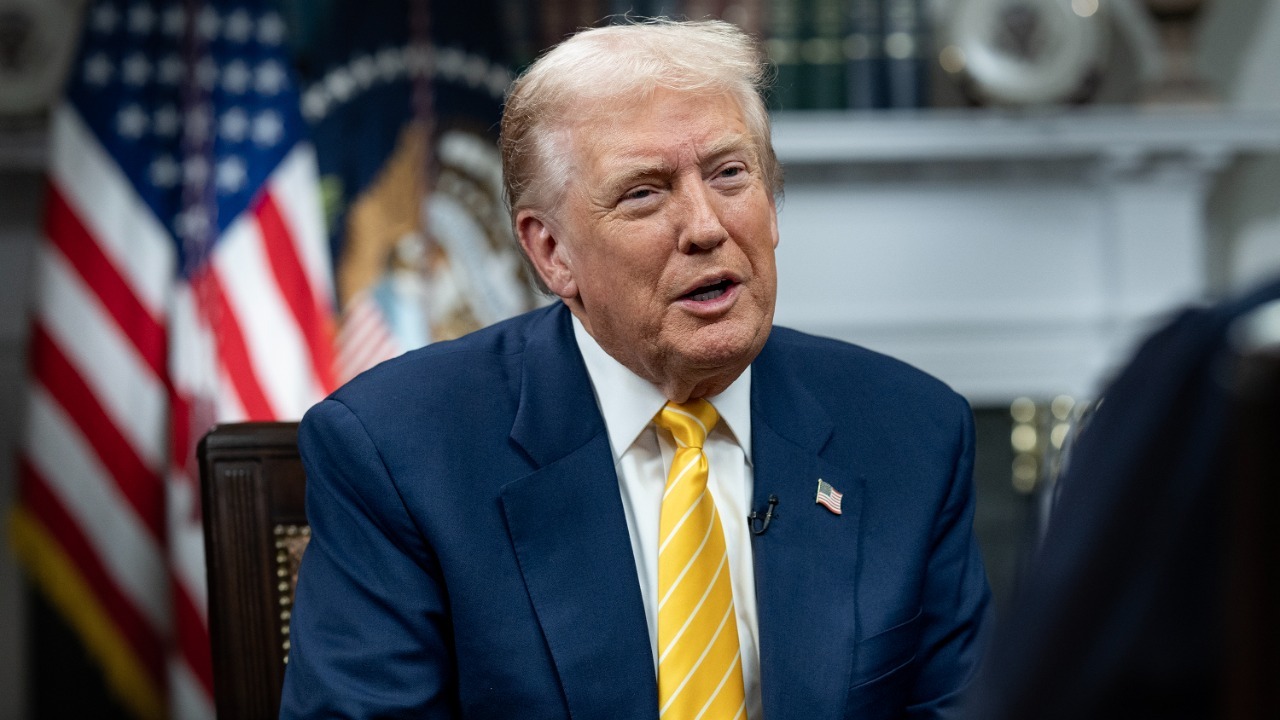
When I asked an AI to walk through what would actually happen if President Donald Trump somehow made federal income tax disappear, the response was not a libertarian fantasy. It was a spreadsheet horror story. Instead of a clean break from the IRS, the model described a vast funding crater, a scramble for new taxes, and a political fight that would make previous budget showdowns look tame.
The headline promise sounds simple: kill income tax, keep government services, and let tariffs or other levies quietly pick up the slack. Once you run the numbers and the legal constraints, though, the picture turns brutal fast, from a Massive Budget Hole to higher prices and deep cuts that would touch everything from Social Security checks to the FBI.
The fantasy collides with the federal math
The first cold shower is scale. Personal and corporate income taxes are not a rounding error in Washington, they are the backbone of federal finance. The AI pointed out that ending these levies would erase $2.2 trillion in personal federal income tax and another $460 billion from corporate income tax, using 2023 figures. That is not a trim, it is the fiscal equivalent of removing the engine from a car and hoping the wheels remember what to do. Other reporting framed the result as a Massive Budget Hole of Around 2 Trillion per Year, a shortfall big enough to swallow entire cabinet departments.
That scale matters because Individual income taxes already account for roughly half of all federal revenue, according to the Source data from the Office of Management. Wiping that out overnight would force a choice between slashing Social Security, Medicare, defense, and agencies like the FBI, or finding entirely new ways to raise trillions of dollars every year. The AI’s verdict was blunt: no modern government can function with a cut of that size without either gutting services or replacing the money somewhere else.
Tariffs and “replacement” taxes would hit consumers hard
Trump has repeatedly floated the idea that higher tariffs could let Americans “stop paying income taxes,” but the arithmetic behind that slogan is unforgiving. To replace what the federal government collects from income taxes with tariffs alone, the United States would need import duties at levels that would send prices on everyday goods soaring, from iPhones to Toyota RAV4s, and likely trigger retaliation abroad. Analysis of his proposal notes that to replace the lost income tax revenue with tariffs, rates would have to be so high that they would distort trade “as far as the eye can see.”
The AI’s answer lined up with that warning, stressing that Replacement Taxes Would and would likely include some mix of tariffs, national sales taxes, or value added taxes. That is where the “brutal” part of the answer really kicked in. Instead of a tax-free utopia, households would face higher prices at the checkout line, and lower income families, who spend more of their pay on consumption, would shoulder a disproportionate share of the burden. The AI also echoed warnings that aggressive tariff hikes could spark massive trade, putting export-heavy sectors like agriculture and manufacturing in the crosshairs.
State experiments show the tradeoffs are real
Supporters of Trump’s idea often point to states with no income tax as proof that the model can work nationally. There is a kernel of truth there. Right now, nine states do not charge state income taxes, which means residents there do not file state-level returns. For high earners in places like Texas or Florida, that can be a meaningful savings compared with California or New York. The AI acknowledged that eliminating income tax can feel like an instant raise for workers and a magnet for businesses.
But those states are not running the Pentagon or Medicare, and they still have to balance their books. The absence of income tax is often offset by higher sales taxes, property taxes, or fees, which can raise the cost of housing, groceries, and utilities, impacting the quality of life for middle class families. Some of these states also lean heavily on tourism or natural resource revenues that do not scale to the federal level. The AI’s takeaway was that state experiments show the tradeoffs are real and often regressive, not that a tax-free federal government is waiting just over the horizon.
The legal and political wall
Even if the economics somehow penciled out, there is a constitutional speed bump that Trump cannot simply tweet away. The AI stressed that a president cannot unilaterally erase federal income tax, a point summarized under the heading Legal and Political. The Sixteenth Amendment gives Congress the power to levy income taxes, and undoing that would require a sweeping act of Congress and ratification by three quarters of the states, or an alternative that still runs through lawmakers. In other words, this is not an executive order away.
On top of that, independent tax analysts warn that even Gradual paths to elimination can be a kind of political sleight of hand. Phasing out income taxes over time lets lawmakers avoid confronting the long term impact on schools, health care, and infrastructure, and it can skirt democratic accountability by locking in future cuts before voters see the full consequences. The AI’s answer echoed that concern, warning that the politics of such a shift would be as destabilizing as the economics, with every constituency from seniors to defense contractors fighting to protect their slice of a shrinking pie.
Trump’s own plan is more complicated than the slogan
Trump’s actual blueprint, as described by his allies, is not a single switch so much as a bundle of ideas. A detailed rundown of his Plan to Eliminate Income Tax lists several Things voters should Know Now, from steep tariffs to possible national consumption taxes. Analysts who have walked through those ideas conclude that, even taken together, they are unlikely to generate sufficient revenue to fund existing commitments without either large deficits or deep cuts. The AI’s assessment tracked that skepticism, describing the plan as “transformational but extremely disruptive,” with a high risk of collateral damage for the broader economy.
When I compared the AI’s answer with a separate breakdown of what would happen if Trump simply “ended” income taxes, the themes were strikingly consistent. Both highlighted the same $2.2 trillion and $460 billion revenue loss, the likelihood of Replacement taxes, and the risk of trade conflict. Another analysis of Trump’s Plan underscored that even aggressive tariffs and new levies are unlikely to be sufficient to fund them. Put together, the message from both the spreadsheets and the silicon is clear: the promise of killing income tax without painful tradeoffs is not just optimistic, it is disconnected from the fiscal and legal reality the country actually lives in.
More From TheDailyOverview

Julian Harrow specializes in taxation, IRS rules, and compliance strategy. His work helps readers navigate complex tax codes, deadlines, and reporting requirements while identifying opportunities for efficiency and risk reduction. At The Daily Overview, Julian breaks down tax-related topics with precision and clarity, making a traditionally dense subject easier to understand.

