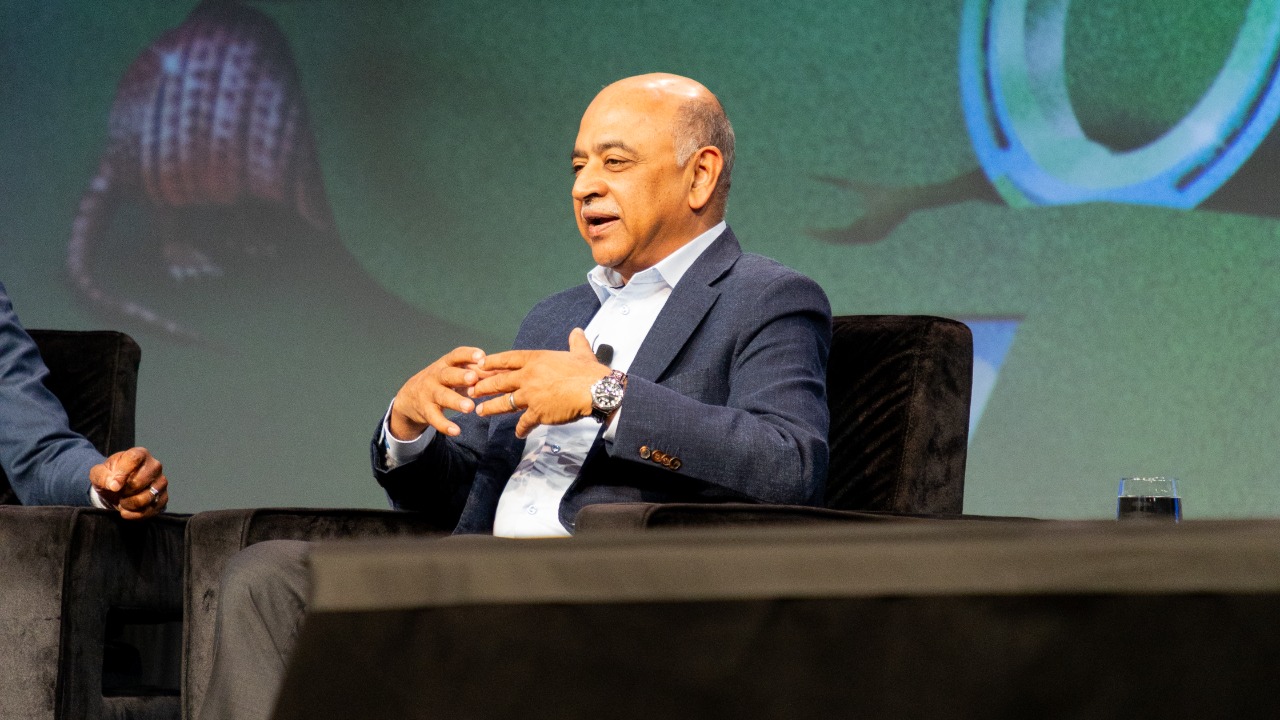
Investors are racing to pour unprecedented sums into artificial intelligence infrastructure, but the basic economics are starting to look strained. IBM chief executive Arvind Krishna is now warning that at current prices for chips, power, and construction, the idea of spending trillions of dollars on AI data centers simply does not pencil out.
His argument cuts against the prevailing narrative that more compute automatically means more profit, and it lands at a moment when capital expenditure plans from the largest technology companies are ballooning. I see his comments as a sober reminder that even in a hype cycle as powerful as generative AI, the laws of return on investment still apply.
The warning from IBM’s corner office
When the head of a company as steeped in enterprise technology as IBM says the math on AI infrastructure is broken, it carries weight. IBM CEO Arvind Krishna has publicly argued that, at today’s cost levels, the idea of plowing trillions of dollars into AI data centers cannot generate acceptable returns, framing that level of spending as an unattainable profit target rather than a rational business plan. In his view, the current trajectory of capital spending is out of sync with realistic revenue and margin expectations from AI services, even if demand for tools like large language models keeps rising.
Krishna’s skepticism is not about AI’s long term potential so much as the near term financial engineering behind it. He has stressed that the combination of expensive accelerators, soaring energy requirements, and the sheer scale of new facilities makes it extremely difficult to earn back such vast sums within normal investment horizons. That is why he has issued what amounts to a stern financial warning about the current surge in artificial intelligence infrastructure, arguing that the industry needs to rethink its cost base before treating multi trillion dollar buildouts as a foregone conclusion, a point he underscored in remarks highlighted in recent coverage of his profit concerns.
Why the AI data center boom “doesn’t add up”
Krishna’s critique goes beyond a vague sense of unease and into the realm of basic arithmetic. He has said bluntly that the math behind today’s AI data center boom does not add up, given the relationship between capital outlays and the revenue that even aggressive AI adoption can realistically support. In other words, if companies are budgeting for multi hundred billion dollar or even trillion dollar infrastructure programs, they need a clear line of sight to cash flows that justify those bets, and he does not see that clarity at current cost levels.
From my perspective, this is a challenge to the assumption that every dollar of AI capex will automatically translate into high margin software or cloud revenue. Krishna has cast serious doubt on the sustainability of the current build first, monetize later mindset, warning that the industry risks constructing a vast overhang of capacity that cannot be profitably filled. His doubts about the underlying economics of the AI buildout, including his view that the numbers behind the boom are fundamentally misaligned with realistic returns, were laid out in detail when IBM chief executive Arvind Krishna questioned whether the boom’s math works.
“No way” the current capex model pays off
Krishna has sharpened his message by putting it in unequivocal terms. He has said there is “no way” that spending trillions of dollars on AI data centers will pay off at today’s infrastructure costs, a phrase that signals not just caution but outright disbelief in the prevailing investment thesis. When a CEO with IBM’s long history in mainframes, cloud, and enterprise software says the current capex model is untenable, it suggests that the industry’s financial assumptions may be drifting away from operational reality.
On a recent appearance on the “Decoder” podcast, Krishna framed the issue as a mismatch between the scale of capital expenditure and the revenue that AI workloads can generate under current pricing and cost structures. He argued that the combination of high cost chips, power hungry facilities, and the need for constant hardware refresh cycles makes it extremely difficult to earn an adequate return on trillions of dollars of capex, especially if customers push back on price increases. His insistence that there is “no way” to make those numbers work at present cost levels was captured in reporting that highlighted his critique of today’s infrastructure costs.
Costs, chips, and the physics of power
Underneath Krishna’s warning is a simple but unforgiving reality: AI data centers are extraordinarily expensive to build and run. High end accelerators, specialized networking gear, and advanced cooling systems all carry premium price tags, and they are being deployed in clusters that can consume as much electricity as a small city. At current prices for hardware and power, the operating expenses of these facilities stack on top of the initial capital outlay, further compressing the potential return on investment.
I see this as a reminder that AI is not a purely digital phenomenon that floats above the physical world. Every new model training run and inference request is grounded in silicon, copper, and megawatts, and those inputs have hard costs that cannot be wished away by optimistic revenue projections. Krishna’s insistence that today’s infrastructure costs make trillion dollar spending plans financially dubious reflects a view that the industry has not yet solved the cost per unit of compute problem at scale, a concern that aligns with his broader argument that the current wave of AI data center investment is structurally mispriced, as highlighted in the same discussion of infrastructure and bubble risks.
AGI dreams versus near term economics
One of the most striking tensions in the current AI moment is the gap between long term ambition and short term cash flow. Some investors and technologists justify massive spending on the grounds that artificial general intelligence, or AGI, will eventually unlock transformative value that dwarfs today’s costs. Even OpenAI cofounder Ilya Sutskever has weighed in on this debate, arguing that simply scaling compute may not be enough to reach AGI, which complicates the narrative that more data centers automatically bring the industry closer to that goal.
Krishna’s comments land squarely in this gap between aspiration and accounting. If, as Sutskever has suggested, there is no guarantee that ever larger clusters of GPUs will deliver AGI, then the rationale for treating trillion dollar infrastructure programs as a necessary down payment on that future becomes weaker. In that context, Krishna’s insistence that the current economics do not work looks less like pessimism and more like a demand for discipline, especially when even AGI advocates concede that scaling compute alone is not a magic key, a point underscored when Ilya Sutskever questioned whether scaling alone can deliver AGI.
Signals of an AI bubble forming
Whenever capital floods into a hot new sector, the risk of a bubble rises, and AI infrastructure is no exception. Krishna’s warnings about the inability of trillion dollar data center plans to pay off at current costs echo broader concerns that the industry may be inflating expectations faster than it can deliver sustainable profits. On recent earnings calls, executives across the technology landscape have been pressed about whether their AI spending plans are grounded in realistic demand or driven by fear of missing out.
From my vantage point, the pattern is familiar: aggressive capex justified by transformative narratives, followed by a period of consolidation when revenue growth fails to keep pace. Krishna’s argument that the math does not work at today’s cost levels functions as an early alarm bell, suggesting that some of the most ambitious AI infrastructure projects could end up as stranded assets if usage and pricing do not align. That concern has already surfaced in investor discussions, including threads where market participants dissect how the claim that there is “no way” to earn back such spending undermines long term financial returns, as reflected in debates over AI capex and bubble risk.
How IBM is positioning itself differently
Krishna’s critique is not delivered from the sidelines, it is part of how IBM is choosing to compete in the AI era. Rather than racing to match the largest hyperscalers in raw data center buildout, IBM has focused on more targeted infrastructure and software offerings, emphasizing hybrid cloud, open models, and industry specific solutions. That strategy implicitly accepts that IBM cannot and should not try to match trillion dollar capex plans, and instead should concentrate on higher margin layers of the stack where the economics are more favorable.
I read Krishna’s comments as a signal that IBM wants to be seen as the sober, returns focused player in a market that is at risk of overheating. By publicly questioning whether the current wave of AI data center investment can ever pay for itself, he is drawing a contrast between IBM’s approach and that of companies betting heavily on scale at almost any cost. His insistence that the math must work before the spending is justified aligns with IBM’s broader posture as a provider of enterprise grade AI tools that are meant to integrate with existing infrastructure rather than demand entirely new, massively expensive buildouts, a stance that fits with his earlier warning that trillion level spending is an unattainable profit target as described in his caution about profit expectations.
What investors should watch in the next phase
For investors, Krishna’s message boils down to a call for discipline in evaluating AI infrastructure plays. Instead of treating every new data center announcement as a bullish signal, the key is to scrutinize the relationship between capex, pricing power, and actual usage. If a company is committing tens or hundreds of billions of dollars to AI facilities, the critical questions are how quickly those assets will be utilized, at what margins, and whether customers are locked into long term contracts that justify the spend.
I expect the next phase of the AI cycle to separate firms that can translate infrastructure into durable revenue from those that are simply chasing scale. Krishna’s insistence that there is “no way” to earn back trillions at today’s cost structure suggests that only players with a clear path to monetization, whether through differentiated services, proprietary models, or tight integration with existing enterprise workflows, will ultimately justify their buildouts. As the market digests his warning that the math behind the boom does not add up, the focus is likely to shift from headline grabbing capex numbers to the more prosaic but vital details of return on invested capital, a shift that aligns with the skepticism he voiced in his assessment of the AI data center boom.
Why Krishna’s skepticism matters beyond IBM
Krishna’s critique resonates beyond IBM because it challenges a core assumption of the current AI narrative: that more compute is always better, and that the market will inevitably reward those who build the most. By arguing that there is no way to justify trillion dollar spending at today’s costs, he is effectively saying that scale without economics is not a strategy, it is a gamble. That message should matter to cloud providers, chipmakers, and enterprise customers who are all being asked to buy into the same story of limitless AI driven growth.
In my view, the most important takeaway from his comments is not that AI is overhyped or doomed, but that its infrastructure must be built on a foundation of realistic financial expectations. If the industry can drive down costs, improve energy efficiency, and design business models that share value fairly between providers and customers, then large scale AI data centers can make sense. Until then, Krishna’s warning stands as a reminder that even in the age of generative models and AGI dreams, the basic rules of investment still apply, a point he has reinforced repeatedly in his criticism of today’s AI infrastructure spending.
More From TheDailyOverview
- Tennessee loses $2.6B megafactory and faces major layoffs
- Retired But Want To Work? Try These 18 Jobs for Seniors That Pay Weekly
- What to do with your pennies after the U.S. stops minting them
- Home Depot CEO warns of a troubling customer trend in stores

Grant Mercer covers market dynamics, business trends, and the economic forces driving growth across industries. His analysis connects macro movements with real-world implications for investors, entrepreneurs, and professionals. Through his work at The Daily Overview, Grant helps readers understand how markets function and where opportunities may emerge.

