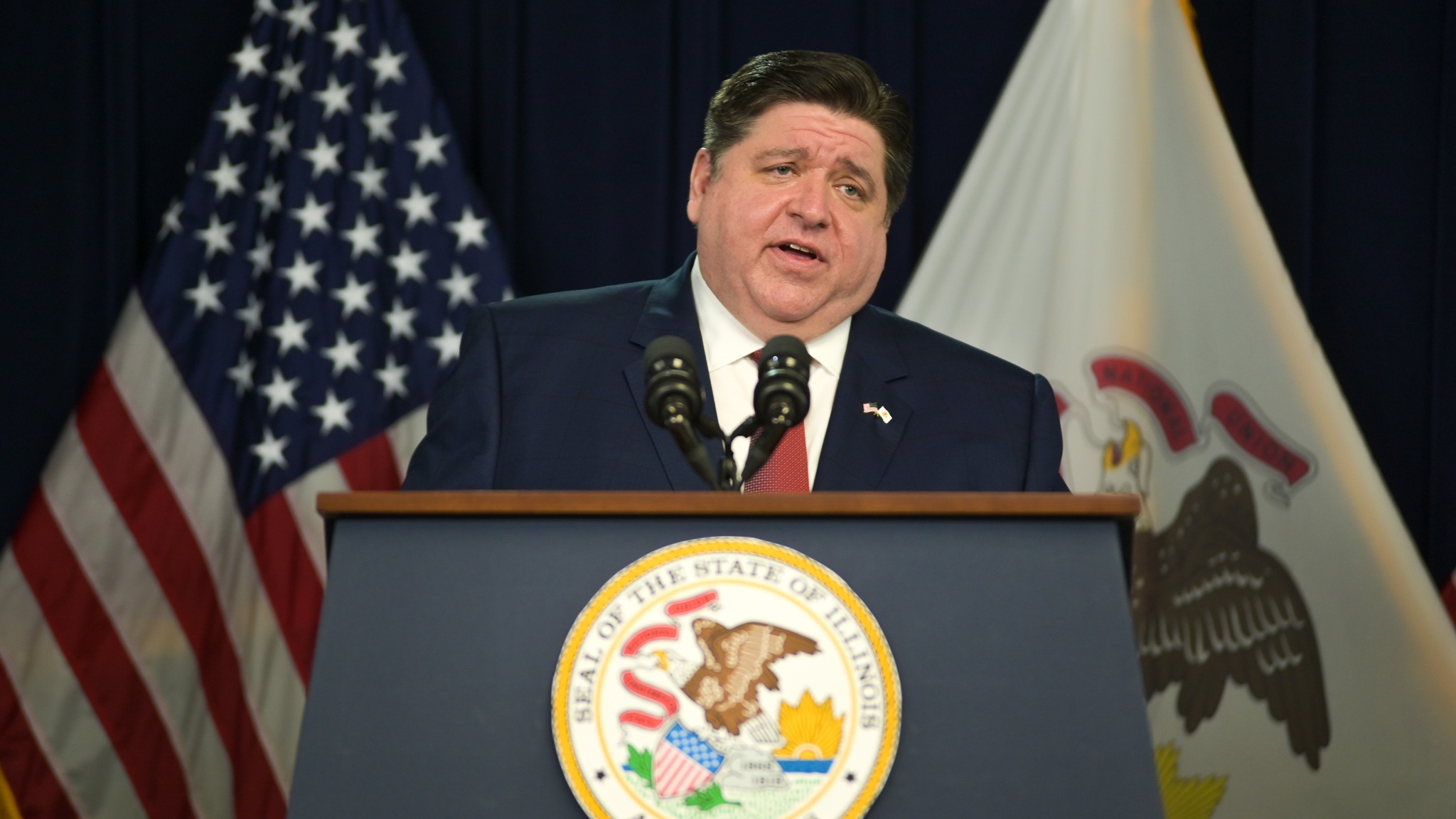
Illinois Gov. JB Pritzker demanded an $8.7 billion tariff refund from the White House, turning a simmering legal dispute into a direct financial confrontation with the federal government. The demand targets duties collected under the International Emergency Economic Powers Act, or IEEPA, which a coalition of state attorneys general has challenged as unlawful. With private corporations now filing their own refund suits in federal court, the governor’s move signals that states and businesses alike are preparing to claw back billions in trade costs they argue should never have been imposed.
The governor’s push also reflects mounting political pressure inside Illinois, where manufacturers, farmers, and logistics firms say the tariffs distorted supply chains and drove up costs. Trade-dependent sectors that rely on predictable pricing have pressed state officials to pursue every available remedy, from litigation to negotiated relief. By putting a concrete dollar figure on the state’s alleged losses, Pritzker is attempting to convert abstract legal arguments into a tangible claim that voters and businesses can evaluate, and that the federal government cannot easily ignore.
A 12-State Legal Coalition Sets the Stage
Pritzker’s refund demand did not emerge in isolation. It builds on a legal foundation laid by Illinois Attorney General Kwame Raoul, who joined a coalition of 12 attorneys general to challenge the Trump administration’s IEEPA-based tariffs in the U.S. Court of International Trade. The coalition’s complaint described the tariffs as illegal, arguing that the White House stretched emergency trade powers well beyond their intended scope. The rates at issue are staggering: 145% on goods from China, 25% on imports from Canada and Mexico, and 10% on products from the rest of the world.
The legal theory driving the coalition is straightforward. IEEPA was designed to give presidents tools to respond to genuine national emergencies, not to restructure trade relationships unilaterally. By invoking it to impose sweeping tariffs on nearly every U.S. trading partner simultaneously, the administration effectively bypassed Congress, which holds constitutional authority over tariffs and trade. Illinois and its partner states contend that this overreach harmed consumers and businesses across their economies, and the coalition’s filing in the Court of International Trade was the first formal attempt to force the question before a judge.
Why $8.7 Billion and Why Now
The $8.7 billion figure represents the cumulative tariff burden that Illinois officials say fell on the state’s importers, manufacturers, and consumers during the period the duties were in effect. No primary source document from the governor’s office has been made publicly available to detail the exact calculation methodology behind that number, a gap that leaves the figure open to challenge from the White House. Pritzker’s team has not published a breakdown showing, for instance, how much of the total stems from the 145% China rate versus the 25% levied on Canadian and Mexican goods. Until the state releases that accounting, the demand functions more as a political and legal opening bid than a settled claim.
The timing, though, is deliberate. Federal court rulings questioning the legality of IEEPA-based tariffs have created a window for refund claims. If the duties are ultimately struck down, the legal framework would require the government to return improperly collected revenue. Pritzker’s demand positions Illinois at the front of what could become a long line of states seeking repayment, and it pressures the administration to either negotiate or defend the tariffs’ legality in a rapidly shifting judicial environment. Residents of Illinois who have absorbed higher prices on imported goods, from auto parts to agricultural equipment, stand to benefit if even a fraction of the claimed amount is recovered and redirected into state programs or consumer relief.
FedEx and the Private Sector Refund Rush
Illinois is not the only party demanding its money back. FedEx recently filed suit against the federal government, seeking a refund of tariffs it paid under the same IEEPA authority. The shipping giant named U.S. Customs and Border Protection as a defendant, arguing that the duties it collected on behalf of the government were unlawful from the start. The case was filed in the same U.S. Court of International Trade where the attorneys general coalition brought its challenge, creating parallel tracks of litigation that reinforce each other’s core argument: that the tariffs lacked legal authority.
The FedEx suit matters for Illinois and other states because it tests the refund mechanism in a concrete, high-dollar commercial context. If a federal court orders Customs and Border Protection to return tariff payments to a private company, the precedent would strengthen state-level claims considerably. Conversely, if the court finds that refunds are not available even when tariffs are ruled illegal, states like Illinois would face a much harder path. For businesses that depend on cross-border shipping, the outcome will determine whether the tariff era leaves a permanent financial scar or whether some recovery is possible. The growing list of challengers in the Court of International Trade suggests that corporate America is betting on the latter.
IEEPA’s Legal Vulnerability Exposed
The deeper question behind Pritzker’s demand is whether IEEPA can survive as a trade tool at all. The statute was enacted in 1977 to give presidents the power to freeze assets and block transactions during genuine national emergencies, such as the Iran hostage crisis. Using it to impose tariffs on allied nations like Canada and on broad categories of consumer goods represents an expansion that legal scholars across the political spectrum have questioned. The 12-attorney-general coalition’s supporting materials argue that this reading of the law has no basis in the statute’s text or legislative history.
If courts agree, the implications extend far beyond Illinois. Any future administration seeking to impose tariffs without congressional approval would lose its most convenient legal vehicle. That prospect has drawn attention from trade lawyers, importers, and foreign governments watching to see whether the U.S. judiciary will constrain executive trade authority or allow it to expand further. For ordinary consumers, the stakes are direct: tariffs on Chinese goods at 145% translate into sharply higher prices on electronics, clothing, and household items. Tariffs of 25% on Canadian and Mexican imports raise costs for everything from lumber to fresh produce. A court ruling that curtails IEEPA’s use in trade could therefore reshape not only constitutional doctrine but also the everyday cost of living.
Political Stakes and What Comes Next
Beyond the courtroom, Pritzker’s refund demand is a political gambit that tests how aggressively states can push back against federal economic policy. By framing the issue as an $8.7 billion debt owed to Illinois, the governor is attempting to recast a technical trade dispute as a straightforward matter of fiscal fairness. That framing may resonate with voters who saw tariff costs ripple through prices and paychecks, even if the underlying legal questions remain complex. It also puts pressure on federal officials to respond publicly, rather than letting the matter play out quietly in specialized trade courts.
The next phase will likely involve a mix of litigation, negotiation, and public advocacy. Businesses and individuals affected by the tariffs may be encouraged to document their losses, with some turning to legal representation or state hotlines for guidance on potential claims. National media coverage and commentary (amplified by tools such as digital reader accounts, subscription drives, and targeted outreach) are likely to keep the controversy in the public eye as key test cases move forward. For policymakers in Washington, the message from Illinois and from corporate plaintiffs like FedEx is clear: the legal gamble of using emergency powers to reshape trade policy now carries a potentially enormous price tag.
Even as courts weigh these challenges, the broader economic ecosystem is already adjusting. Companies that rely on global supply chains are reassessing how they price risk, and some are exploring new markets or restructuring operations to hedge against future policy shocks. Professional observers, from trade economists to legal analysts, are tracking the litigation while also examining how tariff volatility affects investment decisions and labor markets. For those working in or following this space, specialized outlets and industry job boards have become hubs for roles focused on trade compliance, sanctions, and economic policy analysis, underscoring how deeply the IEEPA fight has penetrated the business world.
Ultimately, whether Illinois ever sees its requested $8.7 billion refund will depend on how judges interpret a 1970s-era emergency statute in the context of twenty-first-century trade wars. If the courts side with Pritzker and the coalition of attorneys general, the decision could force the federal government to return vast sums to states and corporations, while sharply limiting presidential leverage over international commerce. If not, the ruling would affirm a broad view of executive authority that future administrations could wield again, potentially reigniting the very tariff battles that sparked this confrontation. In either scenario, the clash over IEEPA has already exposed the fault lines between federal power and state interests, and set the stage for a reckoning over who ultimately pays when trade policy is made by emergency decree.
For now, Illinois’ demand serves as both a legal claim and a warning shot. It signals that states are no longer content to absorb the downstream effects of contested federal trade strategies without seeking redress. As more plaintiffs line up and more courts are asked to weigh in, the outcome will help define the balance between national security tools and economic governance, and determine whether the extraordinary powers embedded in IEEPA remain a fixture of U.S. trade policy or are relegated to the narrower emergency role Congress originally envisioned.
More From The Daily Overview
*This article was researched with the help of AI, with human editors creating the final content.

Grant Mercer covers market dynamics, business trends, and the economic forces driving growth across industries. His analysis connects macro movements with real-world implications for investors, entrepreneurs, and professionals. Through his work at The Daily Overview, Grant helps readers understand how markets function and where opportunities may emerge.

