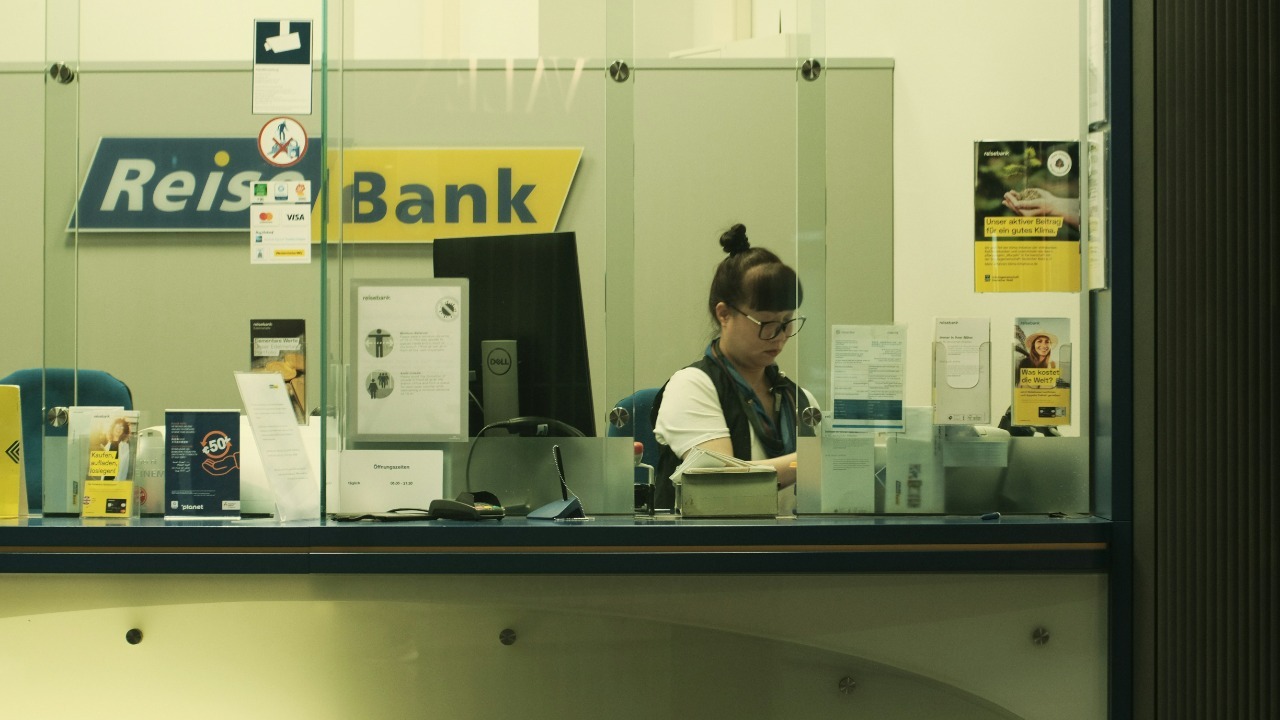
Walk into almost any branch and ask for a stack of $2 bills and you will see the same reaction: a pause, a frown and usually a polite apology. As a bank teller, I have watched the myth of the “special” $2 note collide with the reality of how cash actually moves through the system. The result is a denomination that creates more hassle than value for most everyday customers, and often for the people behind the counter too.
When I tell people to skip $2 bills, I am not attacking nostalgia or collectors. I am looking at how these notes circulate, how often they are available, and how businesses treat them once they leave the bank. From that vantage point, there are nine clear reasons to think twice before you ask for them at the window.
1. They most likely are not in the vault when you ask
From the customer side, it can feel like banks are hiding $2 bills in some secret drawer. On my side of the counter, the truth is more mundane: we rarely order them. Branches stock what people actually use, and the daily demand is for $20s, $10s, $5s and $1s, not a quirky denomination that almost never shows up in deposits. When I open my cash drawer at the start of a shift, I am focused on having enough small bills to make change quickly, not on keeping a handful of twos “just in case.”
That is why, when people ask for $2 bills, the honest answer is usually that They Most Likely Dont Have Them in the building at all. Even when a branch does see a few come in, they tend to be recirculated to the next curious customer or bundled for shipment back to the cash center instead of sitting in a teller’s tray. The result is a cycle where low demand leads to low stocking, which then reinforces the perception that $2 bills are rare, even though the scarcity is really just a matter of how branches manage inventory.
2. Most people do not realize $2 bills are still printed
One of the biggest drivers of $2 bill hype is simple misunderstanding. I routinely meet customers who are convinced the government stopped making them decades ago, so any note they see must be a collectible. That belief fuels requests at the window and encourages people to hoard every $2 bill they touch, which keeps the notes out of normal circulation and makes them feel even more unusual than they are. The irony is that the denomination is still part of the current lineup, even if it is not front and center in daily cash use.
Public confusion is so widespread that a television station felt the need to remind viewers that the United States two dollar bill is a current denomination and that it is still actively printed and used to make purchases, a point highlighted in a post dated Sep 19, 2022 that opened with the word Sep and the simple hook “Did you know the $2 bill is still in circulation.” When people walk into a branch convinced that every $2 bill is a museum piece, they are more likely to be disappointed by what they actually receive and more likely to pressure tellers for something the branch does not keep on hand in volume.
3. Uncommon in circulation does not mean rare or valuable
From my teller window, I see the same pattern over and over: a customer finally gets a crisp $2 bill, then immediately asks if it is “worth more than two dollars.” The short answer is almost always no. The notes are uncommon in daily life, but that does not automatically translate into collectible value. In the broader currency supply, they are a small slice, not a vanished relic, and most modern examples are only worth their face value.
National figures back up what I see in the drawer. One analysis of circulating cash reported that, out of the $54.1 billion in currency that moved through the economy in 2022, only $3 billion were $2 notes, which were described as Uncommon but not rare and introduced with the phrase Out of the total. That ratio explains why you do not see them often at the grocery store, but it also shows why most of them are not prized by collectors. Unless you are holding an older series with specific features like red or blue seals that specialists seek out, the bill in your hand is probably just another piece of everyday cash.
4. The “collector” premium is usually an illusion
Because $2 bills feel scarce, customers often assume they should never spend them and should instead tuck them away as an investment. I have watched people trade perfectly useful twenties for a small stack of twos, then brag about how they are “saving” them for the future. The problem is that, for the vast majority of notes printed in recent decades, there is no realistic path to a big payday. Treating every $2 bill as a lottery ticket simply ties up cash that could be working elsewhere.
Specialist guidance reinforces that point. A detailed review of the market for these notes explains that Many people think $2 bills are rare, but in reality there are millions still in circulation and only a narrow set of series and conditions command high prices. The notes that do sell for thousands tend to be older issues in pristine shape, not the slightly worn bills that pass through a modern teller drawer. For everyday customers, that means the “collector” angle is usually more fantasy than financial strategy, and it is one more reason not to chase $2 bills at the branch.
5. Businesses and machines often will not take them
Even when a customer manages to get a stack of $2 bills, the next hurdle is actually spending them. I hear the same stories from people who come back to the branch frustrated: a cashier refused the note, a bartender hesitated, or a vending machine simply spit it back out. In practice, that makes the denomination less useful than a simple $1 or $5, especially in places where speed and automation matter, like parking garages, transit kiosks or self checkout lanes.
Part of the problem is technical. Industry guidance on payment hardware notes that Vending machine incompatibility is common because Most machines are calibrated for $1 and $5 bills, which discourages businesses from accepting twos and leads to awkward exchanges and reluctance to accept them. From a teller’s perspective, handing out a denomination that will not work in many of the machines people rely on is not doing the customer a favor. It is setting them up for friction at the point of sale, which is exactly what most people are trying to avoid when they come to the bank for cash.
6. Handling $2 bills slows down the teller line
Every extra step in a cash transaction adds up, especially during the lunch rush or on a Friday afternoon when the lobby is full. When someone asks for $2 bills, I often have to leave my station, check the vault, or swap with another teller who might have a few in a side envelope. That detour can turn a simple withdrawal into a multi minute process, which is frustrating for the customer in front of me and for the five people waiting behind them who just want to deposit a paycheck or grab some twenties.
Reporting based on teller experiences has highlighted how these requests can disrupt workflow, noting that on Nov 27, 2025 a bank employee described how unusual denominations can slow everything down and that They Most Likely Dont Have Them in regular drawers because Most people do not even think to ask. When I am balancing my cash at the end of the day, those same odd bills require extra counting and verification, since any mistake in a low volume denomination is harder to spot. Over time, the cumulative drag of catering to $2 bill requests is one more reason many branches quietly steer customers toward more standard notes.
7. The myth of the “special” bank stash keeps expectations unrealistic
There is a persistent belief that banks keep a hidden cache of unusual bills for favored customers, and $2 notes are at the center of that myth. I have had people insist that “my friend’s branch always has them” or that “the manager can get them from the back” if I just ask nicely. In reality, cash shipments are tightly controlled, and branches do not receive secret boxes of twos that only appear for certain clients. When we do have them, it is usually because a customer deposited a stack, not because we ordered them on purpose.
Accounts from front line staff published on Nov 27, 2025 describe the same pattern, with tellers explaining that Here in the branch, unusual denominations are more of a nuisance than a perk and that Most of the time, if a customer gets a $2 bill, it is pure luck. When customers walk in expecting a guaranteed stash, they are more likely to leave disappointed or to pressure staff for exceptions that the branch simply cannot make. Resetting those expectations is part of why I tell people not to build their cash plans around twos in the first place.
8. Everyday budgeting is easier with standard denominations
From a practical standpoint, $2 bills complicate the simple math most people use to manage cash. When I help customers set up envelopes for groceries, gas or tips, we usually work in tens, fives and ones because they break down cleanly into common price points. Twos can seem handy for a $2 bus fare or a $4 coffee, but once you start mixing them with other bills, it becomes easier to miscount or to end up with awkward combinations that do not match typical prices. Over time, that small friction can make budgeting feel less intuitive.
Financial educators who look at how people actually use cash have pointed out that the perceived rarity of $2 bills encourages people to treat them differently, which can distort their sense of what they are really spending. One review of the denomination’s history noted on Nov 15, 2025 that their perceived rarity and vending machine incompatibility make them less practical in everyday transactions, a point echoed in guidance that described how Most machines and many businesses are calibrated for more standard bills. When I help someone withdraw cash for a weekend trip or a month of expenses, sticking to denominations that work everywhere makes their life simpler and their budget easier to track.
9. If you want value, focus on the right kind of $2 bill
None of this means that no $2 bill is ever worth more than face value. As a teller, I occasionally see older notes that make even my colleagues pause, and I always encourage customers to research anything that looks unusual before they spend it. The key is to separate the everyday twos that pass through modern branches from the genuinely collectible pieces that specialists seek out. Chasing every $2 bill at the window is not the same as learning which specific series and conditions might actually carry a premium.
Detailed guides for collectors explain that certain older issues, especially those with distinctive red or blue seals, can fetch hundreds of dollars, while most modern notes will never rise above their printed value. One such analysis, published on Jun 25, 2025, emphasized that Jun was a reminder that careful attention to series, condition and serial numbers matters far more than simply possessing a $2 bill at all. For customers who are genuinely interested in collecting, the smarter move is to study those details and perhaps work with a reputable dealer, not to pressure a local teller for whatever twos might or might not be in the drawer that day.
More From TheDailyOverview
- Dave Ramsey warns to stop 401(k) contributions
- 11 night jobs you can do from home (not exciting but steady)
- Small U.S. cities ready to boom next
- 19 things boomers should never sell no matter what

Silas Redman writes about the structure of modern banking, financial regulations, and the rules that govern money movement. His work examines how institutions, policies, and compliance frameworks affect individuals and businesses alike. At The Daily Overview, Silas aims to help readers better understand the systems operating behind everyday financial decisions.

