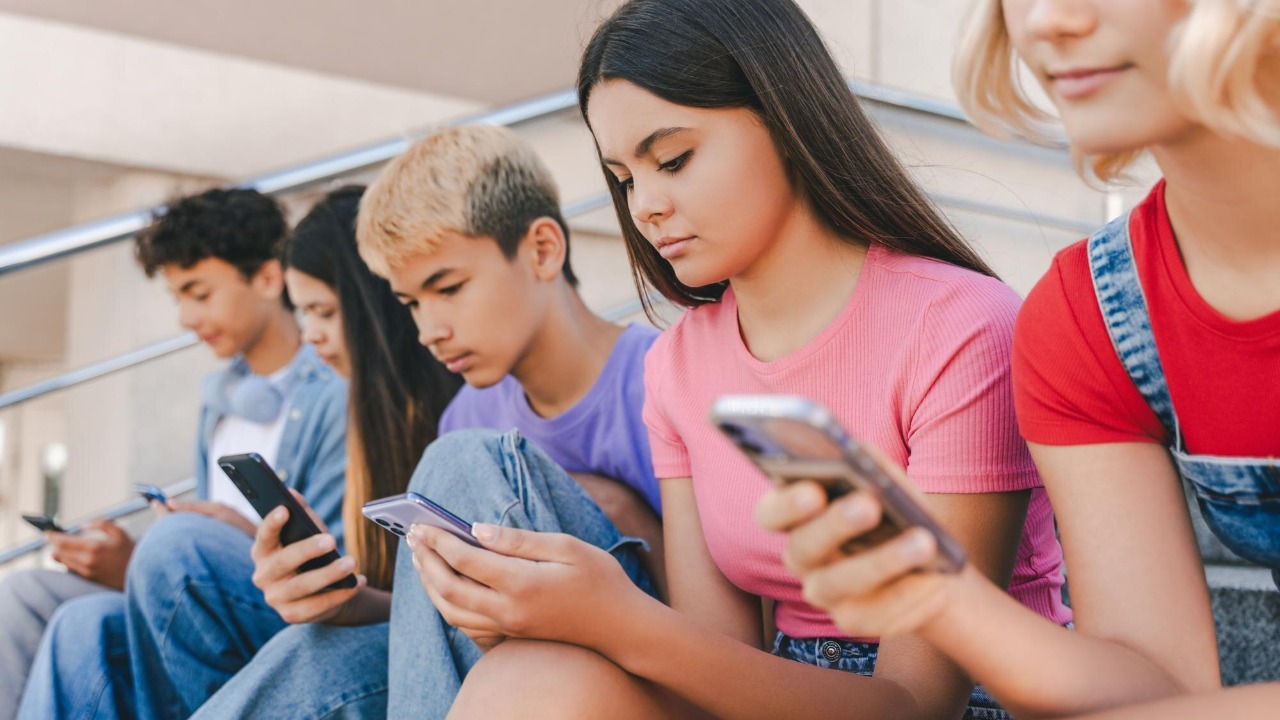
Artificial intelligence is supposed to be Gen Z’s native language, the operating system of their careers and social lives. Yet some of the people building and funding that future are now telling the youngest workers to do something that sounds almost rebellious: step away from the screen. Their message is not anti-tech, but a warning that in a world of constant optimization, the real competitive edge may come from knowing when to unplug.
Mark Cuban, Mary Barra, and Sam Altman are all steeped in the AI boom, yet they are increasingly urging young people to protect the parts of life that cannot be automated. They are pushing Gen Z to leave the house, log off, and cultivate the messy, offline experiences that no chatbot can replicate. I see their advice as less nostalgia and more strategy, a reminder that staying human is becoming a high‑value skill.
The AI insiders telling Gen Z to slow down
The most striking thing about this unplug message is who is delivering it. Mark Cuban has spent years investing in software and streaming, Mary Barra has tied General Motors’ future to advanced technology in cars, and Sam Altman has become one of the most visible faces of generative AI. Yet reporting on their recent comments shows a shared concern that as AI becomes embedded in how we work and learn, progress does not have to mean being online every waking minute. Their argument is that the more powerful the tools get, the more intentional people need to be about when not to use them, a point that has surfaced in coverage of the broader AI era.
In that context, their advice to Gen Z sounds less like a lifestyle tip and more like a survival guide. The same systems that can draft emails, summarize meetings, and personalize feeds can also make it feel impossible to step away. One report notes that as AI becomes increasingly woven into daily life, a growing number of leaders are arguing that real innovation now depends on slowing down and staying human, not just racing to adopt every new tool. By telling young workers to unplug, Cuban, Mary Barra, and Sam Altman are effectively saying that the next phase of the tech revolution will reward people who can think beyond the interface.
Mark Cuban’s grind, and why he still says “go outside”
Mark Cuban’s own schedule makes his unplug advice sound almost contradictory at first. Earlier this year, he described spending hours every day plowing through roughly 1,000 emails, a volume that would make most people reach for more automation, not less. That relentless routine is part of why his message to Gen Z stands out: he is not dismissing hard work or digital hustle, he is arguing that success in the AI age cannot be built on screens alone. In his view, the people who will stand out are those who combine digital fluency with real‑world experiences and relationships, a point he underscored when he urged young people to leave the house and have fun beyond anything ChatGPT can offer.
When I look at that advice, it reads less like a billionaire’s attempt at relatability and more like a diagnosis of what AI cannot do. Algorithms can mimic tone, predict preferences, and generate code, but they cannot attend a pickup game, get lost in a new city, or navigate the awkwardness of a first networking event. Cuban is effectively telling Gen Z that those analog moments are not distractions from ambition, they are the raw material for it. In a labor market where AI can handle routine tasks, the differentiator becomes the kind of judgment, empathy, and creativity that only comes from living a life that is not fully mediated by a screen.
Mary Barra, Sam Altman and the case for staying human
Mary Barra’s world is full of sensors, chips, and software, yet her recent comments align with this call to protect human space. As the chief executive of a company racing to integrate advanced driver assistance and electric platforms, she has every incentive to champion more technology. Instead, she has joined voices warning that as AI spreads through classrooms, offices, and factories, people need to be deliberate about how they use it. Reporting on the AI era notes that leaders like Mary Barra are emphasizing that progress does not require surrendering every decision or interaction to an algorithm, and that there is value in slowing down and staying human as these systems mature, a theme highlighted in coverage that explicitly references how AI becomes increasingly woven into daily life.
Sam Altman, whose name is now shorthand for the generative AI boom, has also been cited alongside Mark Cuban and Mary Barra in urging Gen Z to unplug and go analog. That pairing is telling. Altman has championed rapid experimentation with AI tools, yet he has also spoken about the need for guardrails and the limits of what these systems can replace. When his name appears in the same breath as Cuban and Mary Barra in coverage of advice to Gen Z, it signals a broader shift among tech leaders: the recognition that if young people outsource too much of their thinking and socializing to AI, they risk losing the very qualities that make them employable and resilient. Their shared message is that staying human is not a sentimental choice, it is a strategic one.
The 996 culture clash with Gen Z’s values
Against that backdrop, the rise of the so‑called 996 work culture in Silicon Valley looks even more jarring. The term refers to a schedule of working from 9 a.m. to 9 p.m., six days a week, a model that has been associated with parts of the tech industry for years and is now being reported as spreading through new corners of the sector. One account describes how this 996 mindset is colliding with younger workers’ expectations, particularly Gen Z employees who came of age during a pandemic and are more vocal about mental health and boundaries. The same reporting that highlights Mark Cuban, Mary Barra, and Sam Altman urging Gen Z to unplug also notes that this intense culture is taking hold in the AI era, underscoring a tension between nonstop productivity and the analog life these leaders now recommend, a tension captured in coverage of how 996 culture is taking over.
For Gen Z, that clash is not theoretical. Many are entering workplaces where Slack messages ping late into the night, AI tools track performance metrics in real time, and the expectation to be always available is baked into team norms. Yet they are also hearing some of the most influential figures in tech say that escaping technology is not a luxury, it is a necessity. When leaders who understand AI’s capabilities warn that every minute spent tethered to a device can feel like torture, they are validating what younger workers have been saying for years about burnout and digital overload. The unplug advice from Cuban, Mary Barra, and Sam Altman can be read as a quiet rebuke of 996 culture, an argument that long‑term innovation requires rest, reflection, and offline life.
Why analog experiences are a competitive advantage
There is a practical logic behind telling Gen Z to go analog. In a world where AI can draft a passable cover letter or generate a basic marketing plan in seconds, the baseline for competence is shifting. What stands out now is not the ability to produce more content faster, but the capacity to bring original insight, nuanced judgment, and emotional intelligence to problems that machines can only approximate. Those qualities are forged in lived experience: negotiating with a landlord, volunteering in a crowded clinic, playing in a band, or coaching a youth team. When Mark Cuban talks about real‑world experiences and relationships as essential to success beyond what any chatbot can provide, he is pointing to a labor market where human context is the scarce resource.
Analog life also builds resilience in ways that digital tools cannot. Navigating a delayed train, a difficult roommate, or a community organizing campaign forces people to tolerate uncertainty and adapt in real time. AI can simulate scenarios, but it cannot reproduce the stakes of a real argument or the satisfaction of solving a problem with a group of friends. Leaders like Mary Barra and Sam Altman, who operate at the frontier of automation, seem to recognize that the more capable AI becomes, the more valuable these offline muscles will be. For Gen Z, unplugging is not about rejecting technology, it is about cultivating the human capital that AI cannot copy.
The mental health stakes of constant connectivity
The unplug message also lands in a moment when mental health is a central concern for young people. Gen Z has grown up with smartphones, social media, and now AI companions that can chat at any hour, yet rates of anxiety and burnout remain high. The pressure to be constantly reachable, constantly optimizing, and constantly visible online has created a baseline of stress that older generations did not face in the same way. When tech leaders advise stepping away from screens, they are implicitly acknowledging that the current model of digital life is unsustainable, especially for those just starting their careers.
Broader news coverage reflects how this strain plays out across society. On any given day, feeds that carry updates about Lindsey Vonn’s condition after an Olympic downhill crash sit alongside political fights involving the President and a stream of new details about crises around the world. A single scroll can move from sports injuries to geopolitical tension to viral memes, all competing for attention. One news hub that aggregates these kinds of stories, including items on Lindsey Vonn, the Olympic stage, the President, and new developments in other arenas, illustrates how relentless the information flow has become for anyone who opens a browser or app, as seen in the mix of items on Yahoo News.
How Gen Z can actually unplug without opting out
The challenge, of course, is that Gen Z cannot simply log off and hope for the best. Their jobs, classes, and social lives are intertwined with AI tools and digital platforms, and opting out entirely is not realistic. The advice from Mark Cuban, Mary Barra, and Sam Altman is better understood as a call for intentional boundaries. That might mean carving out specific hours when notifications are off, choosing in‑person meetings over yet another video call when possible, or setting rules about when to rely on AI and when to wrestle with a problem unaided. The goal is not purity, it is balance, and the people urging it are those who know how seductive full immersion can be.
More From The Daily Overview
*This article was researched with the help of AI, with human editors creating the final content.

Grant Mercer covers market dynamics, business trends, and the economic forces driving growth across industries. His analysis connects macro movements with real-world implications for investors, entrepreneurs, and professionals. Through his work at The Daily Overview, Grant helps readers understand how markets function and where opportunities may emerge.