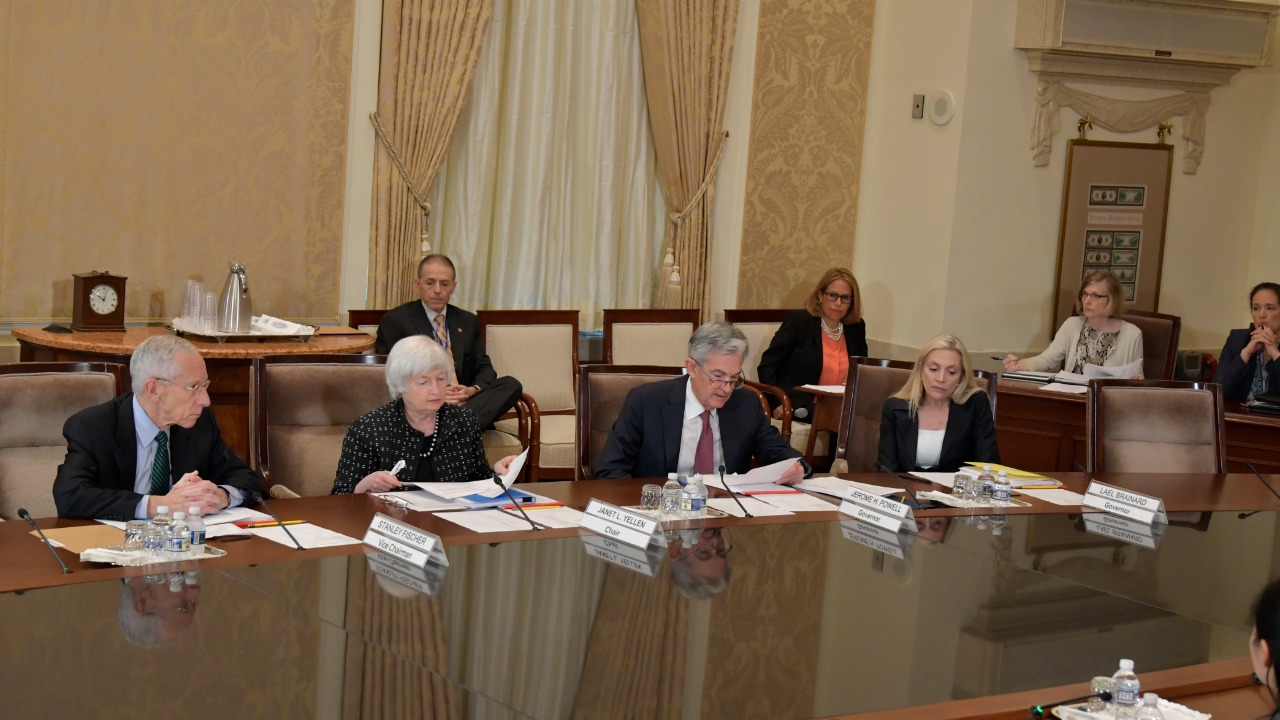
The Federal Reserve’s December decision to cut interest rates by a quarter point was supposed to be a careful step toward normalizing policy after a bruising inflation fight. Instead, it exposed how sharply officials disagree about the risks facing the United States economy and how quickly to pivot from restraint to support. Inside the Fed, the move has become a litmus test for how to balance still‑elevated prices, a cooling job market, and political pressure as the country heads into 2026.
What looked from the outside like a modest 0.25 percentage point adjustment was, on the inside, a fierce argument about whether the central bank was blinking too soon. The split that surfaced in the December meeting minutes is now shaping expectations for every decision that follows, from the path of borrowing costs to the credibility of the Fed’s 2 percent inflation goal.
The December cut and why it mattered so much
By the time policymakers gathered for their final meeting of the year, the Fed had held its benchmark rate in restrictive territory for months and markets were primed for a shift. The Committee ultimately opted to lower the target range for the federal funds rate by 0.25 percentage point, a move that nudged borrowing costs off their peak while still keeping policy tight by historical standards. In its official statement, the Committee framed the step as support for its employment and price stability goals, citing a change in the balance of risks around growth and inflation as justification for the modest cut.
That small adjustment carried outsized symbolic weight because it marked the first clear turn away from a pure inflation‑fighting stance toward a more balanced posture. The Fed’s own calendar of policy meetings shows how long officials had resisted easing, even as markets bet on earlier relief, which is why the December shift drew such scrutiny from investors and politicians alike who track every entry on the FOMC calendar. By choosing to move in December rather than waiting until 2026, the Committee signaled that it saw enough progress on prices, and enough risk to growth, to justify taking its foot slightly off the brake.
A 9–3 vote that revealed a rift
On the surface, a 9–3 vote to cut the benchmark rate by a quarter point looks like a solid majority. In central banking terms, however, three dissents on a single decision are a flashing warning light that consensus is fraying. Officials who backed the move argued that the economy could handle a small reduction in rates without reigniting inflation, while those opposed worried that easing too early would undermine the hard‑won credibility of the inflation fight and leave the Fed scrambling if prices flared again.
The minutes show that the 9–3 split was not about the mechanics of a 0.25 percentage point move but about the story officials tell themselves about the next year. Some participants saw the December cut as the first in a series of gradual reductions that would steer the benchmark rate toward a more neutral setting, a view reflected in the expectation of additional cuts captured in the Dec Officials minutes. Others wanted to keep the benchmark unchanged for longer, arguing that inflation progress was too fragile to risk even a small misstep.
How the official statement framed the move
In the carefully worded statement that followed the meeting, the Committee emphasized continuity rather than capitulation. It reiterated that inflation remained above its 2 percent objective but noted that the balance of risks had shifted enough to warrant a slight easing in policy. The language underscored that the Fed was still focused on returning inflation to target over time, even as it acknowledged that keeping rates at their previous peak indefinitely could pose its own dangers to employment and financial stability.
The statement’s key line explained that, in support of its goals and in light of the shift in the balance of risks, the Committee decided to lower the target range for the federal funds rate, a formulation that tried to reassure both markets and households that the central bank was not abandoning its inflation fight. That phrasing, preserved in the official Dec Committee statement, shows how the Fed tried to present the cut as a technical adjustment within a broader strategy rather than a wholesale pivot.
Deep divisions laid bare in the minutes
The bland tone of the statement could not hide what the minutes later made explicit: Some Federal Reserve officials were deeply uncomfortable with the decision to ease. The record describes how Some Federal Reserve participants who supported the cut did so only reluctantly, warning that if inflation stayed elevated they would be prepared to pause further reductions or even raise rates again. Others argued that the data did not yet justify any move and that the Committee risked sending the wrong signal about its tolerance for above‑target inflation.
Those internal warnings were not abstract. The minutes recount how Some Federal Reserve officials stressed that inflation remained elevated and that loosening policy too quickly could force the Fed into a more aggressive tightening cycle later, a concern highlighted in the Dec EST account that also notes the figure 37 in the context of the discussion. The fact that such starkly different risk assessments coexisted around the same table helps explain why the December move has become a touchstone for debates about the Fed’s next steps.
The 2025 pattern of dissent and what it signals
The December clash did not come out of nowhere. Throughout 2025, The Fed had been grappling with how long to keep rates at restrictive levels, and divisions that surfaced earlier in the year carried straight into the final meeting. At one key gathering, The Fed met for a policy meeting and held rates steady, as it had all year, and that decision drew dissents from Fed governors including Chri, who argued that inflation concerns still warranted a firmer stance. Those earlier disagreements set the stage for the December fight over whether the time had finally come to ease.
By the time of the December cut, the pattern was clear: a core group of officials was increasingly willing to accept slower progress on inflation in exchange for protecting the labor market, while another camp, including Chri, remained focused on the risk that inflation could reaccelerate if the Fed moved too quickly. Reporting on how divisions at the Fed defined 2025 and are expected to carry into 2026 shows that these camps are not temporary factions but enduring schools of thought inside the institution, a dynamic captured in the Dec The Fed analysis.
Three camps: one cut, more cuts, or none at all
Behind the 9–3 headline vote, the December minutes reveal an even more fragmented landscape of preferences about the path ahead. Dec accounts of the meeting describe how Four officials supported just one cut, effectively treating December as a one‑off adjustment that should be followed by a pause to reassess the data. Two others favored a faster pace of easing, arguing that a weaker job market would likely spur the Fed to reduce borrowing costs more quickly if conditions deteriorated further. A third group wanted to skip the cut entirely, keeping rates unchanged to press inflation lower.
This three‑way split matters because it shapes how markets interpret every new data release. If the labor market softens, the camp that warned a weaker job market would likely spur the Fed to move faster will gain leverage, while any upside surprise on inflation will strengthen those who backed only one cut or none at all. The delicate balance among Four, Fed, and Two perspectives is laid out in detail in the Dec Four Fed Two account, which underscores just how close a call the December move really was.
From neutral rate debates to future cuts
Another fault line running through the December discussion was the question of where the so‑called neutral rate actually lies. As rates fell and approached a level that neither discourages nor encourages investment and spending, some officials argued that the Fed was already close to neutral and should slow or stop its easing to avoid overstimulating the economy. Others countered that the neutral rate might be lower than previously thought, leaving room for more cuts without stoking inflation. This debate over neutral is not academic; it directly informs how far and how fast the Fed believes it can reduce its benchmark rate.
The minutes also show that as rates moved toward this neutral zone, opinion diverged on whether to leave the benchmark rate unchanged at future meetings or continue trimming it. The tension is captured in reporting that notes how, as rates fell and approached a neutral level that neither discourages nor encourages investment and spending, some policymakers preferred to leave the benchmark rate unchanged, a view reflected in the Dec But minutes. That split over neutral will loom large as officials weigh whether December was the start of a steady easing cycle or a cautious one‑time adjustment.
What the cut means for households and markets
For consumers and businesses, the December move was less about the exact size of the cut and more about the signal that the Fed was finally willing to ease the pressure. On December 10, 2025, the central bank’s decision to trim its benchmark rate by 0.25 percentage point began to filter through to products like credit cards, auto loans, and adjustable‑rate mortgages, where borrowing costs are often tied to short‑term benchmarks. While the immediate savings on a typical monthly payment were modest, the shift suggested that rates on everything from home equity lines to small‑business credit could gradually move lower if the easing cycle continues.
Households trying to make sense of the change were told that the December 10 decision to cut rates by 0.25 percentage point was intended to keep the economy on stable ground heading into 2026, a message aimed at reassuring borrowers who had been squeezed by the prior tightening campaign. Guidance aimed at consumers explained how the December 2025 Fed rate cut could affect their wallets, from refinancing opportunities to the cost of carrying a balance, as outlined in the What the December Fed Key overview. For markets, the cut reinforced expectations that yields on Treasuries and corporate bonds would drift lower if additional easing materializes, even as the internal split kept traders wary of sudden shifts in tone.
How 2026 is already being shaped
Even as officials argued over the December move, many were already looking ahead to what would prompt the next cut. The Federal Reserve had already reduced rates for a third straight time during its December meeting, according to one detailed summary, as FOMC members saw more evidence that inflation was easing compared with what the prior report showed. That pattern suggests a majority on the Committee believes a gradual series of cuts is appropriate as long as inflation continues to move toward target and the labor market does not weaken sharply.
The same minutes that exposed the December rift also indicated that most participants judged that further cuts would likely be appropriate if the economy evolved as they expected. One concise recap put it bluntly: The Fed cut rates, but the real story is the internal split now shaping 2026, with the latest 0.25% cut exposing major rifts over how quickly to ease without putting the inflation goal at risk, a tension highlighted in the Dec The Fed summary. That internal debate will influence not only the pace of future cuts but also how markets interpret every speech and projection that comes out of the central bank in the year ahead.
Politics, communication, and the Fed’s credibility
The December split is unfolding against a political backdrop that makes the Fed’s communication challenge even harder. President Donald Trump has repeatedly signaled his preference for lower interest rates, and the December move will inevitably be read through that lens, even though the Fed insists on its independence. In public discussions, including a Nov segment that asked what impact the lack of data would have on the Fed’s willingness to lower rates, analysts warned that any perception of political influence could complicate the central bank’s efforts to anchor expectations, a concern echoed in the Nov Fed discussion that probed how officials weigh incomplete information.
Inside the institution, the stakes are just as high. An Overview of the December meeting minutes described a Federal Reserve that cut its target range to 3.5% to 3.75% while wrestling with deep internal disagreements over the decision and what it means for households’ money. That same Overview stressed that the Minutes revealed a secret battle over how to balance inflation risks with growth concerns, a narrative captured in the Dec Overview Minutes Federal Reserve report. Another detailed recap, framed as The Blueprint of how the December meeting unfolded, underscored that Federal Reserve officials were deeply divided over the cut and that Some policymakers worried the move could be seen as backing away from the inflation fight, a concern laid out in the Dec The Blueprint Federal Reserve Some account. How the Fed navigates those internal and external pressures after such a contentious decision will go a long way toward determining whether the December cut is remembered as a turning point or a misstep.
What could trigger the next move
Looking ahead, the key question is what combination of data will be enough to unite a divided Committee around the next step. The Federal Reserve has signaled that it will be guided by incoming information on inflation, employment, and financial conditions, and the December minutes suggest that a weaker job market or a sustained drop in inflation could tip the balance toward more cuts. At the same time, any sign that inflation is stalling above target would embolden those who argued in December that the Fed should have left rates unchanged, potentially leading to a pause or even a reversal of the latest easing.
Analysts parsing the December record note that the FOMC is effectively operating with a conditional roadmap: more cuts if inflation keeps easing and the labor market softens, fewer if price pressures prove sticky. A detailed breakdown of what will prompt the Fed to cut interest rates again emphasizes that the December move was the third straight reduction, taken as members saw more evidence that inflation was easing compared with the prior report, and that future decisions will hinge on whether that trend continues, as outlined in the Dec The Federal Reserve FOMC analysis. With the Committee so sharply split in December, the next few data releases will not just inform the outlook, they will decide which faction inside the Fed sets policy for 2026.
More From TheDailyOverview

Grant Mercer covers market dynamics, business trends, and the economic forces driving growth across industries. His analysis connects macro movements with real-world implications for investors, entrepreneurs, and professionals. Through his work at The Daily Overview, Grant helps readers understand how markets function and where opportunities may emerge.

