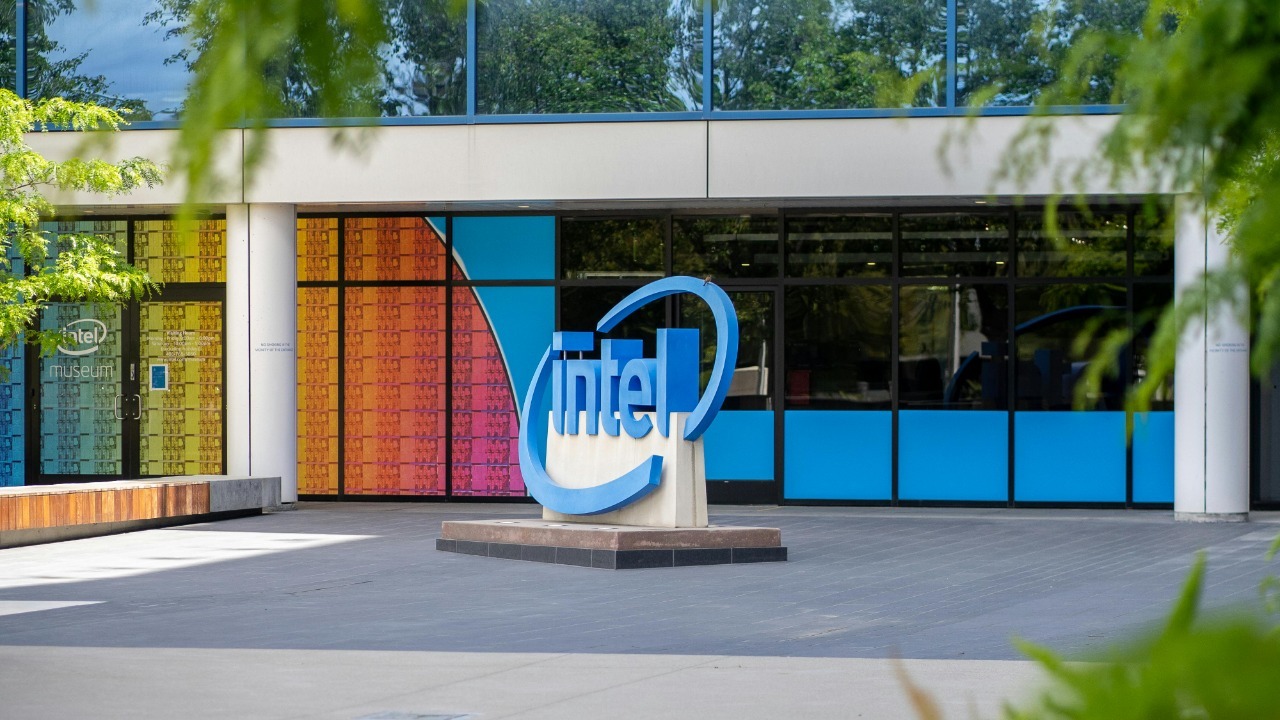
Intel’s latest rally in the stock market underscores how quickly sentiment can swing when Wall Street spies a credible path back into Apple’s supply chain. Reports that the chipmaker is poised to manufacture advanced processors for future Apple devices sent the shares sharply higher, signaling renewed investor faith in Intel’s turnaround story. The move also highlights how central Apple’s silicon roadmap has become to the balance of power in the global chip industry.
Intel’s 7% surge and what the market is really pricing in
When Intel, traded under the ticker INTC, jumps more than 7 percent in a single session, the move is about more than just momentum traders piling in. I see that kind of spike as the market’s shorthand for a structural shift in expectations, in this case the belief that Intel can win a meaningful slice of Apple’s next wave of processor manufacturing. The rally followed fresh commentary from TF International analyst Ming-Chi Kuo, whose track record on Apple’s hardware supply chain is closely watched across the industry and whose latest note pointed to Intel as a likely foundry partner for upcoming Apple chips.
Investors were not reacting to vague optimism but to the idea that Intel’s most advanced process technology, including its current 18A node, is finally competitive enough to attract a marquee customer again. The prospect that Apple could tap Intel for part of its future silicon roadmap, after years of leaning heavily on Taiwan Semiconductor Manufacturing Company, reframes Intel’s foundry ambitions as more than a government-subsidized experiment. That is why the stock’s more than 7 percent climb on Tuesday, tied directly to the report that Intel will supply chips for Apple, marked a clear inflection point in how the market values the company’s manufacturing roadmap, as reflected in detailed coverage of the Intel stock climbs more than 7%.
The Ming-Chi Kuo factor and why his Apple calls move Intel
In the opaque world of hardware supply chains, a single analyst can sometimes move tens of billions of dollars in market value, and Ming-Chi Kuo is one of the rare names with that kind of pull. His research at TF International has long been treated as an early-warning system for shifts in Apple’s component sourcing, from camera modules to display panels, and now to cutting-edge processors. When he posts on X that Apple is lining up Intel as a manufacturing partner, traders read it as a near-term signal rather than a distant possibility.
The latest surge in Intel’s share price followed exactly that pattern, with the market seizing on Kuo’s suggestion that Apple is preparing to rely on Intel’s advanced process technology for at least part of its future silicon. The fact that the move unfolded quickly after his post underscores how much weight investors assign to his view of Apple’s internal plans. It also explains why the reaction was not limited to a modest bump but instead translated into a more than 7 percent gain for INTC on Tuesday, a move explicitly tied to the report that Intel will supply chips for Apple and to the influence of TF International analyst Ming-Chi Kuo, as detailed in the same analysis of Intel’s rally.
From 7% to 10%: how the rally built over several sessions
The initial 7 percent pop in Intel’s stock was only part of the story, because the enthusiasm around a potential Apple deal spilled over into subsequent trading sessions. As more investors digested the implications of a marquee customer returning to Intel’s manufacturing lines, the buying pressure intensified. At one point, Intel shares were up about 10 percent in a single Friday session, a move that extended a run of gains and signaled that institutional money was leaning into the thesis rather than fading the spike.
That roughly 10 percent jump, which came during Intel’s fifth consecutive day of advances, was again linked directly to the same catalyst: a report by Ming-Chi Kuo that Apple was preparing to tap Intel for its silicon. The reaction was strong enough to be flagged by a Senior Editor at LinkedIn News, who highlighted how Intel shares jumped about 10 percent on Friday following Kuo’s report and framed the move squarely around the prospect of Apple using Intel for its silicon. That framing, captured in a concise Intel jumps amid Apple deal report update, shows how the Apple narrative quickly became the dominant lens for reading Intel’s price action.
Why Apple’s foundry business is such a prize for Intel
Apple is not just another chip customer, it is one of the most demanding and influential buyers of advanced semiconductors in the world. Winning even a portion of Apple’s processor manufacturing would give Intel more than incremental revenue, it would validate the company’s claim that its process technology is back in the top tier. For a firm that has spent years trying to shake off delays and missteps in its manufacturing roadmap, being trusted with Apple’s silicon would serve as a public stress test that few other customers can match.
There is also a strategic dimension that goes beyond the dollars attached to any single contract. Apple’s current reliance on Taiwan Semiconductor Manufacturing Company has long been seen as a geopolitical and operational risk, and any move to diversify that exposure would be closely watched by governments and investors alike. Intel’s potential role as a second source for Apple’s chips would not only reduce Apple’s dependence on a single Asian foundry but also strengthen Intel’s pitch that its fabs can serve as a Western alternative for the most advanced nodes. That is why the market’s reaction to the report that Apple will rely on Intel for chip manufacturing, which helped drive Intel shares as much as 10 percent higher on Friday and marked the stock’s fifth straight session of gains, was so intense, as captured in the discussion of Intel and potential Apple chip manufacturing and its implications for Taiwan Semiconductor Manufacturing Company.
Government backing, Nvidia and SoftBank: the capital behind Intel’s comeback
Even before Apple entered the conversation, Intel’s turnaround plan was already being underwritten by a powerful coalition of public and private capital. The company has secured substantial support from the government to expand and modernize its fabrication footprint, a recognition that advanced chip manufacturing is now treated as critical infrastructure. That backing has helped Intel accelerate investment in cutting-edge nodes like 18A, which are essential if it is to compete for contracts tied to the most demanding customers.
On top of that public support, Intel has attracted significant commitments from industry heavyweights Nvidia and SoftBank. Nvidia, traded as NVDA, and SoftBank have together pumped a combined 7 billion dollars into Intel through their own initiatives, a figure that underscores how central Intel’s fabs have become to the broader ecosystem’s plans. Those funds are not charity, they are strategic bets that Intel’s manufacturing capacity will be vital for everything from data center accelerators to consumer and gaming chips. The scale and mix of this capital, including the combined 7 billion dollars from Nvidia and SoftBank alongside government backing, are laid out in coverage of how Nvidia and SoftBank have pumped a combined $7 billion into Intel, reinforcing why investors now see the company as a central node in the global chip supply chain.
How the Apple narrative fits into Intel’s broader stock performance
Intel’s sharp move higher on the Apple report did not come out of nowhere, it slotted into a broader pattern of the stock responding to concrete milestones in the company’s manufacturing and foundry strategy. Over the past year, each time Intel has been able to point to a credible external validation of its process technology, whether through government funding, strategic partnerships, or analyst endorsements, the shares have tended to re-rate higher. The Apple story is simply the most visible and emotionally resonant example of that dynamic, because it ties Intel’s future directly to one of the most valuable companies in the world.
What stands out in this case is how quickly the Apple narrative overwhelmed other drivers of Intel’s valuation. The same trading session that saw the stock climb more than 7 percent on Tuesday was dominated by chatter about Apple’s potential orders, even though the underlying thesis also rests on Intel’s 18A technology and its broader foundry ambitions. That focus reflects how investors often use a single high-profile customer as a proxy for a much more complex set of operational questions. The fact that Intel’s stock climbed more than 7 percent on the report it will supply chips for Apple, as detailed in a widely cited Intel stock climbs more than 7% recap, shows how a single narrative can crystallize a sprawling turnaround story into a simple, tradable idea.
What this means for Apple’s own chip strategy
For Apple, bringing Intel into its manufacturing orbit would mark a subtle but important evolution in its chip strategy. The company has spent years building its own custom silicon, from the A-series processors in iPhones to the M-series chips in Macs, while relying heavily on Taiwan Semiconductor Manufacturing Company to actually fabricate those designs. Adding Intel as a manufacturing partner would not change Apple’s control over its architectures, but it would give the company more flexibility in how and where those designs are produced.
That flexibility matters as Apple pushes into more demanding workloads, from on-device artificial intelligence to high-end gaming and professional creative applications. Having multiple advanced foundry partners could help Apple balance cost, performance, and geopolitical risk, especially as it navigates regulatory scrutiny and supply chain disruptions. The fact that a single report about Apple potentially tapping Intel for chip manufacturing was enough to send Intel shares as much as 10 percent higher and extend a five-session winning streak, as highlighted in the discussion of Intel and potential Apple chip manufacturing, underscores how central Apple’s foundry decisions have become to the entire semiconductor landscape.
The competitive backdrop: Nvidia, NVDA and the broader chip race
Intel’s potential win with Apple is unfolding against a backdrop of intense competition across the semiconductor sector, particularly with Nvidia. Nvidia, under the ticker NVDA, has dominated the market for AI accelerators and high-performance GPUs, while also relying on external foundries for its own chip production. The fact that Nvidia has chosen to invest alongside SoftBank in Intel’s manufacturing capacity shows that even its fiercest rivals see value in a stronger, more capable Intel foundry business.
That dynamic creates an unusual alignment of interests. On one hand, Intel and Nvidia are locked in a battle for data center and AI workloads, with each company racing to deliver more powerful and efficient silicon. On the other hand, Nvidia’s decision to help pump a combined 7 billion dollars into Intel, together with SoftBank, signals a recognition that the industry needs more advanced manufacturing capacity to sustain its growth. This dual role, as both competitor and customer or partner, is captured in the reporting that details how Nvidia and SoftBank have invested that combined 7 billion dollars into Intel alongside government support, a point laid out in the coverage of Intel stock climbing more than 8% on the Apple report and the capital flows behind its foundry push.
Why the Intel–Apple story matters beyond the next quarter
Short-term stock pops come and go, but the forces driving Intel’s latest surge have implications that stretch well beyond the next earnings call. If Intel does secure a role in manufacturing Apple’s chips, it will validate years of heavy investment in process technology and signal that Western governments’ bets on domestic advanced manufacturing are starting to pay off. It would also mark a partial rebalancing of the global chip supply chain, with more of the most sophisticated production shifting away from a single geographic cluster.
At the same time, the reaction to the report is a reminder of how dependent market narratives remain on a handful of influential voices and companies. A single post from Ming-Chi Kuo at TF International, suggesting that Apple will rely on Intel’s 18A technology for future silicon, was enough to send Intel’s stock up more than 7 percent on Tuesday and as much as 10 percent on Friday, moves that were chronicled across detailed coverage of Intel’s 7% climb and the Intel jumps amid Apple deal report. For investors, the lesson is clear: the Intel–Apple story is not just about one contract, it is a live test of whether the industry can build a more resilient, diversified, and politically sustainable foundation for the next decade of computing.
More From TheDailyOverview
- Tennessee loses $2.6B megafactory and faces major layoffs
- Retired But Want To Work? Try These 18 Jobs for Seniors That Pay Weekly
- What to do with your pennies after the U.S. stops minting them
- Home Depot CEO warns of a troubling customer trend in stores

Grant Mercer covers market dynamics, business trends, and the economic forces driving growth across industries. His analysis connects macro movements with real-world implications for investors, entrepreneurs, and professionals. Through his work at The Daily Overview, Grant helps readers understand how markets function and where opportunities may emerge.