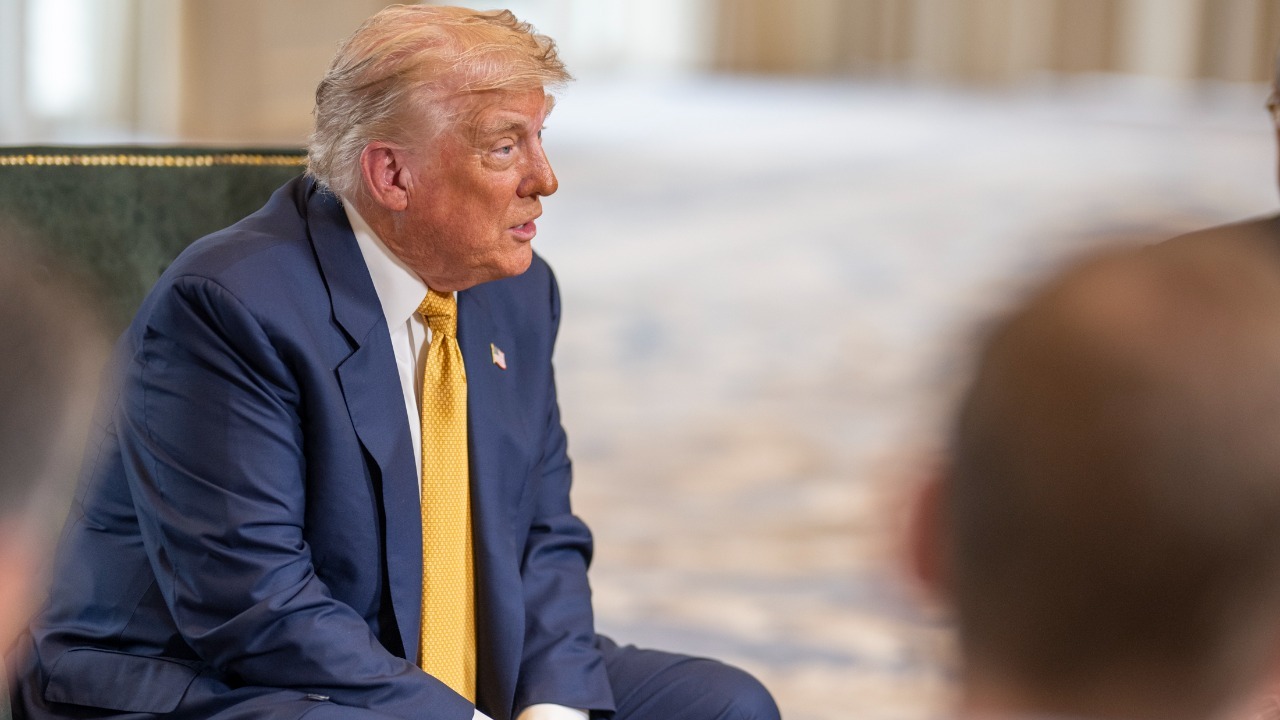
International enrollment at U.S. colleges is sliding at a pace that would have been hard to imagine a decade ago, and the inflection point is not subtle. After President Donald Trump’s overhaul of student visa rules, new foreign student numbers have dropped sharply, reshaping campus finances and the country’s talent pipeline in the process.
I see a clear pattern emerging from the latest data: tighter immigration policies are colliding with global competition for students, and the United States is no longer the default destination it once was. The result is a measurable fall in international enrollment that is rippling from admissions offices to local economies built around universities.
The scale of the drop in new international students
The headline number is stark. New international student enrollment at U.S. colleges and universities has fallen by 17%, a contraction large enough to be felt in lecture halls, research labs, and campus housing. That 17% decline in newly enrolled students is echoed across multiple data sets, including reporting that foreign student enrollment overall is down by a similar margin, captured in the phrase Foreign Student Enrollment Is Down under Trump. For institutions that had grown accustomed to steady growth in overseas demand, a double‑digit slide in a single year is not a blip, it is a structural shock.
What stands out to me is how consistent the numbers are across independent analyses. One report describes U.S. colleges seeing a 17% drop in newly enrolled international students this autumn, tying that decline directly to students who either could not secure or significantly delayed their visas, with many new visas facing long processing times. Another data‑driven review notes that new international student enrollment fell sharply this year amid Trump immigration changes, a pattern that aligns with the 17% figure and reinforces that this is a nationwide phenomenon rather than a cluster of isolated campus anecdotes.
Visa hurdles and Trump’s policy shift
Behind the enrollment slide is a policy environment that has made it harder, slower, and less predictable for students to obtain permission to study in the United States. The administration’s visa overhaul has layered new security reviews and documentation demands on top of an already complex system, and I hear the same refrain from campus officials and students alike: the process has become a deterrent in its own right. One detailed analysis of the current academic year links the downturn directly to a foreign student crackdown, noting that Under Trump, the policy goal has been framed as putting American national security first, even at the cost of fewer international students.
Students and enrollment managers describe a system where consular interviews are harder to secure, approvals take longer, and denials are more common, particularly in fields that touch on advanced technology. One data‑rich review of the 2024‑25 academic year attributes the sharp fall in new international enrollment to difficulties in obtaining a U.S. visa, arguing that these issues have made the U.S. less competitive compared with other destinations. When the path to a student visa is unpredictable, families with options increasingly look to Canada, the United Kingdom, or Australia instead.
Evidence of a sustained downward trend
What makes this moment more consequential is that the current drop is landing on top of earlier declines rather than interrupting a growth curve. International Student Enrollment Drops Sharply in US is not just a one‑year headline, it reflects a pattern of erosion that has been building over several cycles. One report explicitly notes that the latest downturn follows a 7.2% decline in a prior period, and describes International Student Enrollment Drops Sharply in US with Ongoing Declines Linked to Visa Challenges, underscoring that this is a cumulative slide rather than a sudden cliff.
Survey work by the Institute of International Education reinforces that picture of a sustained shift. A study conducted by the Institute of International Education, a nonpartisan organization, sampled over 800 institutions and found a broad decrease in new international enrollments, not just at a handful of high‑profile campuses. Another data visualization of foreign student trends, By Todd Wallack, Maham Javaid, and Susan Svrluga, shows that the number of newly enrolled foreign college students in the United States has been sliding across multiple years, with the latest 17% drop representing an acceleration of that trajectory rather than an anomaly.
Financial and academic fallout for U.S. universities
For universities, the enrollment decline is not an abstract statistic, it is a budget line. International students often pay full tuition, subsidizing financial aid for domestic students and underwriting programs that might otherwise be unsustainable. When foreign student enrollment is down by 17%, as captured in the phrase What It Means for Universities, the financial hit can force hiring freezes, program cuts, and delayed capital projects. Smaller regional institutions that had leaned heavily on overseas recruitment to stabilize their numbers are particularly exposed.
The academic impact is just as real. International students bring language skills, cultural perspectives, and research expertise that shape everything from first‑year seminars to Ph.D. dissertations. A detailed enrollment study that sampled more than 800 campuses found a broad decrease in new international enrollments, which means fewer global voices in classrooms and labs across the country. Another analysis of foreign student data, By Todd Wallack, Maham Javaid, and Susan Svrluga, highlights how the United States is losing ground in key sending countries, which affects not only tuition revenue but also the pipeline of graduate researchers in fields like engineering and computer science.
Broader economic and geopolitical stakes
The consequences of this enrollment slide extend far beyond campus gates. International students are a critical part of the talent pipeline for industries that the United States has identified as strategic priorities, including semiconductor manufacturing and advanced computing. One analysis of the current academic year notes that The US academic year is beginning with fewer foreign students feeding into industries such as semiconductor manufacturing, a shift that could complicate efforts to rebuild domestic capacity in those sectors. When fewer graduates remain in the country after their studies, employers face tighter labor markets in specialized roles that already struggle to attract enough qualified candidates.
There is also a geopolitical dimension that is easy to overlook in the visa debate. For decades, educating future leaders from around the world has been one of the United States’ most effective soft‑power tools, creating alumni who understand American institutions and often maintain professional ties with U.S. companies and universities. A sharp fall in new international student enrollments, documented in multiple reports and echoed in coverage that describes how NEW YORK, Nov 17 (Reuters) detailed the administration’s emphasis on putting American national security first, risks ceding that influence to competitor nations that are actively courting the same students. As other countries streamline their visa processes and market themselves as welcoming alternatives, the United States is testing how far it can tighten its borders without undermining its long‑term economic and diplomatic interests.
More From TheDailyOverview
- Dave Ramsey warns to stop 401(k) contributions
- 11 night jobs you can do from home (not exciting but steady)
- Small U.S. cities ready to boom next
- 19 things boomers should never sell no matter what

Grant Mercer covers market dynamics, business trends, and the economic forces driving growth across industries. His analysis connects macro movements with real-world implications for investors, entrepreneurs, and professionals. Through his work at The Daily Overview, Grant helps readers understand how markets function and where opportunities may emerge.

