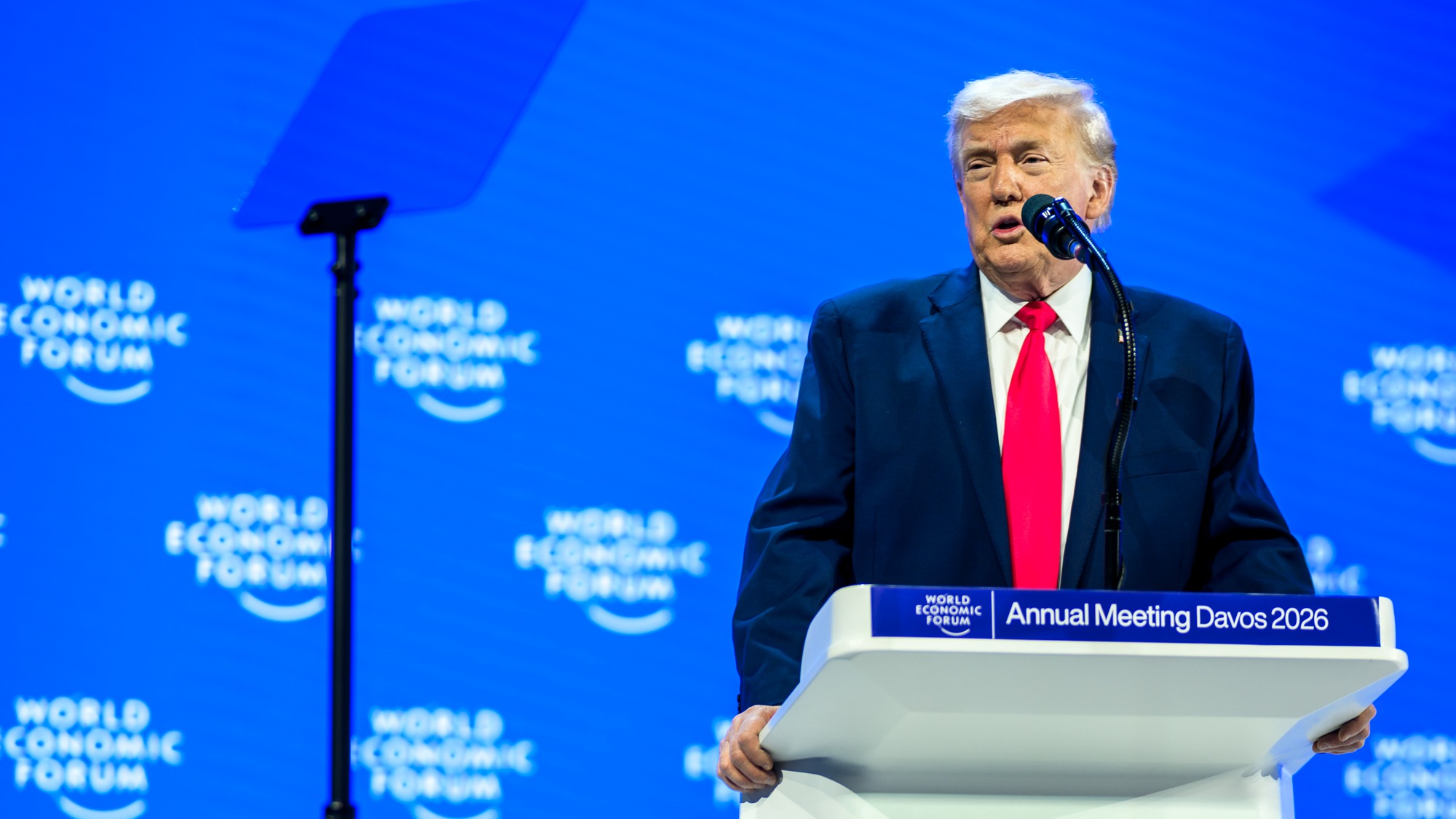
Global investors are not storming the exits from the United States, but they are quietly edging toward the door. The combination of political volatility around President Donald Trump, a more fragile dollar and richer US valuations is pushing big money to reweight portfolios toward emerging markets, gold and overseas stocks. In effect, investors are “quiet quitting” the US, trimming exposure without making a dramatic break.
That shift is less about a single crisis and more about cumulative unease. From Trump’s confrontations with the Federal Reserve to threats involving Greenland and trade, the policy backdrop has become a persistent source of risk rather than a tailwind. I see that as the core driver behind a new phase of global diversification that is gathering pace beneath the surface of headline stock indexes.
From Trump’s rollercoaster to a slow US retreat
The Trump era has been defined by sharp market swings that have gradually worn down investors’ patience. After the 2024 election, US stocks initially surged, with the Dow jumping more than 1,500 points while NASDAQ and the S&P 500 hit fresh records, reflecting optimism that tax and regulatory policy would favor corporate profits. Yet that early euphoria has given way to a more complicated picture as investors digest the costs of trade fights, tariff pivots and institutional clashes. A detailed review of the market since the election notes that, since 2024’s election day, performance has been positive overall but punctuated by abrupt selloffs tied directly to political headlines.
Those jolts are not new. In Trump’s first term in office, the first 100 days already showed how quickly sentiment could flip when tariffs or new confrontations were announced, a pattern that has repeated as the president returned to power. A recent analysis of The US stock market’s response to those early moves described a “rollercoaster ride” in which rallies were repeatedly interrupted by policy shocks. That history is now informing portfolio decisions: investors have learned that political risk is not a one-off event but a structural feature of the current US environment.
“Quiet quitting” US assets and the rise of EM and gold
Against that backdrop, large investors are not staging a dramatic boycott of American markets, but they are steadily reallocating capital. One strategist described how Jan clients are unlikely to make “a massive announcement” about abandoning the US, and will instead “look for opportunities to diversify away,” a pattern that is “even more bullish for EM.” That is already visible in flows, with investors pouring cash into emerging-market funds at a record pace as momentum builds for a rotation out of US holdings. Gold has benefited as well, serving as a hedge against both dollar weakness and political shocks.
Institutional money is leading this shift. A separate analysis of what some have dubbed a Wall Street Exodus notes that Institutional investors are starting to step back from the US market, reallocating toward regions and sectors less exposed to Washington’s policy swings. That is not a wholesale abandonment of American assets, but it is a meaningful rebalancing that chips away at the US premium that has dominated global portfolios for more than a decade.
Trump’s policy shocks and the new risk calculus
Trump’s own decisions are a central reason why the risk calculus is changing. When the president reiterated an aggressive stance on trade and foreign policy earlier in Jan, US equities slid as a sector rotation picked up pace, reversing some of the gains earlier in the year. The initial downturn was sparked by renewed geopolitical uncertainty after President Donald Trump hardened his rhetoric, reminding investors that policy risk can hit valuations without warning. At the same time, the dollar has stumbled, with one analysis explaining why the currency just had its worst week in 8 months despite Trump pivoting on tariffs, a sign that markets are no longer giving Washington the benefit of the doubt.
Fixed income investors are feeling the strain as well. A CEO overseeing $200 billion in assets has warned that Trump’s Greenland threats could force Treasury bond investors to “quiet quit,” accelerating a trend of reduced demand for US government debt. At the same time, According to JPMorgan’s trading desk, Trump’s attacks on the Federal Reserve represent a tangible risk for US equities, because they raise doubts about central bank independence and the path of interest rates. When the world’s benchmark safe asset and its monetary guardian are both in question, diversification stops being optional.
Capital outflows and the global diversification playbook
The behavioral shift is visible in hard data on cross-border flows. A detailed review of What has happened to US capital flows in 2025 concludes that the financial markets have already experienced significant outflows, with specific figures for equity and bond withdrawals running into the billions of dollars. Those numbers are not yet catastrophic, but they confirm that the “quiet quitting” narrative is more than a mood; money is actually leaving. At the same time, executives are warning that policy uncertainty and geopolitical risks are overshadowing otherwise constructive fundamentals, with one survey noting that Still overall consumer confidence remains low, a combination that further undermines the case for concentrated US exposure.
Global diversification is the natural response. A guide to international investing argues that Geographical diversification spreads investments across different regions to balance risk and benefit from different market behaviour, with some investors seeking growth in emerging markets while others prioritize stability in developed economies. Another analysis lays out Here three reasons why investors may want to increase exposure to foreign markets, highlighting a Valuation advantage in Europe, the potential for new opportunities and the role of global holdings in managing risk. Put simply, the rest of the world is no longer just a satellite to a US core; for many portfolios it is becoming a co-anchor.
Alternatives, hedges and what comes next
As investors reweight geographically, they are also rethinking what counts as a core holding. One wealth-management framework urges clients to look beyond traditional equities and bonds, arguing that Hedge funds, private markets and other alternatives can help diversify portfolios in an environment of low stock correlation and high return dispersion. That message resonates in a world where US policy risk is harder to price and where traditional 60/40 portfolios have been whipsawed by both equity and bond volatility. Gold, commodities and even select digital assets are being used as hedges against both inflation and institutional uncertainty.
None of this means the US is about to lose its status as the world’s largest and deepest capital market. It does mean that the automatic overweight to American assets is being questioned in a way that would have been unthinkable a decade ago. From Jan portfolio reviews to quiet reallocations by global institutions, the pattern is clear: investors are not staging a noisy rebellion, they are simply choosing to be less dependent on Washington’s next move. In a world where a single Trump tweet can rattle the Story of the dollar or send sectors into a tailspin, that quiet shift may be the most rational form of protest investors have.
More From TheDailyOverview
*This article was researched with the help of AI, with human editors creating the final content.

Alex is the strategic mind behind The Daily Overview, guiding its mission to uncover the forces shaping modern wealth. With a background in market analysis and a track record of building digital-first businesses, he leads the publication with a focus on clarity, depth, and forward-looking insight. Alex oversees editorial direction, growth strategy, and the development of new content verticals that help readers identify opportunity in an ever-evolving financial landscape. His leadership emphasizes disciplined thinking, high standards, and a commitment to making sophisticated financial ideas accessible to a broad audience.

