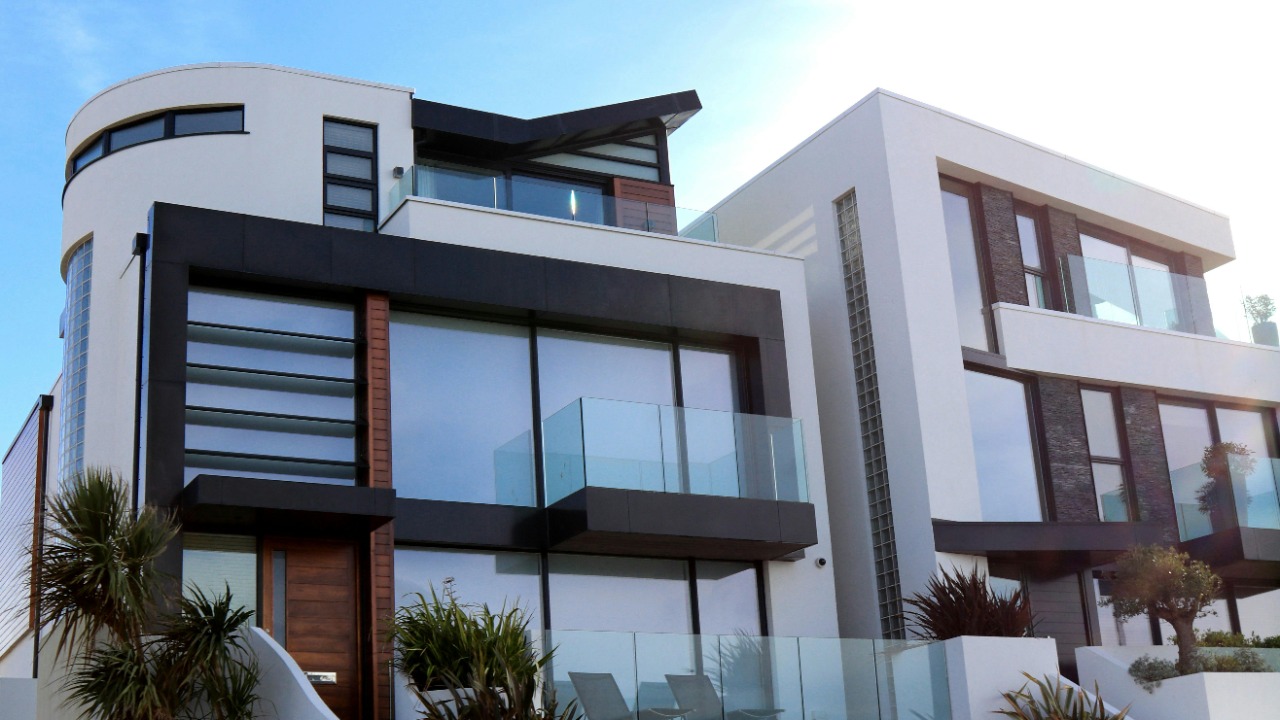
In the highest reaches of the housing market, the benchmark for a “trophy” property has quietly shifted upward, with price tags that once seemed outlandish now appearing almost routine. I see the $200 million mark functioning less as an outlier and more as the new psychological line of scrimmage for ultra-luxury homes, especially in a handful of global hubs where billionaire wealth and scarce land collide.
That shift is not just about headline-grabbing listings, it reflects how concentrated fortunes, new forms of wealth and a taste for ever-larger, amenity-stacked compounds are resetting expectations at the very top. The question is no longer whether a single home can command $200 million, but how often that figure appears in serious negotiations and closed deals.
The rise of the $200 million benchmark
The most striking change I see is how frequently properties are now marketed, and sometimes sold, at or above $200 million, a level that once belonged almost exclusively to royal palaces and one-off estates. In markets like Los Angeles, New York, London and the French Riviera, developers and sellers are increasingly treating that number as a realistic target rather than a moonshot, a shift that reflects both the growth of billionaire wealth and the normalization of nine-figure real estate trades backed by recent sales data. When a growing roster of buyers is comfortable wiring nine figures for a single residence, the ceiling naturally rises.
At the same time, the definition of what a $200 million home includes has expanded, with buyers expecting not just square footage and views but full-scale resort infrastructure. I see listings in this tier routinely bundling multiple structures, private wellness centers, extensive security systems and staff quarters into a single compound, a pattern that aligns with reported mega-deals in enclaves from Malibu to Palm Beach backed by transaction records. The result is that $200 million is less about a single house and more about a self-contained lifestyle platform, which helps explain why that figure is showing up more often in serious negotiations.
Where $200 million homes are actually trading
Even as asking prices soar, I find it useful to separate marketing bravado from closed deals, and the pattern that emerges is highly concentrated. The bulk of confirmed sales near or above $200 million cluster in a few ultra-prime zones, including oceanfront Los Angeles, Manhattan’s most coveted towers, select South Florida islands and a short list of European resort markets, as documented in global ultra-prime sales reports. Outside those pockets, nine-figure listings often linger or trade at steep discounts, which suggests the $200 million “new normal” is still geographically narrow.
Within those hubs, however, the numbers are hard to ignore, with multiple properties closing above $150 million and several crossing the $200 million threshold in the past few years according to wealth and property surveys. I see that pattern especially clearly in New York, where a small set of Central Park–adjacent towers has produced a string of nine-figure apartment sales, and in California, where sprawling estates with acreage and coastline command premiums that would have been unthinkable a decade ago. The data suggests that for a subset of global buyers, $200 million is now a functional, if still rarefied, price point rather than a marketing stunt.
Who is buying at this level, and why
To understand why $200 million homes are gaining traction, I look first at the buyer pool, which has tilted heavily toward tech founders, private equity partners, hedge fund managers and heirs with multi-generational capital. These are individuals whose net worth can exceed several billion dollars, making a $200 million purchase a single-digit percentage of their wealth, a dynamic reflected in global wealth distribution studies. For that cohort, a mega-home is less a stretch and more a portfolio allocation that combines lifestyle, status and perceived safety.
Motivations at this level often blend personal use with strategic considerations, including diversification away from volatile assets, a hedge against political risk in home countries and a desire for hard, tangible holdings in stable jurisdictions, themes that appear repeatedly in cross-border property research. I also see a strong emphasis on privacy and control, with buyers favoring compounds that can operate almost like private hotels, complete with medical-grade wellness facilities, secure panic rooms and infrastructure for staff and security teams. In that context, the leap from $100 million to $200 million is framed less as extravagance and more as a premium for autonomy and resilience.
How inflation and construction costs are reshaping “ultra-luxury”
It is impossible to talk about price inflation at the top without acknowledging the more mundane forces of construction costs and general inflation. Over the past decade, the cost of high-end materials, specialized labor and complex permitting has climbed sharply, with some markets reporting double-digit percentage increases in luxury build costs according to construction cost indices. When a single custom home can require years of work from architects, engineers, artisans and security consultants, the all-in development bill can easily approach nine figures before any profit margin is added.
At the same time, broader inflation has eroded the real value of money, which subtly shifts how both buyers and sellers perceive price brackets. A $100 million sale that once set records now sits closer to the middle of the ultra-luxury pack in real terms, a trend that is visible when adjusting historical trophy sales for inflation using consumer price data. I see developers and brokers using that reality to justify higher list prices, arguing that what looks like a dramatic jump on paper is, in purchasing power terms, closer to a continuation of past norms, especially when land and construction inputs have risen even faster than headline inflation.
A new psychology of scarcity and status
Beyond the spreadsheets, the shift toward $200 million pricing is also about psychology, particularly the perception of scarcity among the ultra-wealthy. In many of the neighborhoods where these homes trade, there are simply very few parcels that combine security, views, zoning flexibility and prestige, a constraint that is documented in supply analyses of luxury districts. When a buyer believes there may only be a handful of comparable properties in the world, the willingness to stretch on price increases, especially if the purchase is framed as a once-in-a-lifetime opportunity.
Status also plays a role, though it is rarely acknowledged outright. Owning one of the most expensive homes in a city, or even on the planet, carries a signaling power that resonates within a small circle of peers, a dynamic that sociologists and wealth researchers have traced in studies of elite consumption. I see that status competition reflected in the escalation of amenities, from private nightclubs and multi-story closets to underground car galleries designed for collections of limited-edition Ferraris and Bugatti Chirons. In that environment, the jump from $100 million to $200 million is not just about more space, it is about occupying a rarer rung on the ladder of global prestige.
Why $200 million is still a ceiling, not a floor
For all the attention on $200 million listings, I think it is important to stress that this level remains a ceiling even in the most rarefied markets, not a new baseline. The vast majority of luxury transactions, even in prime global cities, still close well below nine figures, a pattern that is clear in annual luxury outlook reports. Many properties initially floated at $200 million ultimately sell for less, sometimes significantly so, once the small pool of qualified buyers has had its say.
That gap between aspiration and reality suggests that while the cultural conversation has moved on to $200 million and beyond, the market is still sorting out where sustainable demand actually sits. I see some evidence that buyers are becoming more disciplined, walking away from overreaching listings or redirecting capital into multiple homes across different jurisdictions instead of a single mega-compound, a trend noted in prime residential forecasts. For now, $200 million functions as a powerful symbol of how far the ultra-luxury market has stretched, but it has not yet become the routine benchmark that $100 million once represented in the most rarefied corners of global real estate.
More From TheDailyOverview
- Dave Ramsey warns to stop 401(k) contributions
- 11 night jobs you can do from home (not exciting but steady)
- Small U.S. cities ready to boom next
- 19 things boomers should never sell no matter what

Elias Broderick specializes in residential and commercial real estate, with a focus on market cycles, property fundamentals, and investment strategy. His writing translates complex housing and development trends into clear insights for both new and experienced investors. At The Daily Overview, Elias explores how real estate fits into long-term wealth planning.

