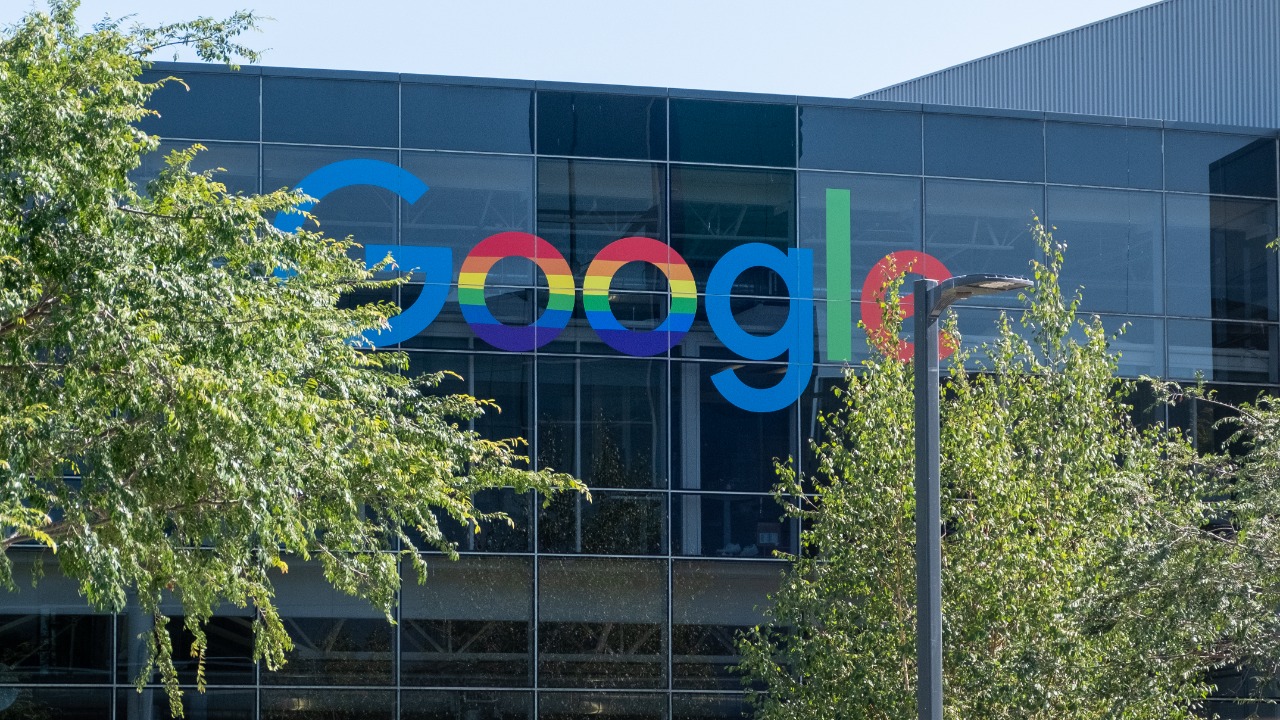
Alphabet’s latest stumble in artificial intelligence has given some high-profile investors confidence that the market has already delivered its verdict on the stock. The claim that “it’s already over” for the Google parent reflects a view that the company has ceded the strategic high ground in AI to faster, more focused rivals, and that the gap is widening rather than closing. I see a more complicated picture, where real missteps and structural challenges coexist with powerful cash engines and a still-formidable research machine.
Why one investor says the AI race has passed Alphabet by
The stark declaration that Alphabet’s moment has passed rests on a simple thesis: in the generative AI wave, the company that once set the pace is now reacting to others’ breakthroughs instead of defining the frontier itself. Critics point to the way OpenAI’s ChatGPT and Microsoft’s Copilot family have become shorthand for consumer and enterprise AI, while Google’s own Gemini brand has struggled to command the same mindshare. That perception has been reinforced by high-profile product issues, including flawed AI-generated answers in search and image tools that forced Alphabet to pause or scale back rollouts after public backlash, a pattern that has fed the narrative that the company is shipping undercooked features to keep up with rivals rather than leading on its own terms, according to recent reporting.
From an investor’s perspective, those stumbles matter because they hint at deeper execution risk at a moment when the market is rewarding clear, confident AI roadmaps with premium valuations. Alphabet’s core search franchise is being reshaped by AI-generated summaries that are more expensive to serve and could compress the lucrative ad units that sit on traditional results pages, a tension that has been highlighted in analyst commentary. At the same time, the company is pouring tens of billions of dollars into data centers, custom Tensor Processing Units, and model training, which has pushed capital expenditures sharply higher and raised questions about whether the incremental AI revenue will justify the spend. When a vocal investor says the story is “already over,” what they are really arguing is that Alphabet is now locked into a defensive, capital-intensive race where it must spend heavily just to protect its existing cash flows while others capture the new profit pools.
Alphabet’s AI missteps and the cost of catching up
Alphabet’s recent AI controversies have not just been embarrassing, they have been expensive. The company’s AI Overviews feature in search, which was meant to showcase Gemini’s capabilities directly on the results page, quickly drew attention for bizarre and inaccurate answers, prompting the company to restrict the feature for certain query types and to adjust its guardrails, as detailed in coverage of the rollout. Similar issues hit Gemini’s image generation, where historically inaccurate or distorted depictions led Alphabet to suspend the feature for some categories while engineers reworked the underlying model behavior, a retreat that underscored how difficult it has been for the company to translate its research strength into polished, reliable consumer products at scale.
Those product resets land at a time when Alphabet’s spending on AI infrastructure is surging. The company has guided investors to expect elevated capital expenditures as it builds out new data centers and deploys its latest TPU v5 chips, investments that are necessary to train and serve large models but that also weigh on free cash flow in the near term, according to its recent financial disclosures. Management has argued that AI features in search, YouTube, and Google Cloud will eventually monetize through higher engagement and premium services, yet the path from experimental tools to durable revenue remains uncertain. For investors who prioritize near-term earnings visibility, the combination of public misfires and rising costs makes Alphabet look less like a disciplined AI winner and more like a sprawling incumbent forced into a costly arms race.
Where Alphabet still holds structural advantages
Writing Alphabet off entirely ignores the scale of the assets it brings to the AI contest. The company still controls the default search experience for billions of users, owns YouTube’s vast video library, and operates Android on a large share of the world’s smartphones, each of which provides data and distribution channels that can feed and showcase new AI features. Alphabet’s latest earnings show that Google Search and other advertising generated tens of billions of dollars in quarterly revenue, while YouTube and Google Cloud added significant growth on top, according to its reported results. Those cash flows give the company a funding base for AI research and infrastructure that few competitors can match, even if the market is currently assigning a lower multiple to those earnings than to pure-play AI names.
On the technical side, Alphabet’s DeepMind and Google Research units continue to publish influential work on model architectures, reinforcement learning, and multimodal systems, and the Gemini family of models has been benchmarked competitively against peers on a range of language and reasoning tasks, as outlined in the company’s own technical materials. Google Cloud has also woven generative AI into its product stack, offering tools like Vertex AI and Gemini for Workspace that aim to embed AI assistance directly into enterprise workflows, from Gmail drafting to code generation in Google Cloud environments. While these offerings have not captured the same cultural spotlight as some rivals, they position Alphabet to monetize AI through both consumer and business channels if it can execute consistently and address reliability concerns.
How the market is repricing Alphabet’s AI story
The tension between Alphabet’s strengths and its missteps is playing out in the stock’s valuation. Investors have rewarded companies that present a clean, AI-centric growth narrative with steep share price gains, while treating Alphabet more cautiously as a diversified incumbent whose AI investments may primarily defend existing revenue rather than open entirely new lines of business. Recent trading has reflected that skepticism, with Alphabet’s market capitalization lagging behind some peers that generate far less revenue but are perceived as more “pure” AI plays, a divergence highlighted in comparative market analysis. When an investor says the outcome is already decided, they are pointing to this valuation gap as evidence that the market has concluded Alphabet will be a follower, not a leader, in the most lucrative parts of the AI stack.
I see a more nuanced repricing underway. Alphabet’s core advertising and cloud businesses are still growing, and the company has been returning capital through share repurchases while maintaining a strong balance sheet, according to its latest shareholder update. At the same time, the stock’s multiple reflects a discount for execution risk in AI and for the possibility that search margins compress as AI-generated answers change user behavior and ad formats. That mix of solid fundamentals and real strategic questions explains why some investors are comfortable declaring the story finished, while others view the current price as an opportunity to buy a dominant platform that is still early in monetizing its AI capabilities.
What would have to change to prove the skeptics wrong
For Alphabet to shake off the idea that the AI race has already been decided, it will need to show that its massive investments are translating into products that users trust and that customers are willing to pay for. That starts with reliability: AI Overviews in search and Gemini-powered features across Google’s ecosystem must consistently deliver accurate, helpful responses that enhance the experience rather than undermine it. Alphabet has already adjusted its rollout strategy after early issues, tightening safeguards and limiting certain use cases, as described in reports on its product changes. Sustained improvement on that front would help rebuild confidence that the company can integrate generative AI into its flagship products without eroding user trust or regulatory goodwill.
The other critical shift would be clearer evidence that AI is expanding Alphabet’s revenue base, not just protecting it. That could come from higher value ad formats tied to AI-enhanced search, from premium Gemini subscriptions inside Workspace, or from enterprises adopting Google Cloud specifically for its AI tooling, areas the company has highlighted in its recent earnings commentary. If Alphabet can demonstrate that these AI-driven lines are growing faster than the rest of the business and contributing meaningfully to margins, the narrative that “it’s already over” will look premature. Until then, the stock will likely trade as a powerful incumbent that is still trying to prove it can turn its research and infrastructure into the kind of focused, monetizable AI story that markets are currently rewarding most.
More From TheDailyOverview
- Tennessee loses $2.6B megafactory and faces major layoffs
- Retired But Want To Work? Try These 18 Jobs for Seniors That Pay Weekly
- What to do with your pennies after the U.S. stops minting them
- Home Depot CEO warns of a troubling customer trend in stores

Elias Broderick specializes in residential and commercial real estate, with a focus on market cycles, property fundamentals, and investment strategy. His writing translates complex housing and development trends into clear insights for both new and experienced investors. At The Daily Overview, Elias explores how real estate fits into long-term wealth planning.

