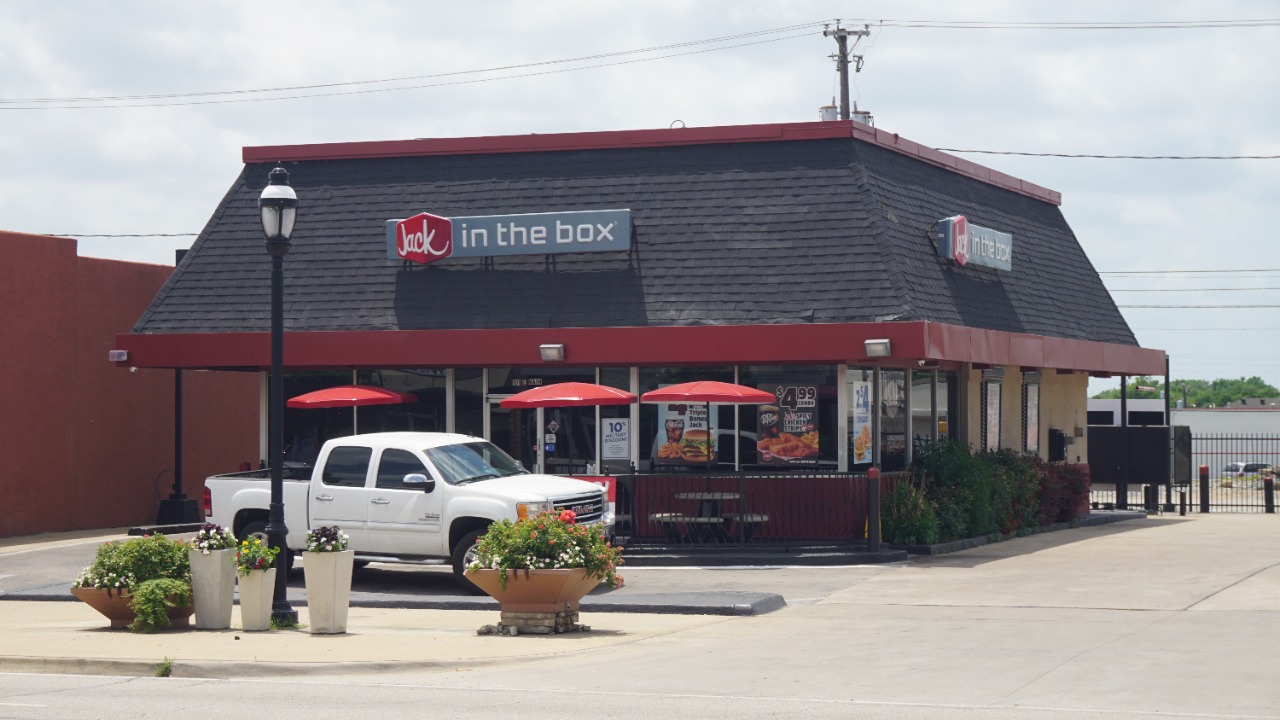
Jack in the Box is embarking on one of the most aggressive retrenchments in its history, shutting 200 restaurants after reporting an $81 million loss and putting 4,000 jobs on the line. The cuts concentrate heavily in California, Texas, and Arizona, and they mark a sharp reversal for a chain that only recently touted new growth plans. I see the move as a high‑stakes bet that a smaller, leaner footprint can rescue a brand squeezed by falling traffic, rising costs, and impatient investors.
The scale of the 200-store shutdown
The headline number is stark: Jack in the Box is closing 200 locations after booking an $81 million loss, a decision that directly threatens 4,000 workers across California, Texas, and Arizona. Those figures capture more than a routine pruning of weak units, they signal a structural reset of the chain’s presence in three of its most important states, where entire local markets will lose a familiar late‑night option. When a company is willing to shutter that many restaurants at once, it is effectively admitting that its existing footprint no longer matches where customers are, or where profits can realistically be made.
For employees and communities, the impact is immediate and personal, from hourly crew members suddenly out of work to landlords and suppliers who depended on steady orders. The company is framing the closures as a necessary response to sustained financial pressure, not a short‑term blip, which suggests that many of these 200 restaurants were unlikely to return to profitability even if sales stabilized. The scale of the retrenchment, and the concentration of layoffs affecting those 4,000 workers in California, Texas, and Arizona, is laid out in detail in a recent breakdown of the closures.
How the closures fit into a broader retrenchment
The 200‑store shutdown does not come out of nowhere, it caps a year in which Jack in the Box had already been steadily shrinking its network. Earlier in the year the chain shut down more than 70 restaurants, signaling that management was already in triage mode before the latest wave of cuts. Executives have been clear that they hope closing weaker units will improve overall financial performance by concentrating resources in locations with stronger traffic and better margins, a strategy that has become common across the fast‑food sector as costs rise and customer visits soften.
In that context, the new closures look less like a one‑off shock and more like the next phase of a multi‑year reset. The company has acknowledged that many of the shuttered restaurants were seeing fewer customers and facing higher input costs, particularly for beef, which eroded profitability even in markets that once looked solid. Reporting on how Jack in the Box shut down more than 70 stores, with more expected as part of a turnaround plan, underscores that management is betting that a smaller system can be healthier, even if that means painful exits from long‑standing communities, a point made explicit in coverage of the earlier wave of store closures.
Sales slump and the 7.4% warning sign
Beneath the store‑count headlines sits a more fundamental problem: customers are not coming in as often. Jack in the Box reported that same‑store sales fell 7.4% in its fourth fiscal quarter, a steep decline for a mature chain that depends on incremental traffic gains to cover rising labor and food costs. A drop of 7.4% in comparable sales means that even restaurants that remain open are generating significantly less revenue than a year earlier, which magnifies the pressure on margins and makes underperforming units even harder to justify.
Management has tied that sales slump to a mix of negative transactions and softer late‑night demand, historically one of the brand’s strengths. On an earnings call, executives described combined system same‑store sales declining 7.4% at Jack in the Box, with negative transactions compounding the hit, and investors took note that the stock, listed as JACK, barely budged at 0.16% despite the bad news. Those figures, and the language around them, appear in the company’s own earnings transcript outlining the 7.4% decline, which effectively served as an early warning that the existing footprint was unsustainable.
Inside the $81 million loss and investor pressure
The $81 million loss that triggered the latest closures reflects more than just weaker sales, it also captures the cost of operating an aging system in a high‑inflation environment. When revenue falls at the same time that wages, utilities, and ingredients climb, even modestly profitable restaurants can tip into the red, and a chain with hundreds of such units can quickly find itself staring at a sizable net loss. Investors in Jack in the Box have made it clear that they expect management to protect returns, and a loss of $81 million is the kind of figure that forces hard choices about which markets to keep and which to abandon.
That pressure is amplified by the company’s own growth investments, including new restaurant openings and remodels that require upfront capital. In its official financial reporting, Jack in the Box Inc, in a document titled Jack in the Box Inc, Reports Fourth Quarter and Full, Year, Earnings, highlighted how pre‑opening costs and other expenses weighed on results even as company and franchised restaurant sales came under strain. The combination of a headline $81 million loss and the need to keep funding new initiatives helps explain why management is leaning so heavily on closures to reset the balance sheet, a dynamic spelled out in the official earnings release from Jack in the Box Inc.
Why California, Texas, and Arizona are hit so hard
The geographic focus of the layoffs tells its own story about where Jack in the Box has been most exposed. California, Texas, and Arizona have long been core territories for the brand, with dense clusters of restaurants that once benefited from strong population growth and heavy car traffic. Those same states now combine high operating costs, intense competition from rivals, and shifting consumer habits, which makes them especially vulnerable when a chain decides to rationalize its footprint.
In California, rising minimum wages and real estate costs have squeezed margins, while in Texas and Arizona, rapid expansion by competitors has chipped away at late‑night and drive‑thru business that Jack in the Box once dominated. The decision to close a significant share of the 200 restaurants in these three states, affecting 4,000 workers, reflects a calculus that some neighborhoods no longer generate enough volume to justify the overhead. The concentration of closures and layoffs in California, Texas, and Arizona is detailed in a summary of the restructuring across those states, which underscores how regional economics can shape national strategy.
From “old-school burger chain” to turnaround project
Jack in the Box has long traded on its identity as an old‑school burger chain, with a quirky mascot and a menu built around burgers, tacos, and late‑night snacks. That legacy has real value, but it can also become a liability when consumer tastes shift toward fresher ingredients, digital ordering, and more specialized concepts. The current wave of closures shows how quickly a once‑beloved fast‑food name can find itself fighting to stay afloat in 2026, even as it tries to modernize operations and marketing.
Coverage describing Jack in the Box as an old‑school burger chain closing locations to stay afloat in 2026 captures the tension between nostalgia and necessity, noting that the company is working to manage debt in the coming years while trimming underperforming stores. I see that framing as a reminder that brand equity alone cannot offset structural financial problems, especially when investors are demanding that every restaurant pull its weight. The characterization of Jack in the Box as This Old, School Burger Chain Is Closing Locations To Stay Afloat In the current environment is laid out in an analysis of how the chain is using closures to manage its obligations, as seen in a detailed look at the old‑school burger chain’s efforts to stay afloat.
“Underperforming” stores and the logic of pruning
Publicly, Jack in the Box has framed many of the closures as a targeted effort to shut down “underperforming” locations rather than a retreat from entire regions. The company has talked about closing up to 22 underperforming restaurants in one phase of the process, on top of the more than 70 already shuttered, as part of a broader review of the portfolio. In corporate speak, underperforming often means units that fall below internal benchmarks for sales, profit, or return on invested capital, even if they still generate some cash.
That language matters because it signals to franchisees and investors that the chain is not abandoning growth, but instead reallocating resources to higher‑potential markets. Management has said it hopes the closures will improve financial performance by removing weaker stores from the system, which can lift average unit volumes and free up capital for remodels and new builds. Reporting that described the fast‑food operator as a FAST, FOOD, CHAIN, CLOSING up to 22 UNDERPERFORMING locations, while noting that more than 70 stores had already been shut down with more expected by year’s end over financial struggles, captures the deliberate nature of the pruning, as outlined in coverage of the fast‑food chain closing underperforming units.
Conflicting signals: revenue “highlights” versus deep cuts
One of the more striking aspects of Jack in the Box’s situation is that not all of its financial metrics look disastrous at first glance. In the third calendar quarter of 2025, the company reported Revenue of $326.2 million, beating analyst estimates of $318.3 million and marking a 6.6% year‑over‑year increase. Those numbers, presented as Q3 CY2025 Highlights, suggest that the brand can still grow the top line, at least in certain periods, even as it struggles with profitability and same‑store sales declines elsewhere in the year.
That apparent contradiction helps explain why management is so focused on reshaping the store base rather than simply hunkering down. If Jack in the Box can generate $326.2 million in quarterly revenue against expectations of $318.3 million, with Revenue framed as a 6.6% beat, then the core concept still has traction, but too much of that revenue may be tied up in marginal locations that drag down overall returns. The detailed Q3 CY2025 Highlights, including the $326.2 million and $318.3 million figures, are laid out in an investor‑focused summary of Jack in the Box Q3 revenue highlights, which helps reconcile how a company can post solid revenue yet still move to close 200 stores.
Closures through 2026 and what comes next
Jack in the Box has signaled that the current wave of closures is not the end of the story, but part of a review that will continue through 2026. The company has already told investors and franchisees to expect additional closures as it evaluates which markets have higher growth potential and which locations are unlikely to meet profitability targets. That means employees and communities in borderline markets may face months of uncertainty as the chain decides which restaurants to keep and which to cut.
At the same time, Jack in the Box remains on lists of 2026 closings that track retailers and restaurants under pressure, often noting that the chain, known for its late night, munchies‑fueled offerings, is in the midst of a restructuring because some locations are not profitable enough for investors. One social media update about the strategy stated that Jack in the Box plans to close dozens of restaurants by the end of the year as it works to cut costs and boost profitability, while another emphasized that additional closures are expected as the review continues through 2026 and that management is prioritizing markets with higher growth potential. Those forward‑looking signals appear in both a consumer‑oriented rundown of 2026 store and restaurant closings and in an update noting that additional closures are expected as the review continues through 2026, reinforcing that the 200‑store shutdown is part of a longer restructuring arc.
What it means for workers, diners, and the fast-food landscape
For the 4,000 workers whose jobs are at risk, the immediate concern is finding new employment in a sector that is itself consolidating, with multiple chains trimming locations that no longer meet investor expectations. Some employees may be able to transfer to nearby Jack in the Box restaurants that remain open, but others in markets losing multiple units will likely have to look to competitors or entirely different industries. The closures also ripple through local economies, affecting suppliers, maintenance contractors, and even neighboring small businesses that benefited from spillover traffic.
For diners, the loss of 200 restaurants will be felt most acutely in communities where Jack in the Box served as a rare late‑night option or a familiar stop on long drives. While some customers will simply shift their spending to other fast‑food brands, the retrenchment underscores how even large chains are rethinking their physical presence in an era of delivery apps and changing work patterns. Earlier coverage of how the company shut down more than 70 stores, with more expected by year’s end, noted that Jack in the Box hopes the closures will improve its financial performance because stores are seeing fewer customers and higher costs, a rationale that also underpins the latest cuts, as detailed in reporting on how the company hopes closures will improve financial performance. Against that backdrop, another update stressing that Jack in the Box plans to close dozens of restaurants by the end of the year as it works to cut costs and boost profitability shows how the chain is trying to convince customers and investors alike that short‑term pain will lead to a more sustainable future, a message encapsulated in a social post noting that Jack in the Box plans to close dozens of restaurants.
More From TheDailyOverview

Grant Mercer covers market dynamics, business trends, and the economic forces driving growth across industries. His analysis connects macro movements with real-world implications for investors, entrepreneurs, and professionals. Through his work at The Daily Overview, Grant helps readers understand how markets function and where opportunities may emerge.

