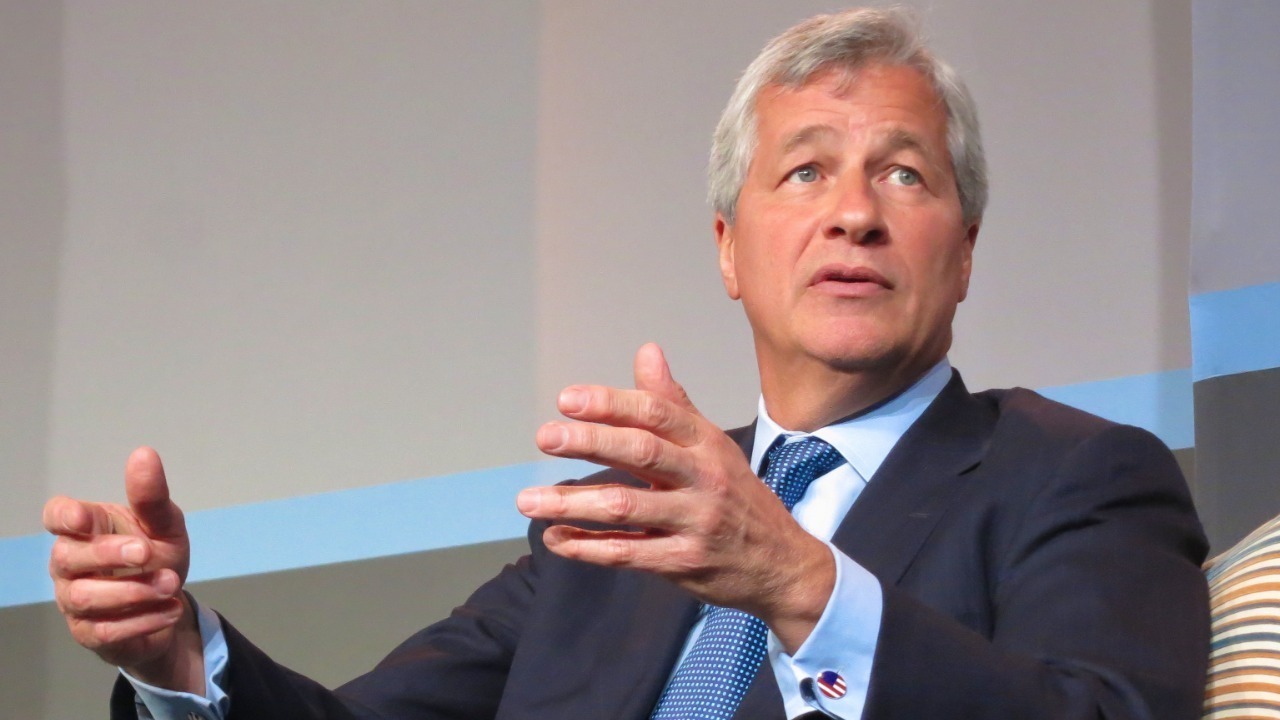
Jamie Dimon is turning a dry number into a flashing red warning light. With U.S. government debt around $38 trillion, the longtime JPMorgan chief is arguing that the bill for years of easy borrowing is getting closer, and that the adjustment will not be gentle. His message is blunt: you cannot borrow forever without eventually forcing painful choices on growth, markets, and ordinary households.
Dimon’s alarm is not about an imminent collapse but about a mounting imbalance that he believes policymakers are still treating as tomorrow’s problem. He has described the debt load as a “big amount of risk” that could shape the fate of the economy, and he is increasingly using earnings calls and television interviews to press Washington to act before markets do it for them.
The $38 trillion problem Dimon says will “bite”
When Jamie Dimon talks about the national balance sheet, he is not speaking in abstractions. He is pointing to a roughly $38 trillion federal debt pile and warning that it will eventually “bite” in the form of higher borrowing costs, weaker growth, or both. In his latest comments, he framed the issue as a simple constraint: “You can’t just keep borrowing money endlessly,” a line that captures his view that the current trajectory is unsustainable even if the economy still looks solid on the surface.
Dimon has stressed that the risk is cumulative rather than sudden, describing the debt as “just a big amount of risk that may or may not be determining the fate of the economy,” a concern he raised while discussing earnings with Jan. Even as he remains optimistic about innovation and corporate profits, he has paired that optimism with a repeated reminder that the federal government is testing the limits of investor patience, telling another interviewer that while the billionaire banker is bullish on artificial intelligence, he does not believe Washington can “keep on borrowing money endlessly.”
Short‑term strength, long‑term strain
Part of what makes Dimon’s warning uncomfortable is that it collides with a still‑resilient economy. He has acknowledged that over the next “six months and nine months and even a year, it’s pretty positive,” noting that “consumers have money” and “there’s still jobs,” a near‑term backdrop he described when he said Call it a solid outlook. That contrast, a healthy present paired with a deteriorating fiscal future, is exactly why he argues the country should act now rather than wait for stress to appear.
Dimon has been clear that the main cloud over his macroeconomic view is government debt, which he sees as the key vulnerability in an otherwise steady picture. He has described the national balance sheet as the biggest hazard on the horizon, grouping it with other risks in a discussion of bank earnings that highlighted how Jan financial statements can reveal deeper economic dynamics. In that framing, today’s strong consumer spending and low unemployment are not a rebuttal to his debt concerns, they are the window of opportunity to fix them.
Deficits in boom times and the risk of a market “rebellion”
Dimon’s frustration is sharpened by the fact that Washington is running large deficits even in good times. He has contrasted today’s fiscal stance with earlier eras, pointing out that “back then the deficit during a recession, you do spend money in a recession, was 4% or 5%,” while “today it’s 6.5% in a boom time,” a figure he cited when he warned of a potential global market backlash against U.S. policy. That specific reference to Back then versus now is central to his argument that the country is burning through fiscal space that should be reserved for downturns.
He has warned that if lawmakers do not adjust course, global investors could eventually stage what he has called a “rebellion,” demanding higher yields or shifting away from Treasurys in ways that would ripple through mortgages, corporate loans, and state budgets. That concern is not theoretical for someone who oversees one of the world’s largest bond dealers. Dimon has said that the combination of rising debt and persistent deficits is a “real problem” for bond markets, echoing his view that Debt and deficits are a big problem that should be addressed in an orderly way rather than through a sudden repricing forced by markets.
From bond desks to Washington: a years‑long drumbeat
Dimon’s latest comments are not a one‑off outburst, they are the continuation of a campaign he has been waging from trading floors to Capitol Hill. In interviews that aired over the summer, he repeated his warnings about the bond market, telling Dimon watchers on Fox Business Network that rising debt had added to market uncertainty. He has framed the issue as one of basic risk management, arguing that it is better to adjust gradually than to wait for a shock that forces abrupt spending cuts or tax hikes.
His message has also been directed squarely at political leaders. As president, Trump has touted an efficiency drive in Washington, promising to trim waste and streamline agencies, but Dimon has said that is not enough to avert a debt crisis. He has argued that “like most problems, it’s better to deal with it than let it happen,” a line he delivered while warning that the United States is already carrying a high debt‑to‑GDP ratio, a concern he raised when Jamie Dimon was asked about Trump’s plans. In a separate discussion of the same theme, he pointed to debt‑to‑GDP levels “around 113% and so on” as evidence that incremental tweaks will not be enough, a warning he repeated when Jamie Dimon was pressed on whether faster growth alone could solve the problem.
What a delayed response could mean for households and markets
Dimon’s focus on timing is rooted in how he thinks a delayed response would filter down to ordinary Americans. If investors eventually demand higher compensation to hold U.S. debt, the first impact would be on Treasury yields, but the chain reaction would not stop there. Higher government borrowing costs would feed into mortgage rates, auto loans, and credit card APRs, tightening financial conditions even if the Federal Reserve wanted to keep policy supportive. That is why he has described the debt as a macroeconomic hazard even while acknowledging that “consumers have money” and “there’s still jobs,” a tension he highlighted when he said Consumers are in decent shape for now.
There are already signs of fiscal strain in the official numbers. In its most recent budget review, the Congressional Budget Office reported that the deficit totaled $601 billion in the first quarter of the fiscal year, a figure that underscored how far spending and revenues are out of balance even before any new recession or emergency. That $601 billion shortfall, flagged in a report released on a Friday by the Congressional Budget Office, is part of the backdrop for Dimon’s insistence that the current path will eventually force sharper trade‑offs between interest costs and other priorities like defense, Social Security, and infrastructure.
More From TheDailyOverview

Alex is the strategic mind behind The Daily Overview, guiding its mission to uncover the forces shaping modern wealth. With a background in market analysis and a track record of building digital-first businesses, he leads the publication with a focus on clarity, depth, and forward-looking insight. Alex oversees editorial direction, growth strategy, and the development of new content verticals that help readers identify opportunity in an ever-evolving financial landscape. His leadership emphasizes disciplined thinking, high standards, and a commitment to making sophisticated financial ideas accessible to a broad audience.

