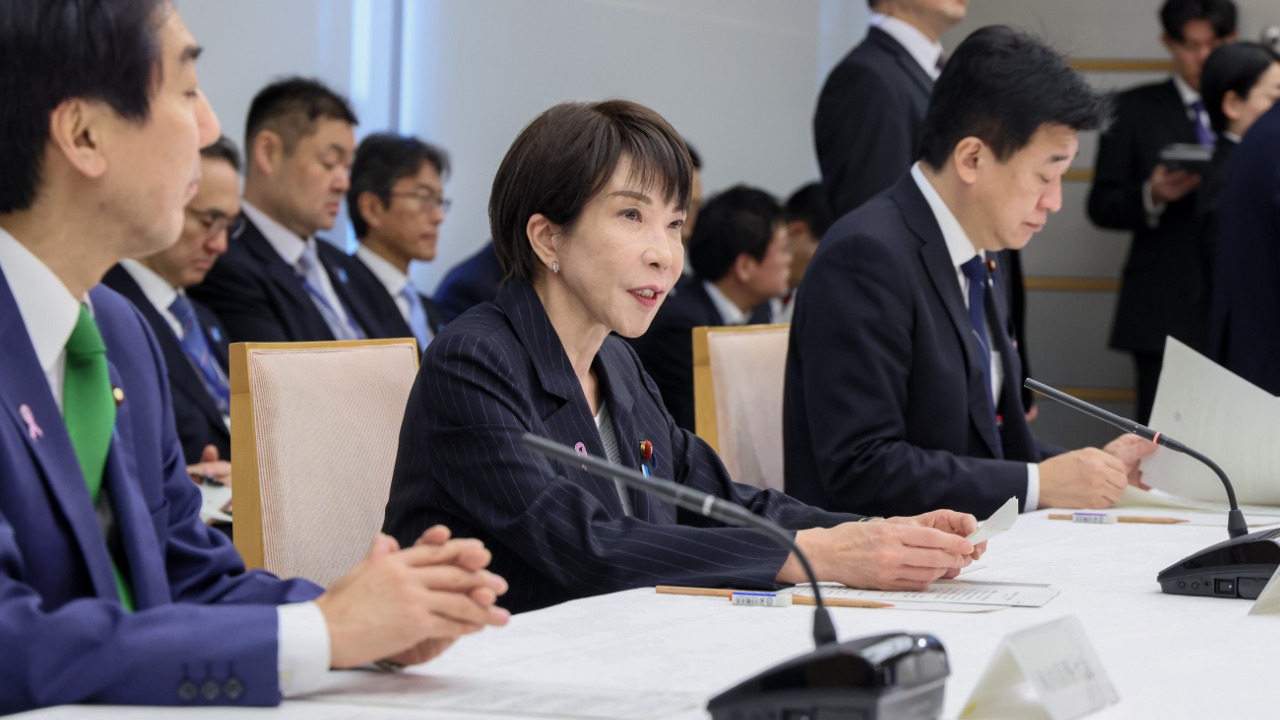
Japan has signed off on its largest spending blueprint on record, a plan worth roughly $785 billion that aims to support growth, bolster defense and cushion households from persistent price pressures. The package, built around a 122.3 trillion yen general account, comes with a promise from leaders in Tokyo that the era of unchecked borrowing is over and that fiscal discipline will tighten even as the state spends more.
That tension between scale and restraint is the defining feature of the new plan. I see a government trying to reconcile three competing imperatives at once: sustaining a fragile recovery, responding to a harsher security environment and convincing investors that the world’s most indebted major economy can still keep its finances under control.
The record 122.3 trillion yen plan and what it covers
The centerpiece of the new framework is a draft budget of 122.3 trillion yen, which officials value at about $785 billion, a level that sets a new high for Japanese public spending. The figure, which I have seen described as part of a “Japan Approves Record” package, reflects not only higher defense outlays but also rising social security costs and measures to ease the impact of inflation on households and businesses. The scale of the plan underscores how far the state has moved from the austerity instincts that dominated policy debates a decade ago, even as leaders now talk more loudly about restraint.
Within that 122.3 trillion yen envelope, the government is trying to balance near term support with longer term investment. Spending lines include welfare and pensions for an aging population, subsidies and tax breaks to encourage corporate wage hikes, and funding to manage the transition as Japan exits ultra loose monetary policy and adjusts to higher borrowing costs. The headline numbers, including the 122.3 trillion total and the roughly $785 billion valuation, have been detailed in reports on the new Budget, which frame the package as both a political statement and an economic tool.
Takaichi’s Cabinet and the politics of “record” spending
The political imprint on this plan is unmistakable. Japanese Prime Minister Sanae Takaichi has made clear that her administration is willing to use fiscal policy aggressively, and her Cabinet has now approved a record 122.3 trillion yen package that one report values at $783 billion. I read that decision as a bet that front loaded spending can secure growth and wage gains strong enough to stabilize public finances later, even if it means accepting criticism that the government is leaning too heavily on the state. The fact that the Cabinet is openly embracing the “record” label suggests a leadership that wants to be seen as decisive rather than timid.
At the same time, the politics are not simply about size, but about priorities. The Cabinet’s plan channels more than US$57 billion into specific initiatives, including defense and economic security, while still trying to reassure voters that social programs will not be squeezed. The description of how Japanese Prime Minister Sanae Takaichi and her Cabinet structured the package highlights a leadership that is acutely aware of both geopolitical risks and domestic inequality, and is trying to craft a narrative that record spending is a necessary response rather than a reckless choice.
Defense buildup: 58 billion dollars amid regional tension
Nowhere is the shift in Japan’s posture more visible than in defense. The cabinet has backed a record military allocation that exceeds 58 billion dollars, a figure that would have been politically unthinkable not long ago. I see this as part of a broader redefinition of Japan’s security role in a region marked by missile tests, maritime disputes and intensifying rivalry among major powers. The focus on missile, drone and maritime capabilities signals a move away from a purely defensive stance toward a more flexible deterrent posture.
The 58 billion dollar figure is not just a budget line, it is a statement about how Tokyo reads its neighborhood. Reports on the new defense plan describe how Japan’s cabinet has endorsed a record 58bn defence budget amid regional tension, while another account notes that the cabinet on a Friday in Dec approved a defense plan exceeding 58 billion dollars for the coming year. By tying these moves to specific capabilities and timelines, the government is signaling to both allies and rivals that Japan is prepared to shoulder a larger share of its own security burden.
The political choreography around this decision has also been carefully managed. The description of how the cabinet acted on a Friday in Dec to approve a record defense budget that exceeds 58 billion dollars shows a leadership keen to present the move as a considered response rather than a sudden lurch. In my view, the way the plan has been framed in coverage of the record defense budget suggests that officials are trying to normalize higher military spending as part of a broader national strategy, not a one off reaction to any single event.
Debt discipline and the world’s heaviest public burden
For all the focus on new spending, the other half of the story is the promise of restraint. Japan already carries the highest public debt load in the developed world, with liabilities that exceed its annual economic output by a wide margin. That reality is why the government has been at pains to stress that the new budget will rely less on fresh borrowing than previous plans, and that the share of spending financed by debt will edge lower even as the overall envelope grows. I read this as an attempt to reassure bond markets that the state is not losing control of its trajectory.
One account of the new framework notes that the cabinet has approved a record 122.3 trillion yen budget amid rising debt costs and a defense buildup, and cites concerns from Kyodo News that Takaichi’s aggressive spending policy could weigh on a resource poor country that depends heavily on imports. That same report on the rising debt costs underscores how higher interest rates are already feeding through to the budget. In that context, the government’s insistence that it is trimming its reliance on bond issuance is less a talking point than a necessity if it wants to avoid a damaging loss of confidence.
How Tokyo defines “fiscal discipline” in a record year
What stands out to me is how Japanese leaders are redefining fiscal discipline for an era of permanent pressure. Instead of promising outright cuts, the Japan PM is emphasizing a slower pace of debt accumulation and a more targeted use of borrowing. Officials in TOKYO have stressed that the next year’s budget will lean less on new bond sales, even as it maintains support for households and invests in defense and growth. In practice, that means squeezing efficiencies from existing programs and counting on nominal growth and inflation to do part of the consolidation work.
The language around this shift is revealing. One report describes how the Japan PM, speaking in Dec, framed the new plan as a balance between fiscal discipline and the need to sustain the recovery, highlighting lower debt reliance as a key achievement. That framing, captured in coverage of how Japan PM stresses discipline, suggests that in Tokyo’s view, responsibility now means bending the curve rather than slamming on the brakes. It is a pragmatic definition that reflects the political and economic constraints of managing the world’s largest public debt stock.
Inflation, households and the search for sustainable growth
Behind the headline numbers, the budget is also a response to a new inflation reality. After decades of deflationary pressure, Japan is now grappling with price increases that are eroding real wages and straining household budgets. The government has acknowledged that inflation continues to affect consumers and has built in measures to cushion that impact, from subsidies to offset energy and food costs to incentives for companies that raise pay. I see these steps as an attempt to turn what could be a purely negative shock into a catalyst for long overdue wage growth.
Reports on the new plan note that the Japanese government approved the record package in Dec as inflation continues to affect the economy, and that the cabinet is trying to use fiscal tools to smooth the transition as monetary policy normalizes. One account of how the Japanese government approved the budget highlights the dual aim of shielding vulnerable groups while nudging firms toward higher wages. Another report on how Japan’s cabinet has vowed to keep its finances sustainable as it exits ultra loose policy underlines the stakes: if the combination of fiscal and monetary shifts can deliver stable inflation with rising incomes, the record 122.3 trillion yen plan may be remembered less for its size than for the turning point it represents.
More From TheDailyOverview

Grant Mercer covers market dynamics, business trends, and the economic forces driving growth across industries. His analysis connects macro movements with real-world implications for investors, entrepreneurs, and professionals. Through his work at The Daily Overview, Grant helps readers understand how markets function and where opportunities may emerge.

