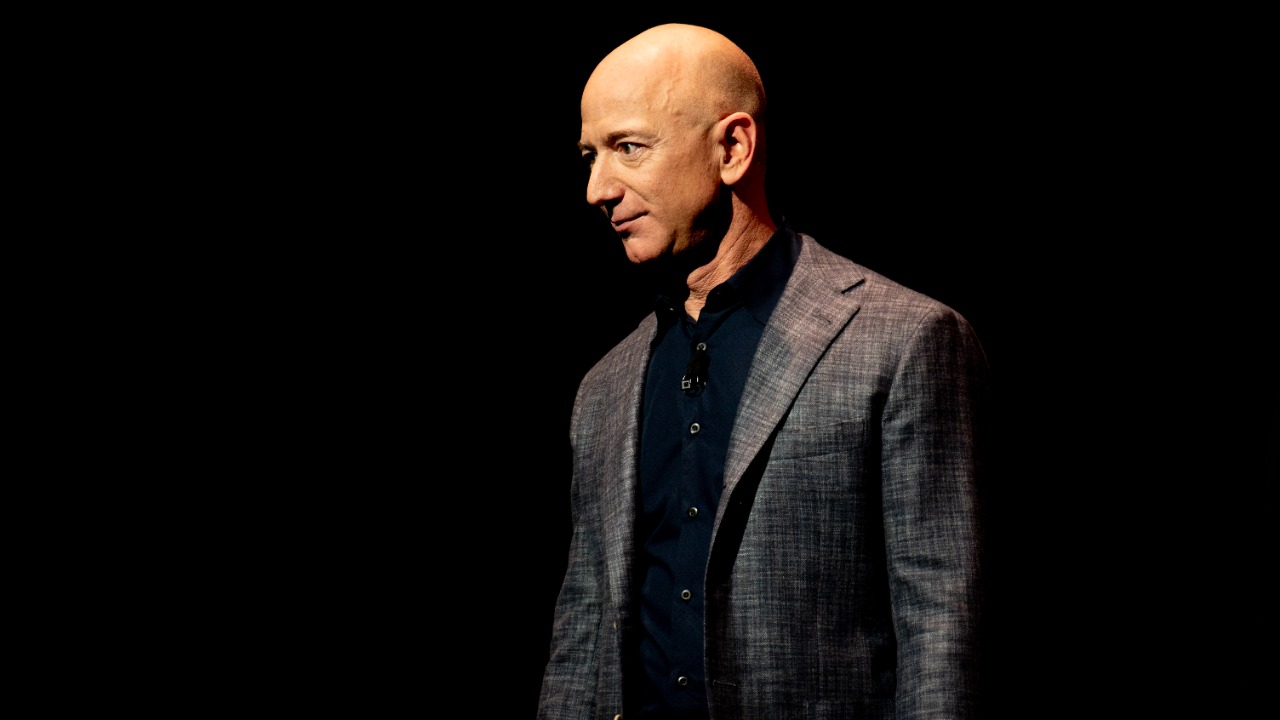
Jeff Bezos is used to seeing his name attached to bold claims, but even by his standards, the line about “real world jobs like McDonalds or Palantir” crossed a line. When prediction platform Polymarket circulated that quote as if it came from him, the Amazon founder and executive chairman did something he rarely does: he publicly accused a tech company of simply making it up. The clash has turned a single viral post into a broader test of how far hype-driven markets can go before they lose the trust they depend on.
At stake is more than one billionaire’s reputation. Polymarket and similar platforms pitch themselves as neutral barometers of public expectations, yet they increasingly rely on social media theatrics to drive attention and trading volume. When those theatrics spill into fabricated quotes, the line between information and promotion blurs, and the fallout can spread well beyond crypto circles.
How a fake Bezos quote went viral
The controversy began when Polymarket’s official account on X shared a supposed Bezos remark about “real world jobs like McDonalds or Palantir,” tying it to a market about politics and tech employment. According to reporting on the incident, the platform presented the line as if Jeff Bezos had actually said it, even though there was no underlying interview, transcript, or video to support the wording. Coverage of the episode notes that the post was seen by Millions Saw Polymarket, amplifying a quote that had never actually left Bezos’s mouth.
The Amazon founder, who is also identified as executive chairman in the reporting, did not let the misattribution slide. After the post spread, he publicly denounced it on X, making clear that the words were not his and that he had not given any “exit interview” that could be twisted into that phrasing. One detailed account of the backlash explains that the false quote about Jeff Bezos and the framing of “Here’s What Really Happened” became a flashpoint for critics who already worried about how prediction markets handle truth, especially when the subject is a high profile figure like The Amazon founder.
Bezos’s unusually sharp public rebuke
Jeff Bezos is not known for live tweeting every slight, which made his response all the more striking. In a post replying directly to the platform’s account, he wrote, “@Polymarket Nope. Not sure why polymarket made this up,” punctuating the message with a shrug emoji to underline his disbelief. That short message, preserved in the thread where he addressed Polymarket Nope, was enough to reframe the narrative from a quirky quote about jobs to a direct allegation of fabrication.
In follow up coverage, Bezos is described as “setting the record straight” and explicitly accusing the prediction platform of making up the “McDonalds or Palantir” line. One report notes that he took to X on a Thursday and called out the company by name, a rare instance of the Amazon founder using his personal account to challenge a specific startup’s behavior. That same reporting emphasizes that Jeff Bezos, who has often spoken favorably about innovation and even companies like Palantir, was not objecting to the companies mentioned so much as to the idea that Polymarket of all platforms could simply invent his words.
Crypto and prediction markets close ranks
Once Bezos weighed in, the reaction inside the crypto ecosystem was swift. A post from a verified industry account described how, on January 23, the prediction market platform Polymarket faced widespread criticism for publishing what was described as false information through its official X feed. That summary, shared by Binance News, framed the uproar as a reputational crisis for a company that relies on traders believing its markets are grounded in reality rather than marketing spin.
Other observers in the digital asset world echoed that concern. One detailed analysis from a trading platform’s news arm described how the Prediction market platform Polymarket is under fire for allegedly spreading false information via its official X account, and how the backlash has intensified scrutiny on how such platforms moderate their own feeds. That piece, which highlighted the growing regulatory and public attention on prediction markets, warned that the more Polymarket leans on provocative content to drive engagement, the more it risks undermining the very trust that makes its markets useful, a point underscored by the critical coverage from Prediction market commentators.
Media critics question Polymarket’s information hygiene
The backlash did not come only from traders and token holders. Media and social analysts seized on the episode as a case study in how quickly misinformation can be laundered through “fun” financial products. One widely shared feed noted that, on January 23, the prediction market platform Polymarket faced intense scrutiny from both the crypto and media community after its official X account pushed out the false Bezos quote. That same feed highlighted how journalist Rachel Karten raised questions about Polymarket’s credibility and its content moderation mechanisms, arguing that a platform that profits from public attention has a heightened responsibility to avoid fabricating quotes, a critique captured in the coverage from On January.
From my perspective, that criticism goes to the heart of Polymarket’s business model. The company pitches its markets as a way to crowdsource probabilities on everything from elections to corporate moves, yet here it used its most visible channel to circulate a line that even a basic fact check would have flagged as unverified. A separate write up on the same theme described how the Prediction market platform Polymarket is now being cited as an example of why oversight of such platforms is increasingly scrutinized, with regulators and journalists alike asking whether the incentives to go viral are overpowering the incentives to be accurate, a tension that the analysis at Polymarket made explicit.
What the episode reveals about tech, truth, and influence
For Bezos, the incident was a reminder that even the most powerful executives can see their words invented in real time, then monetized by third parties. His X post, “Nope. Not sure why polymarket made this up,” which appears in the thread at Not, was a concise attempt to reclaim his voice in a medium that often rewards whoever speaks first, not whoever speaks accurately. It also showed that when a figure of his stature calls out a platform directly, the resulting attention can be as punishing as any formal sanction.
The broader tech world, meanwhile, is still digesting what this means for the future of prediction markets. Detailed coverage of the dispute notes that Jeff Bezos has, at times, spoken favorably about innovative companies like Palantir, yet he drew a bright line at having his name attached to a quote he never gave, a nuance captured in the reporting that examined how Polymarket attributed a statement to him in order to juice engagement around its markets tied to politics and the President, a dynamic explored in the analysis of Jeff Bezos and the platform’s tactics.
There is also a political subtext. One account of the online reaction pointed out that the fake quote circulated alongside commentary about how “it is possible to, you know, be the President,” a line associated with Elon Musk’s own social media musings about politics and work, which appeared in the same context as the fabricated Bezos remark in coverage of the dispute at Thursday and. When a single viral post can mash together invented quotes, real executives, and live political markets, the line between entertainment and influence becomes thin. That is why industry observers, from Binance News to independent feeds like Verified Binance and social analysts tracking Polymarket, are treating the Bezos episode not as a one off gaffe but as a warning shot about what happens when markets built on information start playing fast and loose with the truth.
More From TheDailyOverview
*This article was researched with the help of AI, with human editors creating the final content.

Grant Mercer covers market dynamics, business trends, and the economic forces driving growth across industries. His analysis connects macro movements with real-world implications for investors, entrepreneurs, and professionals. Through his work at The Daily Overview, Grant helps readers understand how markets function and where opportunities may emerge.

