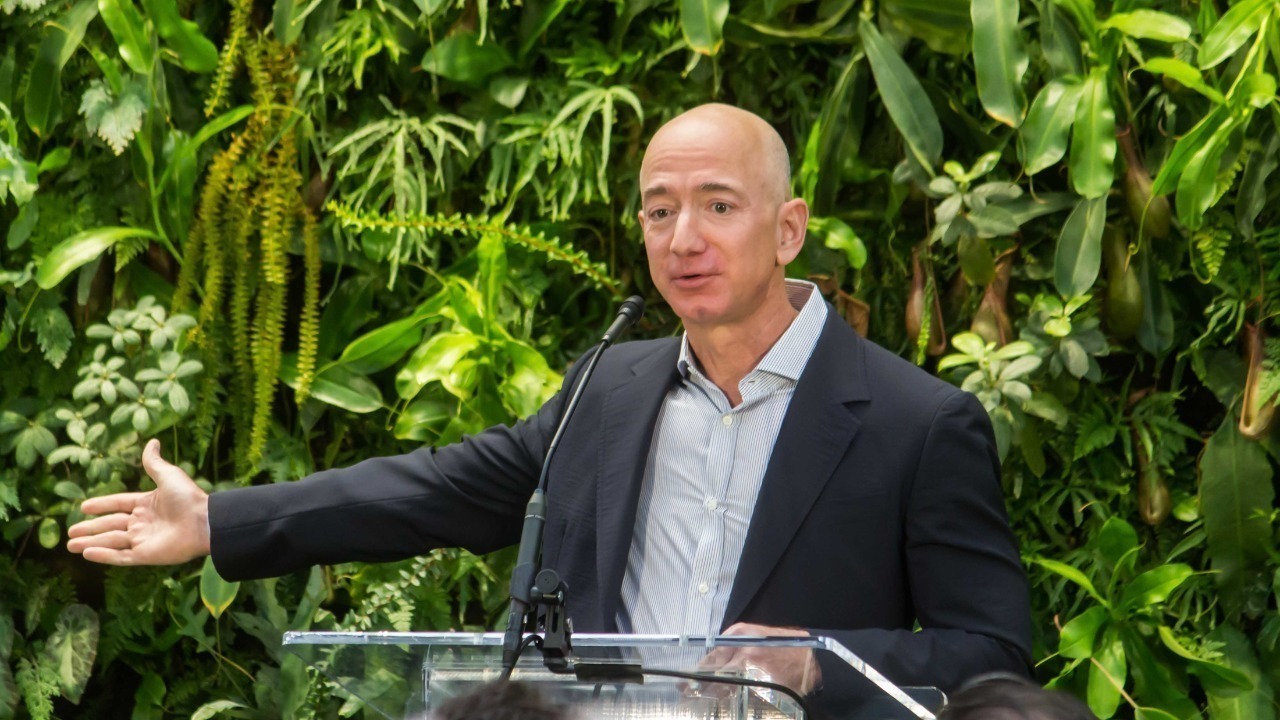
Jeff Bezos once treated the Washington Post as a prestige project and a civic statement, a place where his fortune could underwrite aggressive reporting and digital reinvention. A decade later, the paper is being gutted on his orders, its newsroom demoralized and its public mission subordinated to cost cutting and political calculation. The recent wave of layoffs and strategic reversals suggests that for Bezos, the Post has shifted from prized asset to expendable line item.
The question now is not whether the Washington Post can survive another rough year, but whether it can still function as an independent counterweight in a country where the sitting president openly attacks the press. The pattern of decisions coming out of Bezos’s orbit points to an owner who no longer sees unique value in owning a national newspaper, beyond whatever leverage it offers in his dealings with power.
The brutal reset inside a 150-year-old newsroom
The clearest sign of Bezos’s diminished attachment is the scale and style of the layoffs he just ordered. The Washington Post moved on a Wednesday, at the behest of owner Jeff Bezos, to cut deeply into its staff, a decision described internally as painful but necessary. Reporting on the cuts describes hundreds of jobs being eliminated, with some employees learning their fate in hurried meetings and others left in limbo, still employed as of now but unsure how long their roles will exist.
The Washington Post on that same Wednesday announced sweeping layoffs that affected nearly every corner of the 150-year-old newsroom, including the paper’s sports desk and other core coverage areas. One account noted that the company cast the move as modernization, a way to reposition the Post in a tougher media market, even as staffers described it as a shock that cut into the institution’s muscle. The Post is casting these current layoffs as modernizing the paper, and the paper has lost money in recent years, but The Post is also confronting a crisis of confidence in its owner.
From civic trophy to cost center
When Bezos bought the paper, he was widely seen as a savior, bringing deep pockets and a tech mindset to a legacy brand. Many years ago, he seemed to be deriving a great deal of satisfaction from this, and Many accounts describe a close bond between The Washington Pos leadership and their new owner. There was a period when digital subscriptions surged, the newsroom expanded, and Bezos’s willingness to invest was treated as proof that a billionaire could strengthen, rather than hollow out, a major news organization.
That story line has curdled. At this point, it is hard to believe that Jeff Bezos has any real ambition to grow the Washington Post into a larger business, according to one detailed analysis of his recent decisions. Instead, critics argue that he is trying to squeeze out short term profits, or at least stem losses, even if that means shrinking the newsroom and abandoning the expansive public service mission that once defined the paper. Another commentator put it more bluntly, writing that Here is the irony, by getting more involved in decision making at the Post, business genius Jeff Bezos has worsened its long term fortunes and driven away subscribers who have cancelled their Post subscriptions.
Fear of Trump and the politics of retreat
Inside the newsroom and across media circles, a second theory has taken hold, one that has less to do with spreadsheets and more to do with the occupant of the White House. The Washington Post’s former executive editor, Martin Baron, has suggested that Bezos’s fear of Trump helped motivate the layoffs, a claim that has electrified an already anxious staff. However, However, Baron told NOW that Wednesday’s announcement represents a turn back, suggesting that this newspaper, with a deep history of challenging presidents, is now pulling its punches.
Other reporting has traced how Bezos’s relationship with Trump has evolved from confrontation to accommodation. Bezos got a full embrace from the Trump administration when Bezos welcomed Pete Hegseth to Blue Origin to discuss the space company’s work, a visit that symbolized a thaw between a president who once railed against “Amazon Washington Post” and the billionaire who owns both Amazon and the paper. In that context, the layoffs look less like a neutral business decision and more like a strategic retreat from the kind of aggressive reporting that once made the Post a particular target for Trump.
Subscribers, staff, and the unraveling of trust
The damage from Bezos’s choices is not theoretical. Almost immediately after one controversial shift in editorial direction, that led to a huge negative impact to the paper’s bottom line because more than 250,000 existing subscribers cancelled. Almost as soon as those cancellations hit, the newsroom was told to brace for cuts, and staffers began to see a direct line between editorial compromises, reader anger, and the erosion of their own job security. The layoffs impacted hundreds of the outlet’s employees and are leading to widespread criticism of Bezos, who bought the Post in 2013 and is now being tagged in #SaveThePost campaigns.
Inside the building, the sense of betrayal is sharpened by the contrast between Bezos’s rhetoric and his actions. If Jeff Bezos is no longer willing to invest in the mission that has defined this paper for generations and serve the millions who rely on it, one union statement argued, then staff and readers will have to fight to If Jeff Bezos will not. Another critic wrote that what we are seeing is not a mistake but a deliberate strategy, and that What is happening, unlike the Graham family in the late 199, is an owner who is not trying to balance civic duty with profit but simply exiting the civic role altogether. Unlike the Graham, this argument goes, Bezos is not especially interested in aligning the paper with its readers’ needs.
Bezos’s public defense and the gap with reality
In public, Bezos insists that nothing fundamental has changed. He has defended the paper’s editorial independence, including its endorsement decisions in high stakes races, arguing that the Post must be free to back candidates even when that angers some readers or politicians. In one recent exchange, he pushed back on criticism of a controversial endorsement, telling critics that the paper’s board, not its owner, makes those calls, a stance reflected in his comments about endorsement decisions. His allies also point to his long term approach at Amazon, where Bezos, Jeff Bezos, has often prioritized market share and innovation over short term profit, as evidence that he is capable of thinking beyond the next quarter.
Yet the pattern at the Post looks less like the patient strategy that built Amazon and more like a hurried retrenchment. The layoffs were ordered after a period in which the company reported financial struggles and leadership churn, and they coincided with a new editor in chief, Matt Murray, being installed with a mandate to stabilize the business. Coverage of that transition has noted that Matt Murray was presented as a steady hand, but staffers quickly realized his tenure would begin with mass job cuts. By Brian Stelter reported that Bezos remains committed to the Washington Post amid brutal layoffs, and that newsroom leaders are choosing to hope that he will recommit to growth, even as the numbers and the mood tell a different story, a tension captured in coverage that highlighted how the story was Bylined and framed.
More From The Daily Overview
*This article was researched with the help of AI, with human editors creating the final content.

Grant Mercer covers market dynamics, business trends, and the economic forces driving growth across industries. His analysis connects macro movements with real-world implications for investors, entrepreneurs, and professionals. Through his work at The Daily Overview, Grant helps readers understand how markets function and where opportunities may emerge.

