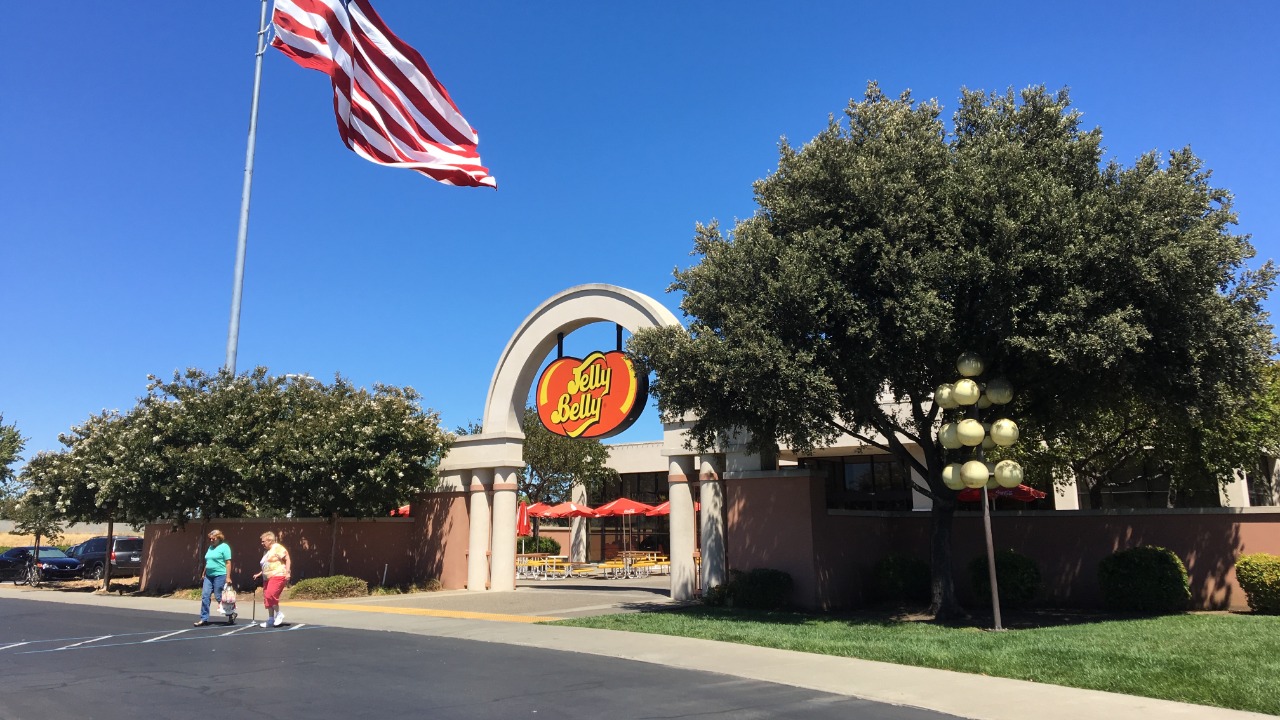
Ferrara Candy Company, the parent of the Jelly Belly brand, is shutting down corporate operations at its Fairfield, California, headquarters and permanently eliminating 69 jobs, according to a WARN notice and local reporting. The cuts target white-collar roles at the Fairfield campus while manufacturing continues on-site.
69 Corporate Jobs Gone From Fairfield
The layoffs were disclosed through a filing under California’s WARN requirements, which require employers to give advance notice before mass separations. The notice specifies that Ferrara is ceasing what it calls “corporate-commercial operations” at One Jelly Belly Lane and nearby North Watney Way addresses in Fairfield, Solano County. The 69 positions being eliminated are large enough to trigger California’s WARN disclosure requirements.
The affected roles span marketing, finance, IT, and customer service, the kinds of office functions that give a corporate campus its identity beyond the factory floor. Those administrative functions are being consolidated into Ferrara’s headquarters outside California, shifting oversight away from the Fairfield site where Jelly Belly built its brand over decades. Workers have been invited to stay on until their specific positions close, but the trajectory is clear: the Fairfield campus will retain its production lines while losing the professional staff that once surrounded them.
Manufacturing Stays, But the Campus Shrinks
Ferrara has been careful to frame the move as a restructuring rather than an abandonment. In a statement provided to local media, the company described its Fairfield operations as a “critical part of Ferrara’s operations,” language designed to reassure the community and the remaining workforce that the factory itself is not on the chopping block. The company emphasized that only corporate positions are affected and that production will remain in Fairfield, with Jelly Belly candies still manufactured at the long-standing plant.
That distinction matters, but it also obscures a real loss. A campus that once housed both the people who made the candy and the people who marketed, financed, and supported the business is becoming a production-only site. When corporate functions leave, the decision-making center of gravity shifts with them. Local suppliers, restaurants, and service businesses that depended on office workers spending money near the headquarters lose that traffic. The 69 jobs being cut are not assembly-line positions; they are the mid-career professional roles that anchor household incomes in a mid-sized city like Fairfield.
What the WARN Filing Reveals
California’s WARN Act exists precisely for situations like this. Under California’s WARN framework described by the Employment Development Department, covered employers must provide advance notice for qualifying layoffs and closures, and the notices generally include details such as separation dates, affected job titles and headcounts, whether the action is permanent, and the work sites involved. The filing gives displaced workers and local agencies time to prepare, connecting affected employees with retraining and unemployment resources through the state’s Employment Development Department portal, which coordinates rapid response services when mass layoffs occur.
The Jelly Belly filing checks every box of a permanent, site-level corporate shutdown rather than a temporary reduction. The notice names multiple addresses, covers a broad range of job functions, and does not suggest the positions will return. For the 69 workers involved, the filing is not just a legal formality. It starts the clock on layoff timelines and access to state rapid-response and job-search resources, though no public details about Ferrara’s specific severance, relocation assistance, or opportunities to transfer to other company locations have surfaced in available reporting. What is clear is that, once the separation dates arrive, the corporate side of Jelly Belly’s Fairfield presence will effectively disappear.
Solano County Absorbs Another Hit
Jelly Belly is not just any employer in Fairfield. The brand’s name is literally the street address of its headquarters, and the factory tour has long been a regional attraction drawing families and school field trips. Losing 69 corporate jobs from a company so deeply identified with the city carries weight beyond the raw headcount. For Solano County, which sits between the San Francisco Bay Area’s high-cost urban core and the agricultural Central Valley, professional-class employment at legacy manufacturers has been a stabilizing force. Each position that migrates out of state chips away at that base and nudges Fairfield closer to being a pure bedroom community and logistics hub rather than a diversified employment center.
The broader pattern here deserves scrutiny. When a national parent company acquires a regional brand, consolidation of back-office functions into a single headquarters is a predictable next step. It cuts overhead, centralizes management, and simplifies reporting lines. But the communities that built those brands bear the cost. Fairfield keeps the factory noise and the truck traffic; it loses the marketing team, the finance department, and the customer service center. The dozens of staff now facing layoffs are living proof of that tradeoff, and their departure could ripple through small businesses and other parts of the local economy in ways that rarely show up in corporate earnings reports.
A Familiar Playbook With Local Consequences
Most national coverage of corporate layoffs focuses on headline numbers at tech giants or financial firms. A 69-person cut at a candy company in a mid-sized California city barely registers on that scale. But that framing misses the point. In a community the size of Fairfield, losing several dozen office jobs in a single action can have an outsized effect on the local economy. These are not abstract economic indicators; they translate directly into fewer families spending at local businesses, fewer sponsorships for youth sports and community events, and fewer reasons for skilled professionals to build long-term careers in the area.
What makes this case worth watching is not the size of the layoff but the mechanism behind it. Ferrara did not announce a shutdown of manufacturing; instead, it is realigning the brand’s support functions into its corporate structure, a move that reduces Fairfield’s corporate job base. The factory will keep running, and Jelly Belly jelly beans will keep rolling off the line in Fairfield. The people who once handled the planning, promotion, and coordination behind that production will increasingly be based somewhere else, reinforcing a familiar pattern in which decisions are made far from the communities that feel their impact most directly.
More From The Daily Overview
*This article was researched with the help of AI, with human editors creating the final content.

Grant Mercer covers market dynamics, business trends, and the economic forces driving growth across industries. His analysis connects macro movements with real-world implications for investors, entrepreneurs, and professionals. Through his work at The Daily Overview, Grant helps readers understand how markets function and where opportunities may emerge.