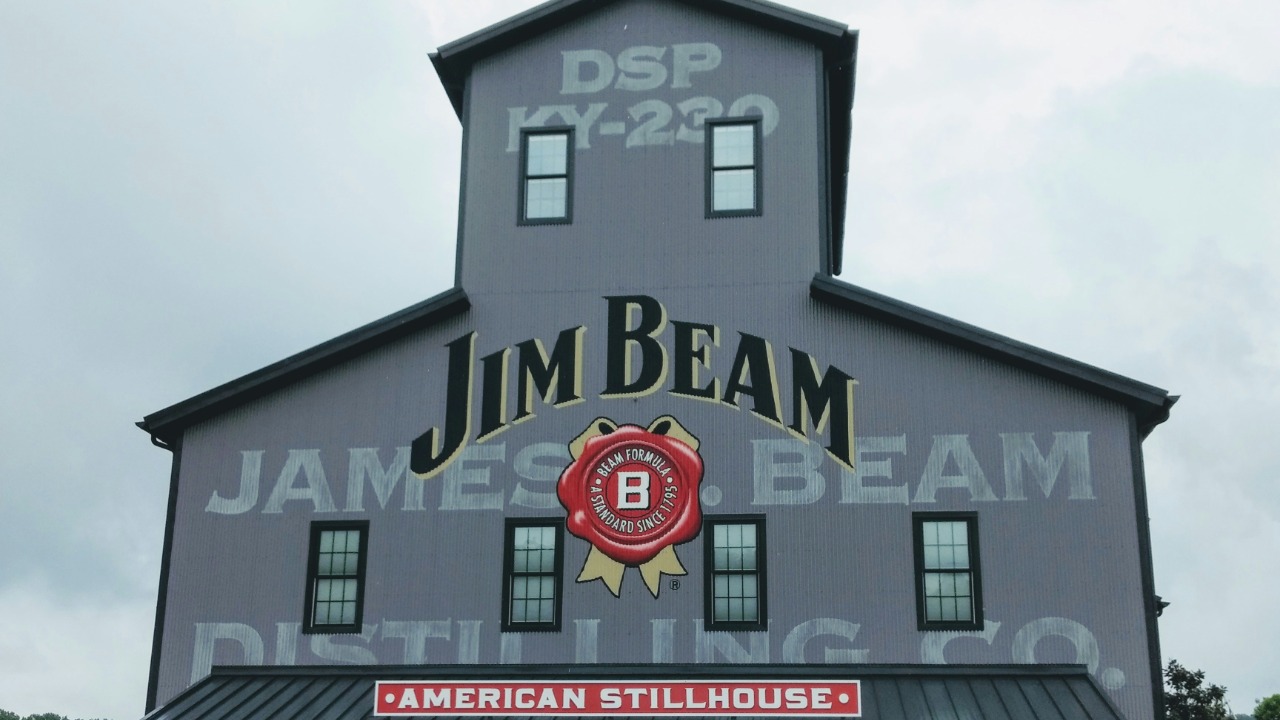
Jim Beam is preparing to turn off the stills at its flagship Kentucky distillery for a full year, a dramatic move that underscores how President Donald Trump’s trade wars have collided with a global bourbon glut. The company’s decision to halt whiskey production in Clermont in 2026 ties together swelling inventories, retaliatory tariffs on American spirits, and mounting pressure on one of Kentucky’s most famous exports.
What might look like a routine supply adjustment is, in reality, a high-profile casualty of a policy fight that has pushed whiskey to the front lines of international trade. As tariffs squeeze overseas demand and barrels pile up in warehouses, Jim Beam’s pause has become a test case for how far the industry can bend before long-term damage sets in.
Inside Jim Beam’s unprecedented production pause
Jim Beam, one of the largest makers of American whiskey globally, has told workers it will stop distilling bourbon at its main Clermont campus for all of 2026, effectively mothballing the heart of its operation while keeping the brand alive through existing stock. The company has framed the move as a way to “adjust production to meet future demand,” a signal that its warehouses are already brimming with aging barrels and that it can keep bottles on shelves without fresh spirit flowing through the stills. Reporting on the plan makes clear that the shutdown is focused on distillation, not the entire business, and that Jim Beam remains one of Kentucky’s biggest bourbon producers even as it hits pause on new whiskey.
Even with the stills going quiet, the Clermont site will not go dark. Executives have said that bottling and warehousing will continue at the facility, and that the company will keep distilling at its smaller Freddie Booker Noe craft distillery in the same area to maintain a pipeline of innovation and specialty releases. State filings and local coverage describe how the pause is structured to comply with Kentucky’s WARN Act while limiting layoffs, and they note that the brand’s presence on the Kentucky Bourbon Trail will persist despite the production halt. One detailed account of the plan explains that Jim Beam will stop making new whiskey in Cle but keep its visitor experience open, while another notes that bottling and warehousing will still operate even as distillation pauses.
Tariffs, Trump, and the global squeeze on American whiskey
The production halt cannot be understood without looking at how President Donald Trump’s trade policies have reshaped the market for American spirits. When the administration imposed sweeping tariffs on imported steel and aluminum, key trading partners responded in kind, targeting iconic U.S. products that would generate political pressure at home. Canada and Mexico were among the countries that ordered retaliatory tariffs on American goods, and bourbon quickly found itself in the crosshairs as a symbol of U.S. culture and a major export from a politically sensitive state. Trade analysts have pointed out that these measures were designed to hit industries with strong regional identities, and Kentucky whiskey fit that bill perfectly.
For distillers, the impact has been direct and painful. Reports on the sector describe how whiskey and spirit makers have faced new levies in Europe and other markets, raising prices for overseas consumers and encouraging some buyers to switch to non-American alternatives. One trade-focused account notes that Canada and Mexico moved quickly to tax American whiskey after the metal tariffs, while another explains that alcohol on the front lines of the trade war has become a case study in how targeted retaliation can ripple through a regional economy. Coverage of Jim Beam’s decision explicitly links the pause to President Donald Trump’s trade wars, with one report stating that the company is halting production at its main distillery for a year as tariffs and boycotts hit sales of American liquor in key markets.
From boom to glut: bourbon inventories and tax pressure
Even before tariffs bit into exports, Kentucky’s bourbon industry was grappling with the consequences of its own success. Years of aggressive expansion, fueled by surging global demand and the cachet of small-batch and single-barrel releases, led distillers to fill warehouses with record numbers of barrels. By October, the Kentucky Distillers’ Association trade body was warning that the amount of bourbon in storage across the state had climbed to unprecedented levels, with inventories up more than 60% through October compared with earlier baselines. That surge left producers exposed when international sales slowed, since whiskey already laid down cannot be easily redirected or repurposed.
The financial strain is magnified by Kentucky’s unique tax structure, which charges levies on aging barrels year after year. Distillers are effectively paying rent to the state on every cask that sits in a rickhouse, a burden that becomes heavier when those barrels are not moving quickly into bottles and onto store shelves. Reports on the Jim Beam pause highlight how this tax regime has turned high inventories into a costly liability, with one account noting that distillers in Kentucky are paying for the privilege of holding stock that tariffs have made harder to sell. Another report cites the Kentucky Distillers’ Association, or KDA, detailing how much bourbon is now sitting in warehouses and how exposed producers are to any sustained downturn in exports.
How Jim Beam is managing the shutdown on the ground
On the shop floor in Clermont, the pause is being managed as a controlled slowdown rather than a full retreat. Company statements describe a plan in which distillation at the main campus stops on January 1, 2026, while bottling lines, warehousing operations, and tourism continue to run. Local coverage notes that Jim Beam has been in talks with the workers’ union about how to handle staffing during the hiatus, and that the company is trying to redeploy some employees to other parts of the business. One detailed report explains that Jim Beam pauses production at its main distillery while keeping bottling and warehousing in Clermont, and another notes that the company has told employees it will continue to distill at its Freddie Booker Noe craft facility even as the big stills go quiet.
State and local filings provide a more granular look at the transition. According to one account, the company’s WARN notice outlines how many positions could be affected and over what timeline, while emphasizing that some roles will be preserved through reassignment or natural attrition. Another report, citing the state’s WARN Act online database, says that whiskey production will stop in 2026 at a major Kentucky distillery but that bottling and warehousing will continue as normal in Clermont. A separate piece notes that Jim Beam is pausing distillation at its main Clermont campus while keeping other operations running, and another local report from CLERMONT, Ky., explains that Jim Beam plans to pause production at its main distillery but will maintain barrels, warehouses, and tourism according to a state trade group.
Trade wars, boycotts, and what comes next for bourbon
Beyond the factory gates, Jim Beam’s decision reflects a broader backlash against American liquor in some overseas markets. Reports on the pause describe how tariffs have been compounded by consumer boycotts, with some drinkers in Europe and elsewhere choosing to avoid U.S. brands in protest of President Donald Trump’s policies. One account of the shutdown notes that Jim Beam is shutting down production at its Clermont distillery as Trump’s tariffs and calls to boycott American liquor hit sales, while another bulletin describes the company as an iconic Kentucky whiskey brand and a major American producer that will halt production at a key distillery. A separate report by Rhian Lubin emphasizes that Jim Beam, one of Kentucky’s biggest bourbon producers, is shutting down bourbon production for a year as Trump’s trade wars hit sales of American whiskey globally.
Industry watchers are now asking whether Jim Beam is an outlier or a harbinger. Some analysts argue that the brand’s deep inventories and global reach give it more flexibility than smaller rivals, allowing it to ride out a year without new distillate while still meeting demand. Others warn that if tariffs and boycotts persist, more producers could be forced into similar pauses or even permanent closures. One detailed business report by Osmond Chia notes that the maker of the popular Jim Beam bourbon is halting production at its main distillery for a year and staying in talks with the workers’ union, while another account from CNN, published December 21, 2025 3:43 PM and written by By Auzinea Bacon, CNN, describes how a popular Kentucky bourbon maker is pausing production as inventories rise and explicitly ties the move to President Donald Trump’s trade wars. For now, the barrels already resting in Kentucky’s rickhouses will keep Jim Beam on store shelves, but the longer the policy fight drags on, the harder it will be for the industry to pretend this is just a temporary hiccup.
More From TheDailyOverview

Grant Mercer covers market dynamics, business trends, and the economic forces driving growth across industries. His analysis connects macro movements with real-world implications for investors, entrepreneurs, and professionals. Through his work at The Daily Overview, Grant helps readers understand how markets function and where opportunities may emerge.

