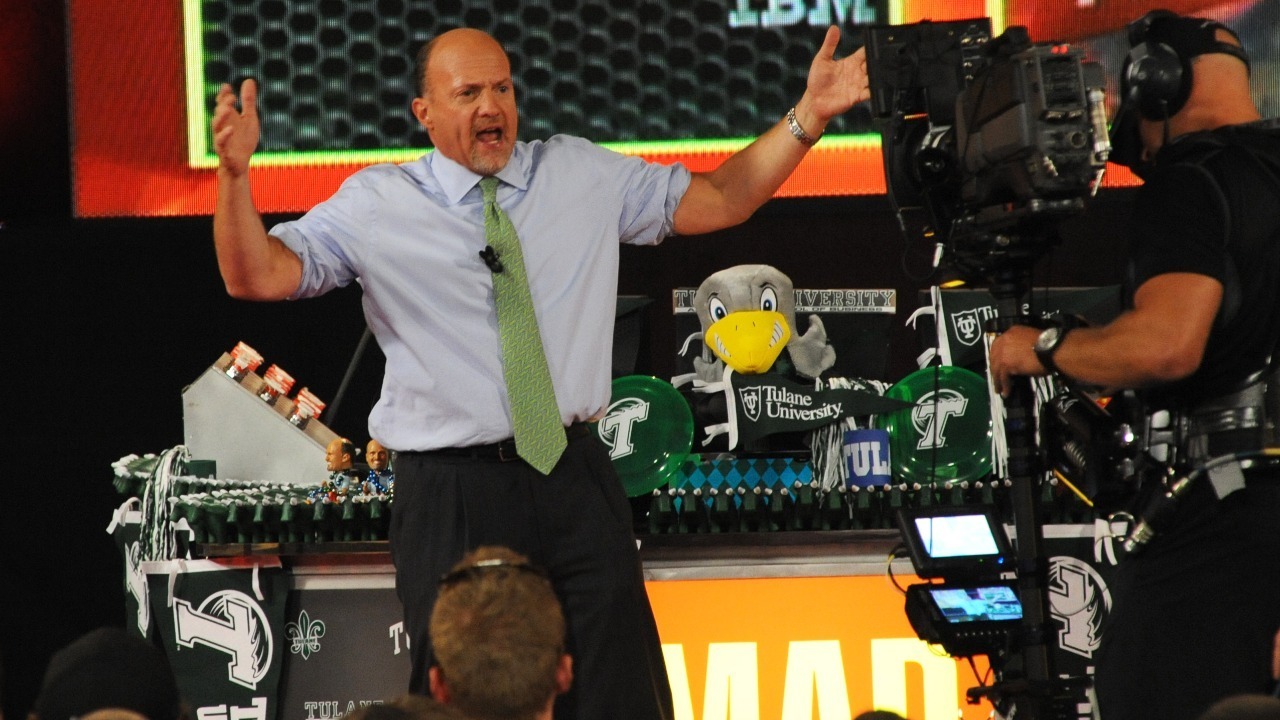
Jim Cramer is telling investors that the easy money phase of this bull run is over and that unrealized gains are not a safety net for what could come next. His message is blunt: take profits in the most speculative corners of your portfolio now so you are not forced to sell quality holdings in a rougher 2026. I see his warning as less about calling a top and more about urging investors to trade euphoria for discipline before the cycle turns.
At the same time, he is not arguing for a wholesale exit from stocks. Cramer is drawing a sharp line between frothy names with little in the way of earnings and durable companies that can ride out volatility, and he is already pointing to specific examples on both sides of that divide. That nuance matters for anyone trying to turn a television soundbite into a practical strategy.
Speculation is back, and Cramer wants investors to hit the brakes
Cramer has been increasingly vocal that wild speculation has crept back into the Market, particularly in smaller companies that trade more on hype than on cash flow. He has described a wave of buying in stocks with minimal earnings or sales, a pattern that, in his view, rarely ends well for latecomers to the rally, and he has urged investors to look at these speculative positions first when deciding where to trim. In his recent comments, stocks that check all those boxes are exactly where he believes investors should be taking money off the table.
He has framed this not as a vague concern but as a clear pattern he says he has watched unfold early in 2026, telling viewers that he has seen a troubling amount of speculative buying and that it is time to act before sentiment shifts. As the host of Mad Money, Jim Cramer has warned that this kind of environment tends to punish investors who confuse paper gains with permanent wealth, and he has been explicit that the time to reduce risk is while markets are still receptive to sellers.
From “buy today” to “get ready for a bad open”: a fast mood swing
What makes Cramer’s current alarm so striking is how quickly his tone has shifted from opportunistic to defensive as conditions evolved. Jim Cramer recently urged investors to “buy today” amid choppy trading, arguing that short term fear was creating entry points for those willing to step in while others hesitated, a stance he highlighted in a Jim Cramer social media post that drew 9.5K interactions and emphasized that the opposite outcome could occur if investors stayed frozen. That message was rooted in the idea that volatility alone is not a reason to flee equities when fundamentals still support selective buying.
Yet in another clip, labeled “Jim Cramer Warns,” he told followers to “Get Ready For” a “Bad” “Market Open,” signaling that he expected a rough start to trading and that those who had not already de-risked might be in for a shock. That warning, shared in an Jim Cramer Warns reel, underscored how quickly sentiment can sour when speculative excess meets disappointing news, and it set the stage for his broader argument that investors should not wait for a gap down to start taking profits.
Why unrealized gains “do not count” in a frothy 2026
Cramer has been unusually blunt about the psychology of investors who watch their portfolios balloon and then assume those numbers are locked in. In a recent Quick Read summary of his comments, Jim Cramer suggested that unrealized gains on high flying stocks do not “count,” stressing that it is wise to take profits because only cash in hand can cushion a future downturn. He has argued that investors sometimes need to “ring the register” on winners, especially when valuations have run far ahead of underlying business performance, a point he tied directly to the need to book profits sometimes in order to protect real money, as highlighted in a Quick Read recap.
He has also reminded viewers that as the host of his long running show, he has seen many cycles where investors refused to sell until it was too late, and he has been clear that his current warning is shaped by that history. In the days following January 20, he reiterated that point, emphasizing that the combination of speculative fervor and complacency can be toxic and that investors should not assume that a strong start to the year guarantees a smooth path into 2026, a message captured in another Cramer summary.
Target the froth, not the foundations
Despite the urgency of his tone, Cramer has been explicit that he is not calling for investors to dump every stock they own. In another Quick Read of his remarks, Jim Cramer stressed there is “No Need to Sell Everything,” instead urging people to focus on trimming positions in companies that have soared without much in the way of sales or profits. He has pointed to a Market Speculation Wave in which some names with minimal earnings or sales have become market darlings, and he has argued that these are the holdings most likely to implode if sentiment turns, a view echoed in an Quick Read that quoted his warning about companies with little in the way of sales.
That distinction is central to his broader thesis that investors should be rotating out of the most speculative names and into sturdier franchises rather than abandoning equities altogether. A detailed analysis of this Market Speculation Wave underscored how his alarm is rooted in specific patterns of trading, not a blanket bearish call, and it supports his argument that investors should be surgical in deciding what to sell.
Why Corning is a hold while other winners are sells
Cramer’s stance on Corning, Inc shows how he is separating durable stories from names he thinks have run too far. By Syeda Seirut Javed reported that GLW, the ticker for Corning Incorporated, is one of the stocks Jim Cramer has singled out as a hold rather than a sell, even as he urges profit taking elsewhere. In that coverage, Corning, Inc was described as a key supplier for technologies that sit inside the chip, and Cramer’s view was that its role in the semiconductor ecosystem gives it staying power that many high flying AI names lack, a nuance captured in the Syeda Seirut Javed report that noted the time 12:43 PM alongside GLW and the NYSE listing.
Another breakdown of his thinking put it more broadly, stating that while analysts acknowledge the potential of GLW as an investment, they believe certain AI stocks offer greater upside potential and carry different risk profiles, which is why Cramer is comfortable telling investors to hold Corning while trimming more speculative AI names. That perspective, which framed GLW as a solid but not necessarily best short term AI stock, was laid out in a separate While analysis that aligned with his broader message: protect core holdings with real businesses, and harvest gains where the story is mostly momentum.
More From TheDailyOverview
*This article was researched with the help of AI, with human editors creating the final content.

Grant Mercer covers market dynamics, business trends, and the economic forces driving growth across industries. His analysis connects macro movements with real-world implications for investors, entrepreneurs, and professionals. Through his work at The Daily Overview, Grant helps readers understand how markets function and where opportunities may emerge.