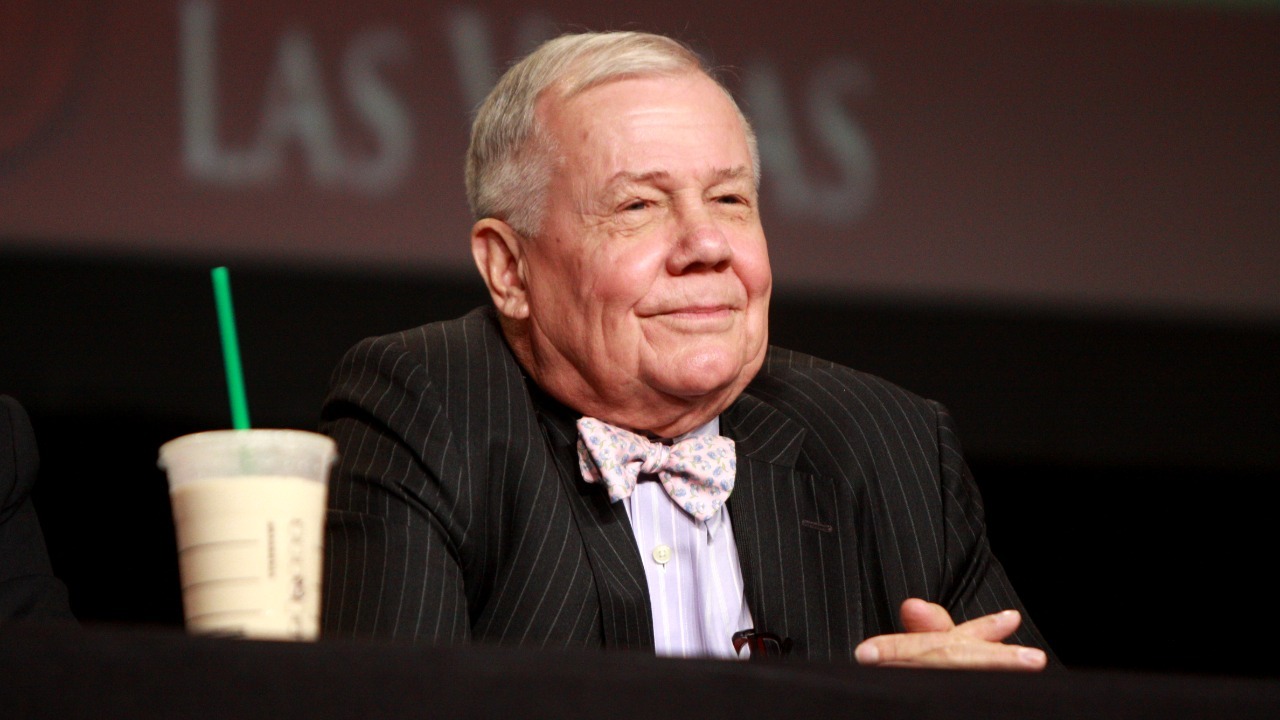
Veteran investor Jim Rogers is walking away from United States equities, arguing that the country’s debt burden and policy complacency have pushed markets into dangerous territory. His warning is blunt: the Federal Reserve can cut rates and pump liquidity, but in his view that will not be enough to shield investors from the consequences of years of excess.
I see his move as more than a personal portfolio tweak. It is a high profile vote of no confidence in Washington’s ability to manage risk, and a reminder that even in a world of instant bailouts and emergency facilities, there are limits to what central banks can do when the largest debtor nation on earth keeps piling on obligations.
Rogers’ dramatic exit from US stocks
Jim Rogers has not just trimmed around the edges of his portfolio, he has said he “sold all my U.S. stocks” and is openly questioning policymakers with the line, “Can’t they read in Washington?” as he points to the sheer size of America’s obligations and calls the United States “the largest debtor nation” in history. His argument is that the political class in Washington is ignoring basic arithmetic, and that the combination of swelling deficits and aggressive monetary easing has turned the equity boom into a party he has “seen” before and does not want to attend again, a stance he has linked to his broader concern about how Dec decisions on spending and debt will eventually collide with market reality in America.
In a separate conversation he underscored that he “sold all my U.S. stocks recently” because he has watched similar cycles end badly, stressing that investors should not assume the Fed will always be able to “save us” when the bill for years of leverage finally comes due. That skepticism about the Fed’s power to backstop every downturn runs through his comments on the current environment, where he contrasts the optimism he sees in equity prices with his own view that the risks embedded in the system are rising, a gap that he believes will eventually close in painful fashion for those still heavily exposed to U.S. shares, even as Dec market rallies tempt traders to stay all in on the Fed narrative that lower rates can keep the party going.
Why he thinks the next crisis will be worse
Rogers has been clear that his decision is not about a minor correction but about what he sees as the potential for the most severe downturn of his lifetime in the United States, a view that has been echoed in commentary noting that Rogers has emptied all US stocks and warned that the next economic crisis in the country could be the harshest he has ever seen. In that context, a post highlighting how Aug market exuberance can mask structural fragilities credits Rogers with arguing that the combination of record debt, speculative behavior and faith in policy rescue has set the stage for a shock that will surprise investors who have only known a world of quick recoveries and central bank support, a pattern he believes cannot continue indefinitely without consequence for the real economy.
Earlier this year, in an interview recapped by Johnny Hopkins May, he urged investors to “be very, very careful,” recalling past episodes where companies and even countries looked strong right before they failed and noting that some institutions that seemed rock solid ended up “bankrupt” later. In that same discussion with Wealthion, Jim Rogers tied his caution to a long running build up of debt and what he described as dangerous complacency among investors who assume that because the last crisis was contained, the next one will be too, a mindset he believes ignores how each cycle tends to be different and how leverage can make outcomes worse when sentiment finally turns.
From US stocks to dollars, metals and real assets
Rogers has not simply gone to cash and waited on the sidelines, he has shifted toward what he sees as safer havens and tangible assets that can survive a storm in financial markets. In a detailed breakdown of where he is investing, he explained that he has “sold all my US stocks and bet on US dollar as safe haven,” positioning the greenback as a place to hide while he waits for better valuations and clearer policy signals, and that move was framed as part of a broader strategy by Jim Rogers, the Veteran commodity investor, to stay cautious about potential market corrections while still keeping dry powder in a currency he believes will benefit if global stress rises.
His preference for hard assets is just as strong. In his recent interview with Wealthion, Jim Rogers reiterated that he owns “a lot of gold and silver,” describing precious metals as a hedge against both inflation and financial system stress that could emerge if central banks push too far. A separate analysis of his views on safe havens noted that Rogers has long been a proponent of precious metals as a hedge against uncertainty and that he continues to hold gold and silver, a stance that aligns with his broader skepticism about paper promises and his belief that, in a serious crisis, investors will gravitate toward assets that do not depend on any single government or central bank to retain value.
Macro backdrop: volatility, rate cuts and a “overdue” recession
Rogers’ retreat from U.S. equities is unfolding against a backdrop of choppy trading and aggressive central bank action that, on the surface, seems to contradict his pessimism. A recent market update noted that U.S. stocks were volatile, with sectors like financials up 1.86% even as investors digested limited Economic data due to a government shutdown, a reminder that price swings can coexist with underlying uncertainty about growth and policy. On another day of intense trading, Markets News coverage of a major Fed decision described how Stocks Surge After Federal Reserve Cuts Interest Rates and how the Dow jumped after adding nearly 500 points, with the S&P 500 Just Misses New Closing highs, a move that reinforced the belief among many traders that lower rates can keep pushing risk assets higher.
Rogers sees those rallies as part of the problem rather than a sign of health. In an earlier warning about the broader cycle, he argued that The US economy is “overdue” for additional economic issues and is on the verge of experiencing an “extremely bad” recession, a phrase that captures his conviction that years of stimulus and debt accumulation have only delayed, not eliminated, the adjustment. Another profile of his outlook noted that Looking at how much stronger the U.S. dollar is to the rest of the world, Rogers has chosen to hold cash and even highlighted the need for more farmland to feed itself as populations grow, underscoring his tilt toward real assets and essential industries that can weather a downturn better than highly leveraged growth stories tied to cheap money.
How he says investors can protect themselves
For individual investors, the most practical part of Rogers’ message is his focus on risk management rather than market timing. In a detailed breakdown of his latest comments, he emphasized that he is not feeling optimistic, far from it, and urged readers to think about How to protect yourself by diversifying away from crowded trades, trimming exposure to overvalued sectors and holding assets that can survive a policy mistake, a theme that runs through his critique of those who assume the Fed can always engineer a soft landing. That same analysis, written by Jing Pan and illustrated with VCG images, noted that he is not telling everyone to panic but to recognize that the Fed cannot “save us” from the consequences of structural imbalances, a point he drives home by contrasting his own caution with the enthusiasm he sees in parts of the market.
His own portfolio offers a template. A detailed Q&A titled Where is Jim Rogers investing? explained that he has sold U.S. stocks and is using the US dollar as a safe haven while he waits for better opportunities, and it described how Jim Rogers, the Veteran investor and renowned commodity specialist, is combining that cash position with exposure to real assets and selective bets in markets he believes are less stretched. Another recap of his stance on equities stressed that Yet investing legend Jim Rogers is not feeling optimistic about current valuations and that he has already sold his US stock holdings because he has “seen this party” before, a phrase that captures his belief that the combination of easy money, high prices and faith in central banks has created a familiar and dangerous setup that calls for discipline rather than complacency.
Why his warning matters even as markets cheer
It is tempting to dismiss a high profile bear when indexes are near records, but Rogers’ track record and the specificity of his concerns make his warning hard to ignore. In a widely shared video clip titled “I Sold Almost All My Stocks,” he explained that he “sold all my US stocks recently” because he has “seen this party before,” elaborating in that YouTube interview that he would rather miss the final leg of a rally than be caught when sentiment turns and liquidity dries up. His comments echo a broader unease among seasoned investors who remember past cycles where euphoria masked fragility, and they stand in contrast to the confidence of traders who see every dip as a buying opportunity because the Fed has stepped in so often in the past.
At the same time, the broader conversation about risk is not limited to Rogers. A separate analysis of market warnings noted that Rogers has long been a proponent of precious metals as a hedge and that he continues to hold gold and silver, placing him in a camp of investors who are quietly preparing for turbulence even as headline indexes grind higher. When I weigh his arguments against the backdrop of volatile U.S. stocks, Dec rate cuts and the persistent belief that central banks can always fix things, I see his decision to dump U.S. equities not as an outlier but as a stark reminder that, at some point, fundamentals reassert themselves and even the Fed cannot rewrite the basic math of debt, growth and valuation.
More From TheDailyOverview

Elias Broderick specializes in residential and commercial real estate, with a focus on market cycles, property fundamentals, and investment strategy. His writing translates complex housing and development trends into clear insights for both new and experienced investors. At The Daily Overview, Elias explores how real estate fits into long-term wealth planning.

