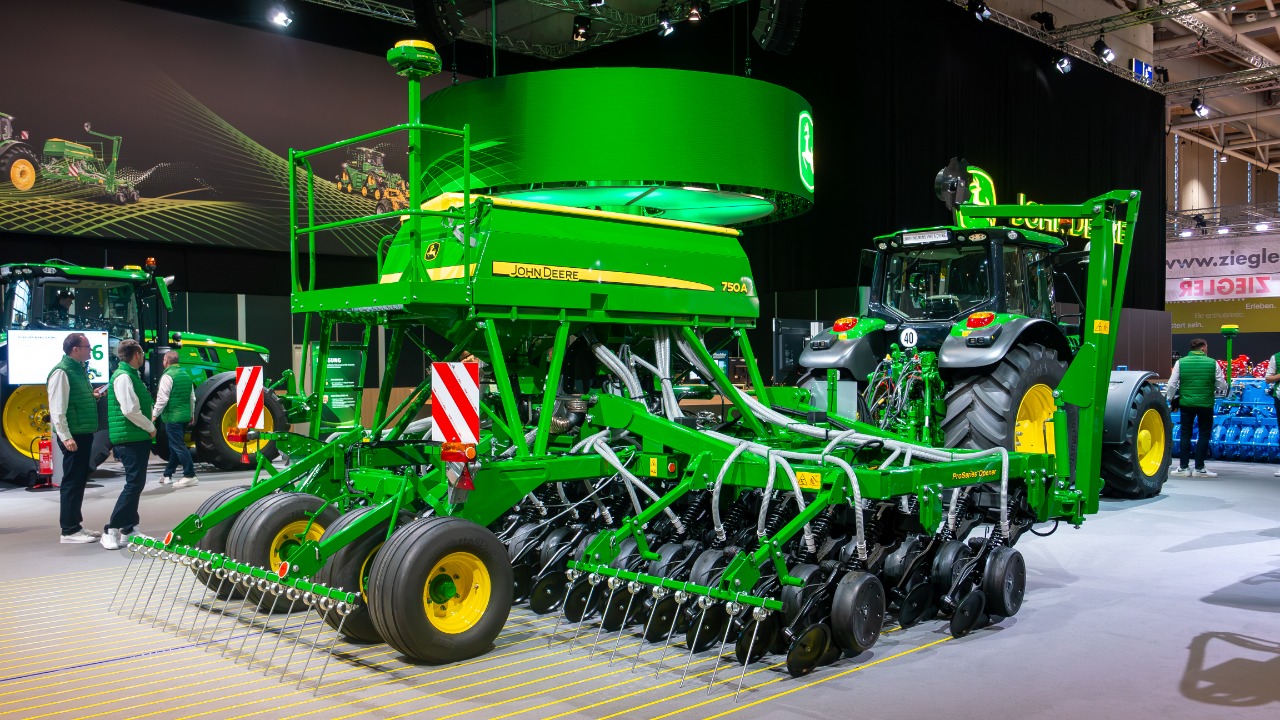
John Deere’s green-and-yellow brand has long been shorthand for Midwestern prosperity, yet the company’s recent decisions tell a harsher story for its Iowa workforce. Over roughly the past decade, the manufacturer has eliminated more than 4,500 jobs in the state while continuing to generate billions in profit and committing $55 million to new production in Mexico. The contrast between shrinking payrolls at home and fresh capital abroad has turned a routine restructuring into a flashpoint over who benefits from Deere’s global strategy.
The company frames its moves as a response to a brutal downturn in farm income and a changing global market, but for laid-off machinists and welders in places like Waterloo, Dubuque, and Ankeny, the logic feels cold. As Deere banks billions in net income and touts its growth plans, the question hanging over Iowa is whether the communities that built the brand are being written out of its future.
How Deere got from Iowa icon to serial job cutter
To understand the scale of the shift, I start with the simple tally: John Deere has cut more than 4,500 jobs in Iowa since 2015, a figure that captures a steady drip of layoffs rather than a single shock event. Earlier this year, nearly 200 John Deere workers in Iowa learned in the first days of Jan that their employment would end, with notices arriving On Jan 3 and adding to a long list of reductions tied to what the company describes as lower demand from farmers and a weaker ag cycle, according to 2015 layoff data. That pattern has turned Iowa from a secure base of middle class manufacturing jobs into a place where Deere workers live with constant uncertainty about the next round of cuts.
The reductions have continued even as the company promotes its heritage and community ties on its own corporate site, where John Deere’s homepage highlights its role in feeding and building the world. The dissonance is sharp: the same brand that markets itself as a pillar of rural America is methodically shrinking its footprint in the state that helped define it. For workers and local officials, the issue is not only the number of jobs lost, but the sense that Iowa has become a cost center to be trimmed rather than a core asset to be protected.
Fresh Iowa layoffs, even as profits stay in the billions
The job losses have not stopped with that 4,500 figure. In Sep, John Deere announced another wave of cuts, telling employees it would lay off 141 people at facilities in Waterloo and Ankeny as the ag economy continued to struggle, a move detailed in John Deere layoff notices. A separate report from DES MOINES, Iowa, confirmed that John Deere is making job cuts at two Iowa locations, again citing 141 affected workers and underscoring how the reductions are spread across multiple plants rather than confined to a single struggling site, as described in DES MOINES, Iowa reports. For employees, the message is clear: no Iowa facility is immune.
These cuts are part of a broader pattern that has seen John Deere announce more layoffs in Iowa as the agricultural economy weighs on equipment demand, a trend highlighted when Follow AGDAILY noted that John Deere was trimming staff in separate divisions from the foundry in Sep, as captured in Follow AGDAILY coverage. At the same time, Deere has been telling investors that it is navigating a difficult ag cycle with disciplined cost control, a phrase that for many Iowa families translates directly into pink slips and shuttered production lines.
Banking billions while warning of a “difficult ag cycle”
What makes the layoffs especially contentious is that they are not happening in a period of corporate distress. Deere & Company reported net income of $1.065 billion for the fourth quarter of its Fiscal Year, according to an earnings release from MOLINE, Illinois that framed the results as resilient despite headwinds, as detailed in $1.065 billion results. For the full year, Deere’s net income reached $5.027, a figure that represents a 29.2% decline year over year but still leaves the company firmly in the black, as shown in Deere net income data.
Company leaders have emphasized that despite a slight rebound in fourth quarter net sales, Deere expects the farm economy to remain under pressure and has lowered its full year net income forecast by about $100 m, a move that came as profits were still down compared to the prior year and shares fell nearly 10%, according to Nov earnings commentary and $100 m forecast cut. Deere & Company ended its fiscal year with a warning that Construction and Forestry sales had fallen to $11,382 billion and operating profit in that segment had shrunk by 49%, even as it projected net income of up to $4,75 billion next year, according to Construction and Forestry figures.
Why Mexico is getting $55 million while Iowa loses work
Against that financial backdrop, Deere’s decision to channel new investment into Mexico has become a lightning rod. The multinational John Deere, described as an American producer of agricultural and construction machinery, has committed $55 million to a new plant in Nuevo Le, Mexico that will focus on construction machinery, with reports noting that the investment is $55 m and that demand in that segment has grown 76 percent since 2022, according to $55 million construction plant. Another account from NUEVO LEON states that NUEVO LEON, John Deere has announced plans to invest $55 m, described as $55 million, in a new manufacturing plant in Nuevo Le, Mexico to produce mini excavators and compact track loaders, underscoring how the company is betting on growth in construction production south of the border, as laid out in NUEVO LEON investment.
Those commitments build on a broader strategy in which John Deere currently has four facilities operating in Mexico in addition to a dedicated export lane at the Laredo, Colom border crossing, a footprint that is set to expand with the new $55 m plant that executives describe as critical for development as a company, according to Mexico facility count. Analysts of the Mexico tractors market note that by shifting production to Mexico, Deere aims to leverage the region’s manufacturing capabilities and reduce costs, a move that also supports its growing market presence in the Americas, as described in Mexico tractors analysis. In other words, the $55 million is not an isolated bet, but part of a deliberate pivot toward lower cost, higher growth production hubs.
Production shifts, tariff threats, and the politics of offshoring
The investment in Mexico is not just about new plants, it is also about moving work that used to be done in Iowa. John Deere is in the process of acquiring land in Ramos, Mexico to build a new facility, and company officials have said that when the plant is complete, it will allow them to shift some production from Dubuque to that new Mexico facility by 2026 in order to cut costs and improve operational efficiencies, according to Dubuque shift plans. A separate report described how new tonight John Deere is moving some production from Iowa to Mexico according to an email sent to Waterlue workers, a message that crystallized local fears that the company’s long term plan is to hollow out its U.S. manufacturing base, as captured in Waterlue email video.
Those moves have drawn political fire. Despite President Donald Trump’s threat to levy a 200% tariff on John Deere products if production shifts to Mexico, the company is expanding operations in Mexico, a tension that surfaced when TOPSHAM, Maine farmers and John Deere representatives spoke out against a global tariff war, as reported by WGME in coverage that noted the 200% figure and the phrase Despite President Donald Trump, John Deere, and Mexico in the same breath, as seen in TOPSHAM, Maine reaction. Another analysis framed Trump’s stance as a bold move, noting that this year, John Deere announced the layoff of hundreds of workers in the American Midwest while seeking lower labor costs and less rigorous regulatory regimes in Mexico, a dynamic that has turned the company into a symbol of the broader offshoring debate, as described in 200% tariff warning.
Deere’s defense: a brutal farm slump and a global growth story
From Deere’s perspective, the restructuring is a rational response to a historic downturn in its core market. Analysts have pointed out that 2023 and 2024 will go down as the two largest declines in net farm income ever, with Just last week, Deere announcing more employee layoffs and citing the severe headwinds faced by farmers and ranchers as a key factor, according to Just last week analysis. Deere has also disputed some state level layoff reports, arguing that it is adjusting capacity to match demand and that its long term health depends on staying profitable through the ag cycle, a point it underscored when it cut its forecast by about $100 while still highlighting its global growth opportunities, as noted in But profits were still down.
At the same time, Deere is keen to present its Mexico expansion as a forward looking bet rather than a simple cost cutting play. One industry write up titled John Deere To Expand Its Business Horizon With a $55m Plant In Mexico described how John Deere To Expand Its Business Horizon With a $55m Plant In Mexico would allow the company to produce wheel loaders and track loaders closer to key markets, with the Editorial Team framing the move as News that reflects how In the last few months, Mexico has been tagged as a strategic hub, as outlined in John Deere To Expand Its Business Horizon With and a companion note that John Deere To Expand Its Business Horizon With a $55m Plant In Mexico has sparked questions about this new investment plan, as captured in Plant In Mexico commentary. Another report from Jun stated that In November, John Deere confirmed its plans to build a $55 m plant in Nuevo Le, Mexico and that production is scheduled to begin in 2026, while also noting that John Deere, an American agricultural, construction, and forestry equipment manufacturer, has denied reports that it is abandoning U.S. workers even as it expands abroad, as detailed in In November confirmation and John Deere, American profile.
The human cost behind the balance sheet
Critics argue that whatever the macroeconomic logic, the human cost of Deere’s strategy is being borne disproportionately by workers in places like Iowa. One analysis noted that Deere’s attempts to justify its ( John Deere ) destruction of thousands of livelihoods are belied by the fact that it generated over $10 billion last fiscal year, a figure that underscores how the company has been highly profitable even as it trims staff, according to Deere’s attempts critique. Another report on John Deere to lay off a further 345 workers, adding to its bloodletting of over 1,500 jobs, framed the cuts as part of a broader pattern in which Deere, John Deere prioritizes shareholder returns over stable employment, a narrative that resonates in communities that have seen generations of families work at the plants.
At the same time, Deere’s own messaging stresses that it is a global company with responsibilities to customers and investors around the world. Its corporate site presents John Deere as a technology driven leader in agriculture and construction, with John Deere’s global brand emphasizing innovation and sustainability rather than the specifics of where jobs are located. Another business focused report noted that John Deere confirms US $55M investment in Mexico plant despite Trump’s threats, quoting Tractor and farm equipment manufacturer executives who argued that the new facility would serve markets across Latin America and the Caribbean, as detailed in $55M investment despite Trump. For Iowa workers watching 4,500 jobs disappear while $55 million flows to Mexico, that global story can feel like a justification for leaving them behind.
Supporting sources: Deere Reports Net Income of $1.065 Billion for Fourth Quarter ….
More From The Daily Overview

Grant Mercer covers market dynamics, business trends, and the economic forces driving growth across industries. His analysis connects macro movements with real-world implications for investors, entrepreneurs, and professionals. Through his work at The Daily Overview, Grant helps readers understand how markets function and where opportunities may emerge.

