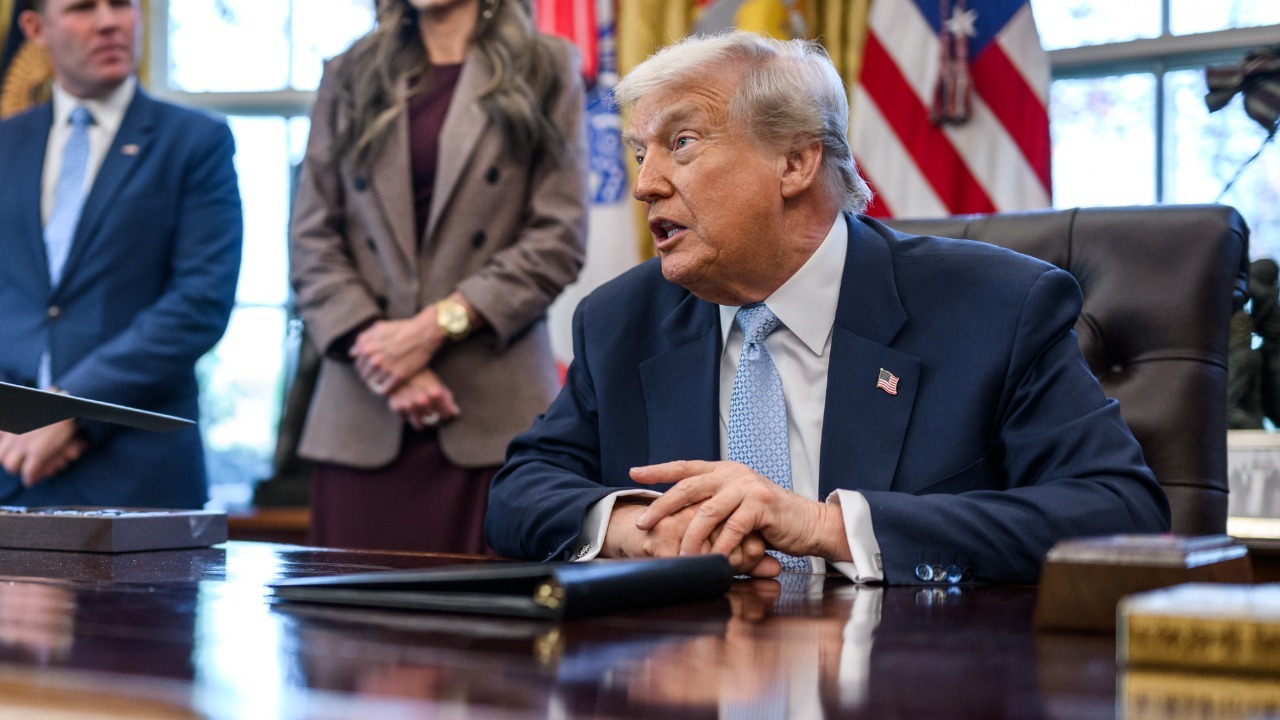
President Donald Trump’s push to cap credit card interest at 10 percent has jolted the country’s biggest lenders, which are now openly weighing whether to mount a coordinated counterattack. At the center of that debate is JPMorgan Chase, whose top finance executive is warning that the proposal could upend profits, reshape consumer credit, and trigger a bruising political and legal fight with the White House. The question is not only whether banks will resist, but how far they are prepared to go to defend one of their most lucrative businesses.
JPMorgan sounds the alarm on Trump’s 10% cap
JPMorgan Chase CFO Jeremy Barnum has emerged as one of the clearest voices signaling that the industry is ready to contest Trump’s plan. In public remarks, the Chase CFO Jeremy Barnum has said “everything is on the table” as banks consider how to respond to President Donald Trump’s demand to limit credit card pricing, including a cap on card late fees, a stance that underscores how seriously the sector views the threat to its revenue streams, according to Key Points. By framing the response in such expansive terms, Barnum is effectively warning that banks could deploy lobbying muscle, litigation, and product changes in a bid to blunt or reshape the policy.
Barnum has also been explicit about the operational shock a hard ceiling would create for a bank the size of Chase. He has argued that if President Donald Trump’s proposed 10 percent credit card interest rate cap were implemented, it would “significantly change” how Chase runs its card business, forcing a rethink of underwriting, rewards, and risk-based pricing that currently allow rates to exceed 20 percent for some borrowers, as detailed in Chase. That kind of shift would not be confined to one institution, and Barnum’s comments are a signal that the largest banks see the proposal as a direct challenge to their current business model rather than a tweak they can quietly absorb.
From pricing squeeze to “war”: why banks feel cornered
Behind the tough rhetoric is a simple math problem for lenders that rely on double digit card APRs to offset losses and fund rewards. Industry executives argue that a 10 percent ceiling would compress margins so sharply that they would have to pull back on lending to riskier customers, raise other fees, or both, a concern that has been echoed in Key Points about how banks might fight the cap. For institutions that have built sprawling card franchises, the fear is that Trump’s plan would turn a profit engine into a break-even line of business, or worse, and that is the kind of existential threat that tends to unify competitors.
JPMorgan’s finance chief has gone further, warning that Trump’s Proposed Credit Card cap could cause people to “lose access to credit” altogether if banks respond by tightening standards or closing accounts that no longer make economic sense at 10 percent, a scenario laid out in detail by the CFO. From the industry’s perspective, that risk to availability is not just a talking point but a potential political lever, since it allows banks to argue that a policy framed as consumer friendly could backfire on the very households Trump says he wants to help.
What a 10% ceiling could mean for cardholders
For consumers already paying APRs that can exceed 20 percent, the idea of a 10 percent cap sounds like an immediate win, but the trade offs are more complicated. Analysts have warned that if banks cannot price for risk above that level, they are likely to cut back on approvals for borrowers with weaker credit scores and steer them toward costlier products such as personal loans or “buy now, pay later” plans, a dynamic explored in detail in credit card analysis. That would leave some households with fewer flexible borrowing options, even if those who keep their cards enjoy lower rates.
There is also a risk that the perks many cardholders now take for granted would shrink or disappear. Millions of Americans have rewards credit cards that offer cash back, points, or travel miles, and experts caution that if interest income is capped, issuers will have less money to subsidize those benefits, a concern spelled out in a “Why This Matters to You” breakdown that notes how rewards could be “diminished” for Millions of Americans. In practice, that could mean fewer 5 percent cash back categories, higher annual fees on premium cards like the Chase Sapphire Reserve or American Express Platinum, and less generous airline mileage bonuses.
Warnings of vanishing accounts and political blowback
Some experts are going further than JPMorgan’s leadership and sketching out a scenario in which the credit card market shrinks dramatically. One analysis has suggested that as many as four fifths of existing credit card accounts could vanish if Trump’s cap is imposed as a hard line, with banks and credit unions choosing to close or not renew large swaths of their portfolios rather than operate them at sharply reduced yields, a stark possibility laid out in a report that notes how Consumer frustration with high rates is colliding with banks’ need to make up for lower interest revenue. That kind of contraction would be unprecedented in modern consumer finance and would almost certainly trigger a fierce blame game between the administration and the industry.
The political risks are not lost on Republicans on Capitol Hill, some of whom are already urging caution. House Speaker Mike Johnson has warned that a 10 percent credit card interest rate cap could have unintended consequences, saying it is something lawmakers need to be “very deliberate about,” a concern captured in reporting that quotes Johnson and notes the byline of Sudiksha Kochi at Johnson. If banks follow through on threats to cut credit lines or close accounts, they will be betting that public anger will land on the White House rather than on them, a gamble that could define the next phase of the fight.
The broader payments ecosystem braces for impact
The shock waves from a 10 percent ceiling would not stop at the banks’ balance sheets. Payments specialists warn that a cap could reduce lending volume and card spending, which in turn would hit the broader ecosystem of processors, merchants, and networks that depend on swipe fees, an effect mapped out in a “How Trump” analysis that highlights Key risks for the industry. Lower credit availability could mean fewer big ticket purchases on cards, from used cars to home appliances, and a shift toward debit or cash that would alter how retailers manage checkout and loyalty programs.
Markets are already trying to price in those possibilities, even though the proposal targets bank interest income rather than network fees. A recent equity analysis noted that the 10 percent cap panic has triggered a sell off in Visa and Mastercard shares, even though the measure is aimed at banks and not at Visa and Mastercard’s core transaction fees, a distinction that has been emphasized in a breakdown of Visa and Master. The reaction underscores how intertwined the system has become, with any threat to card lending reverberating through everything from tap to pay terminals to airline mileage programs.
More From TheDailyOverview

Silas Redman writes about the structure of modern banking, financial regulations, and the rules that govern money movement. His work examines how institutions, policies, and compliance frameworks affect individuals and businesses alike. At The Daily Overview, Silas aims to help readers better understand the systems operating behind everyday financial decisions.

