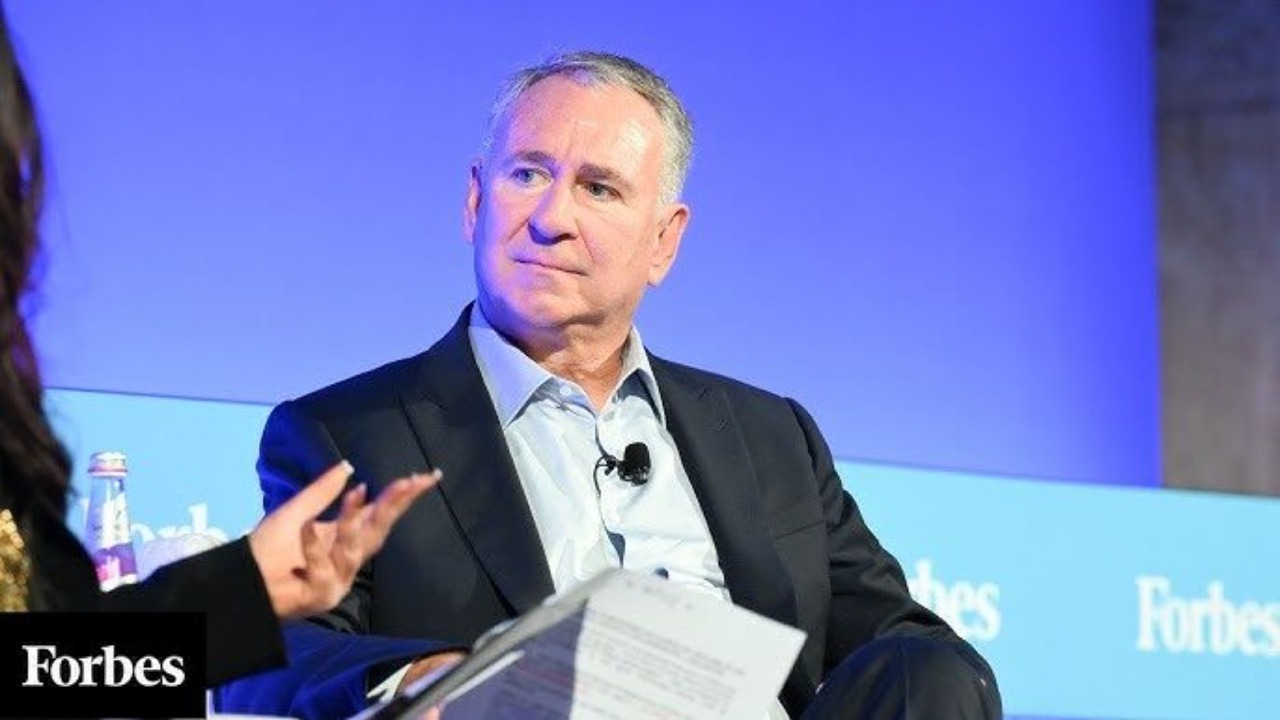
Ken Griffin is betting that the inflation scare is not coming back in full force, but he is not promising a painless landing either. The founder and CEO of Citadel expects price growth to settle in a band between the mid 2 percent and 3 percent range next year, a level that would sit slightly above the Federal Reserve’s formal target but far from the peaks that rattled markets and households earlier in the cycle. His call puts a sharp number on a debate that now stretches from the White House to Wall Street trading floors: what counts as “good enough” inflation in a politically charged economy.
That forecast matters because it shapes how investors, companies, and voters think about the next phase of the cycle under President Donald Trump. A world of roughly 2.5 percent inflation looks very different from one where prices are sprinting at 5 percent, but it is also not the clean victory over inflation that central bankers once promised. Griffin is effectively arguing that the United States is heading into a higher resting heart rate for prices, and that the policy choices made now will determine whether that feels manageable or corrosive.
Griffin’s mid‑2 to 3 percent call, and what it really implies
When Ken Griffin talks about inflation, markets listen, because he is not just a commentator, he is the CEO of Citadel, one of the most influential trading firms in the world. In a recent interview, he said he and his team “predict inflation will be in the mid 2 to 3 percent range next year,” signaling a belief that the worst of the price spike is behind the United States but that a clean return to 2 percent is unlikely. That view, delivered as a forward-looking forecast rather than a backward-looking postmortem, frames how he expects interest rates, asset prices, and corporate profits to evolve in the coming year.
Griffin’s projection is not a casual guess, it reflects how he sees the balance between cooling goods prices, still‑firm wage growth, and policy choices in Washington. By putting the likely outcome in a narrow band, he is effectively telling investors to prepare for a world where inflation is slightly sticky, not collapsing, and where the Federal Reserve may feel comfortable trimming rates but not racing back to the ultra‑low levels of the 2010s. His comments in the original video, where he laid out that mid‑2 to 3 percent range, have quickly become a reference point for traders trying to price everything from Treasury yields to tech valuations.
Tariffs, the Fed, and why 2 percent may stay out of reach
Griffin’s inflation band is not just about domestic demand, it is also a judgment on the policy mix coming out of Washington, especially on trade. He has argued that the full impact of President Trump’s tariffs has not yet been felt in consumer prices, warning that more tariff impact on inflation is still ahead as supply chains adjust and companies pass on higher costs. In his view, the United States is only partway through the process of repricing imported goods, which helps explain why he thinks inflation could hover closer to 3 percent than glide neatly back to 2 percent.
At the same time, Griffin has been explicit that the Federal Reserve should remain independent as it navigates this environment, even as political pressure builds around interest rate decisions. He has contrasted the Fed’s 2 percent target with his own expectation that inflation will sit above that level, implying that central bankers will have to decide whether to tolerate a modest overshoot or tighten policy further into a politically sensitive election cycle. In one interview, he stressed that more tariff impact on inflation is still ahead and that the Fed’s 2 percent target remains the benchmark, a combination that sets up a potential clash between political goals and technocratic discipline.
Why 3 percent inflation could still feel painful for voters
Griffin’s warning is not just about bond math, it is about politics. He has cautioned Trump and the GOP that they should not underestimate how grating a 3 percent inflation rate could be for households that have already endured years of elevated prices. Even if the headline rate cools from earlier peaks, a world where prices keep rising at roughly 3 percent means paychecks must work harder just to stand still, especially for families facing higher rents, car payments, and grocery bills. For a party that has made cost‑of‑living complaints central to its message, that lingering squeeze could be a serious vulnerability.
In his comments, Griffin has effectively told Republican leaders that they cannot assume voters will reward them simply because inflation is lower than it was at its worst. Instead, he argues, they need to recognize that a “new normal” of roughly 3 percent inflation still erodes purchasing power and can fuel resentment toward whoever holds power in Washington. His pointed remarks, in which Ken Griffin has a warning for Trump and the GOP about how grating a 3 percent inflation rate could be, underline the political risk of declaring victory too early while voters still feel squeezed at the checkout line.
Markets, gold, and the search for inflation hedges
Investors are already repositioning for the kind of environment Griffin describes, and he has been candid about what worries him in that response. One of his concerns is the rush into gold as a perceived safe haven against inflation, fiscal stress, and doubts about the long‑term strength of the United States dollar. When he looks at conversations across Wall Street, he hears a growing focus on the fiscal situation and the possibility that persistent deficits and higher inflation could undermine confidence in traditional safe assets, which helps explain the surge of interest in bullion.
Griffin has linked that gold rush to broader anxieties about the policy mix in Washington, including how the new administration’s immigration stance and spending choices intersect with inflation and debt. He has suggested that investors piling into gold are effectively expressing a lack of faith that policymakers will keep inflation anchored near the Fed’s target over the long run, even if the near‑term outcome is the mid‑2 to 3 percent range he expects. In one detailed discussion, he described how the new administration’s immigration and fiscal choices are feeding worries about inflation, the US dollar, and the rush to gold, a chain of concern that shows how macro policy and market psychology are now tightly intertwined.
GOP economic strategy, tariffs, and Griffin’s broader critique
Griffin’s inflation forecast also doubles as a critique of the economic strategy pursued by Trump and the GOP, particularly on tariffs and spending. He has argued that Republican policies are helping to fuel inflation by layering trade barriers and fiscal expansion on top of an already tight labor market, a combination that keeps upward pressure on prices even as the Fed tries to lean against it. In his view, the party that once branded itself as the champion of free markets is now experimenting with a more interventionist approach that carries real inflationary side effects.
He has been especially pointed about the tariff regime, warning that the impact of Trump’s trade measures is only halfway through the system and that the result could be inflation that stays near 3 percent instead of drifting back to 2 percent. Griffin has said he sees only one additional rate hike left in the current cycle, which would leave the Fed trying to manage an inflation rate that is still above target while the political branches continue to push policies that add to price pressures. In one report, Griffin said GOP policies are fueling inflation and highlighted the split between the White House and the Fed, underscoring how his mid‑2 to 3 percent call is inseparable from his criticism of the current policy mix.
Griffin has also urged the White House to recognize that tariffs are a tax that consumers ultimately have to pay, not a cost that can be painlessly shifted onto foreign producers. He has warned that if the administration continues to escalate trade conflicts, the United States risks a scenario where inflation remains stuck near 3 percent, growth slows, and both sides of the border lose. In one detailed account of his remarks, Ken Griffin Reportedly Warns Trump that the Tariff Impact Only Halfway Through could keep inflation near 3 percent and that all of us lose in a prolonged trade fight, he framed the issue as a choice between politically satisfying toughness and economically sustainable stability.
For Griffin, the path to a more comfortable inflation outcome still runs through policy restraint and institutional independence. He has repeated his mid‑2 to 3 percent forecast in multiple venues, including a widely shared segment where Ken Griffin said he predicts inflation will be in the mid 2 to 3 percent range next year, and he has tied that outlook to a plea for more disciplined choices in Washington. In a separate appearance, Ken Griffin, CEO of Citadel, reiterated that same mid‑2 to 3 percent prediction, reinforcing the message that the United States is unlikely to snap back to the old 2 percent world unless both the White House and Congress change course.
More From TheDailyOverview

Grant Mercer covers market dynamics, business trends, and the economic forces driving growth across industries. His analysis connects macro movements with real-world implications for investors, entrepreneurs, and professionals. Through his work at The Daily Overview, Grant helps readers understand how markets function and where opportunities may emerge.

