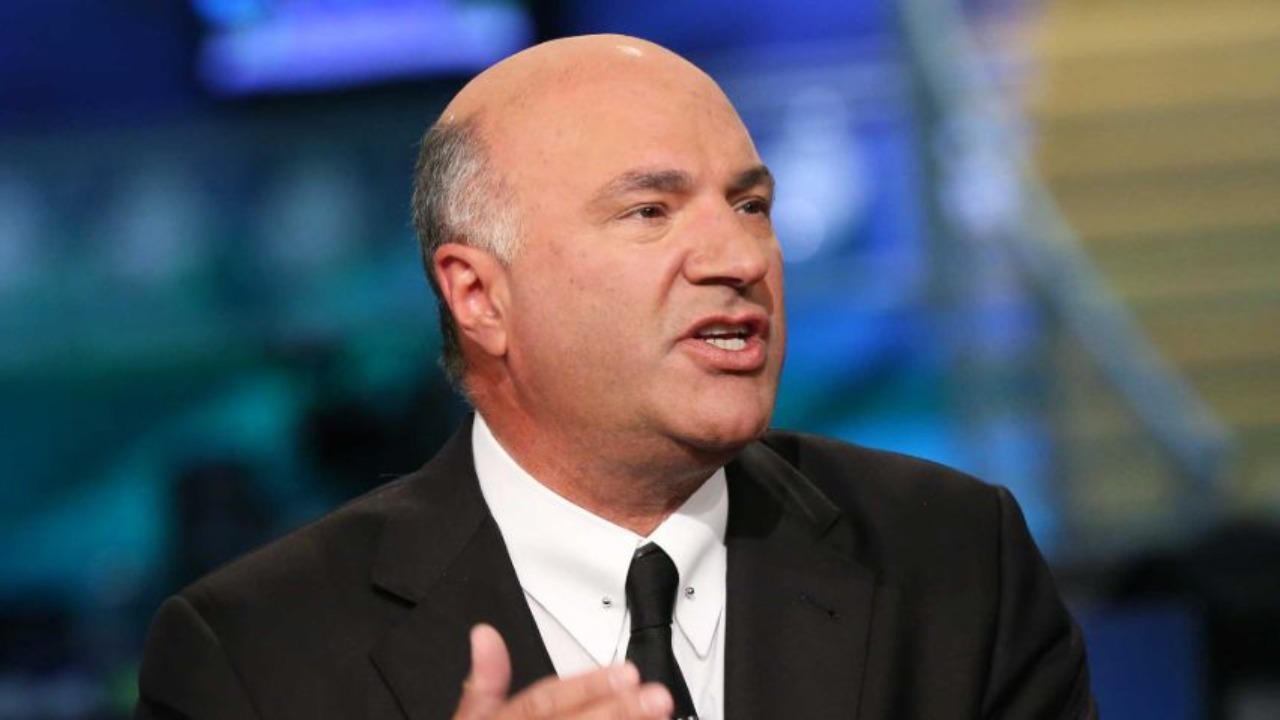
Kevin O’Leary, the blunt-talking investor from “Shark Tank,” has repeated one piece of financial advice across multiple interviews over the years: carve off a fixed slice of every paycheck and funnel it into low-cost index funds. The strategy sounds almost too simple, yet O’Leary claims it is exactly how he began building wealth, even during his lowest-earning years. Whether that formula can truly multiply a typical worker’s savings tenfold depends on the savings rate, the investment vehicle, and, perhaps most of all, the discipline to keep going when markets turn ugly.
The 10% Paycheck Rule, Explained
O’Leary’s core instruction is straightforward. He has said that workers should take 10% of every paycheck, including gifts and side income, and invest it for the long term. He specifically points toward broad, low-cost index approaches such as S&P 500 funds and exchange-traded funds. The logic is that by automating a fixed percentage before you have a chance to spend it, you remove the emotional decision-making that derails most savers. In his view, the simplicity of the rule is a feature, not a bug: if the system is easy to follow, people are more likely to stick with it through good markets and bad.
In a separate interview, O’Leary tightened the range, saying he consistently put 10% to 15% of earnings into index funds like the S&P 500, even when working low-wage jobs. That detail matters because it reframes the advice as something he claims to have practiced himself rather than a theoretical exercise. Starting early and staying consistent, in his telling, is what separates people who build real portfolios from those who plan to invest “someday.” By emphasizing teenagers and young workers, he is effectively arguing that time in the market is more powerful than trying to pick hot stocks or time economic cycles.
What 10% Actually Looks Like for a Median Earner
Abstract percentages are easy to nod along with. Concrete dollar amounts are harder to ignore. The U.S. Bureau of Labor Statistics publishes median weekly earnings for full-time wage and salary workers, broken out by age, education, and occupation. Those figures give a real baseline for testing O’Leary’s rule against a typical American paycheck. If a full-time worker earns roughly the median weekly amount, then diverting 10% of each paycheck into an index fund might translate into a few hundred dollars per month. On paper, that may not look transformative in the first year or two, but over decades of compounding, even modest regular contributions can snowball into a substantial balance.
The same data also reveals how uneven earnings are across demographics. Workers with bachelor’s degrees earn considerably more than those with only a high school diploma, and earnings vary sharply by occupation and age group. That variation means O’Leary’s flat 10% target feels very different depending on where you sit in the income distribution. For someone earning well above the median, 10% is relatively painless and might still leave room for additional saving. For someone closer to the bottom quartile, that same percentage can collide with rent, groceries, transportation, and debt payments in ways that make consistent investing difficult. The advice is sound in principle, but the execution gap between income brackets is wide, and a rigid rule can ignore the reality of households already stretched thin.
O’Leary’s Aggressive Variant: 20% and Age Milestones
O’Leary does not always stop at 10%. In at least one interview, he pushed the target higher, advising workers to save 20% of every paycheck and set concrete age-based milestones for their net worth. He assumes a 5% to 7% annual growth rate in his timeline math, which roughly aligns with long-run equity returns after inflation in many historical analyses. At that pace, hitting six figures in savings by your early thirties becomes arithmetically plausible if you start in your late teens or early twenties and avoid large gaps in contributions. The milestones are designed to give savers a scoreboard: benchmarks that signal whether they are on track or falling behind their own goals.
The jump from 10% to 20% is not trivial. Doubling your savings rate does not just double the endpoint; it accelerates compounding because more capital is working for you earlier. O’Leary frames this higher rate as the path for people who want to reach financial independence faster, not just retire comfortably at a traditional age. His guidance includes concrete timeline math tied to age targets, which gives the advice a specificity that generic “save more” platitudes lack. Still, a 20% savings rate is aggressive by most household budgeting standards, especially for families juggling childcare, housing in expensive markets, or existing debt. O’Leary’s own trajectory from low-wage work to multimillionaire investor depended on entrepreneurial success as well as saving, and that part of the story is harder to copy.
Can This Strategy Really 10x Your Money?
The “10x” promise in the headline deserves scrutiny. If you assume a 7% annual return, which sits at the top of O’Leary’s stated range, a lump sum would roughly double about every decade and grow around eightfold over thirty years. Ongoing contributions change the math significantly because each new deposit starts its own compounding clock. A worker who invests 10% to 15% of a median paycheck every two weeks for twenty-five to thirty years, reinvesting dividends in S&P 500 index funds, could plausibly see total portfolio value reach several multiples of cumulative contributions. Whether that multiple hits exactly ten depends on the sequence of returns, the level of fees, tax treatment, and whether the investor actually stays the course during downturns instead of pausing or withdrawing contributions.
That last variable is where most strategies fall apart. Behavioral finance research has repeatedly found that many individual investors underperform the very index funds they hold because they sell during crashes and buy back in after recoveries. O’Leary’s real message, stripped of the round numbers, is about removing yourself from the decision loop. Automate the contribution. Pick a broad, cheap fund. Do not touch it except to rebalance occasionally or increase the savings rate when income rises. The 10x figure is less a guarantee than a rough destination for someone who follows those rules for decades without flinching. It is aspirational math, not a contract, but the underlying mechanics of compound growth are well established, and a disciplined saver who starts early can indeed end up with a portfolio many times larger than the raw dollars invested.
Where the Advice Falls Short
No single savings rule works for everyone, and O’Leary’s framework has blind spots. His percentages shift between interviews, ranging from 10% to 15% to 20%, which suggests the specific number is more rhetorical device than hard science. Focusing on a fixed share of income also glosses over priority questions such as building an emergency fund, paying down high-interest debt, or securing adequate insurance before aggressively investing. For someone carrying expensive credit card balances, directing every spare dollar into index funds may not be the mathematically optimal move, even if it fits the spirit of “always be investing.” A rigid target can also induce guilt or a sense of failure in people who simply cannot hit those percentages due to circumstances beyond their control.
There is also the risk of overemphasizing market returns as the primary driver of financial security. O’Leary’s story highlights the power of investing early and often, but it sits alongside business ownership, media income, and other opportunities that are not universally accessible. For most workers, long-term wealth will depend on a mix of factors: steady earnings growth, manageable living costs, prudent use of debt, and consistent investing in diversified, low-cost funds. His rule of thumb can serve as a useful starting point—a simple, memorable target that nudges people toward action—but it works best when adapted to individual realities. A household that begins with 3% or 5% and gradually ramps up contributions as income rises is still applying the core principle, even if it never reaches the full 20% O’Leary champions. The real test is not whether you hit his exact numbers, but whether you build a sustainable habit of paying yourself first and letting time in the market do its work.
More From The Daily Overview
*This article was researched with the help of AI, with human editors creating the final content.

Cole Whitaker focuses on the fundamentals of money management, helping readers make smarter decisions around income, spending, saving, and long-term financial stability. His writing emphasizes clarity, discipline, and practical systems that work in real life. At The Daily Overview, Cole breaks down personal finance topics into straightforward guidance readers can apply immediately.
