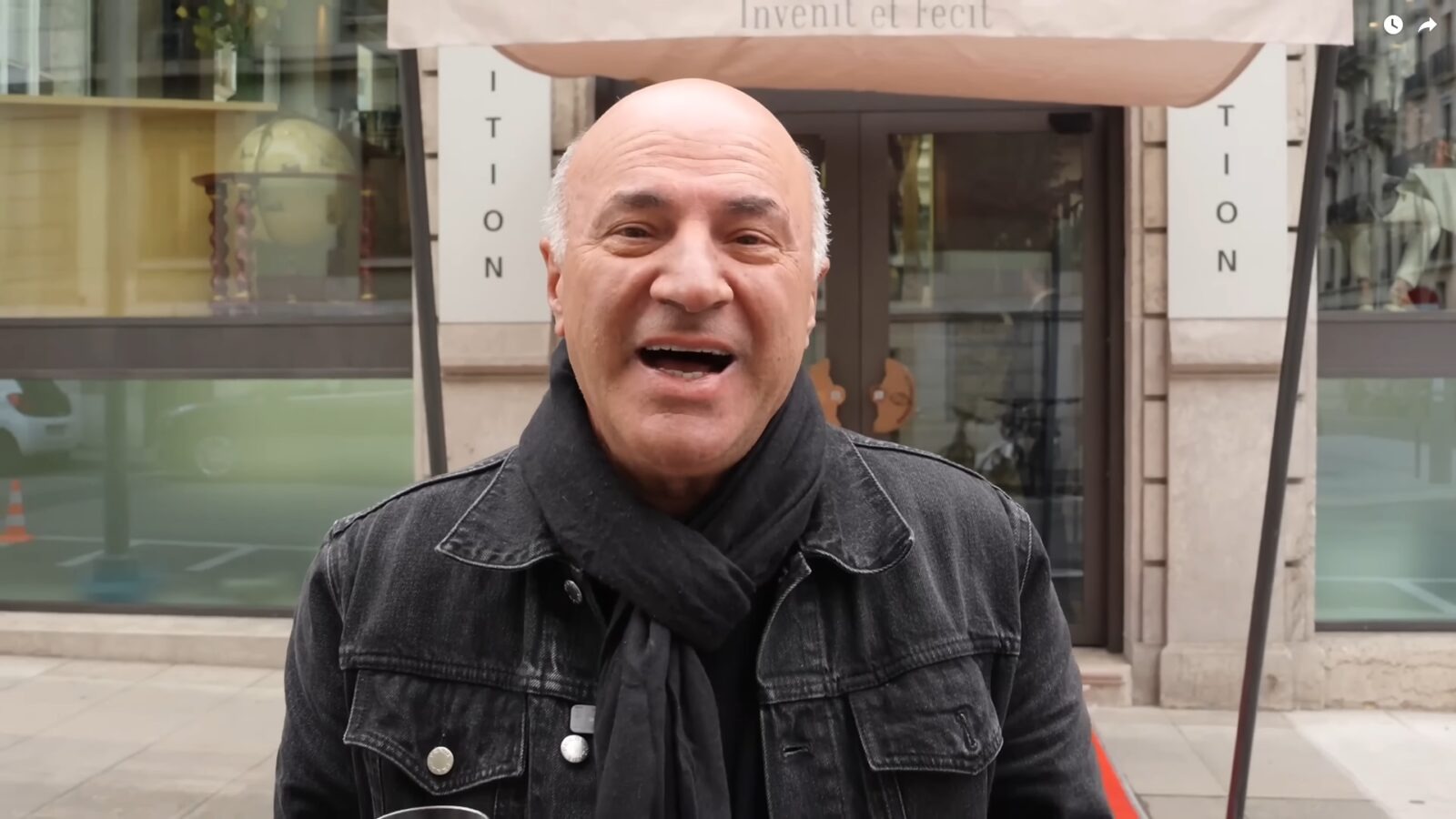
Kevin O’Leary, the investor and television personality known for Shark Tank, told a House committee on February 10, 2026, that President Trump must take ownership of an affordability crisis pushing American families to skip rent payments, meals, and prescription medications. His testimony before the House Financial Services Committee arrived at a moment when tariff policy, housing costs, and borrowing rates are converging to squeeze household budgets from multiple directions. The hearing, titled “Priced Out of the American Dream: Understanding the Policies Behind Rising Costs of Housing and Borrowing,” put O’Leary’s blunt warning at the center of a growing debate over who bears responsibility for rising prices.
O’Leary Tells Congress Tariff Policy Needs “Fine Tuning”
In written testimony submitted to the House Financial Services panel, O’Leary did not mince words about the current direction of trade policy. “I suggest that the current tariff policy needs some ‘fine tuning,’” he stated, framing his critique as friendly advice rather than outright opposition. That careful phrasing reflects O’Leary’s public positioning as a Trump ally who nonetheless sees real economic damage from specific policy choices. His appearance on the witness roster alongside other experts signaled the committee’s intent to press the administration on cost-of-living pressures tied to trade barriers.
O’Leary zeroed in on a question that cuts through the political noise around tariffs: “The main issue is this: Why levy tariffs on scarce goods and services?” according to his prepared statement. That framing challenges the logic of applying import taxes to products already in short supply domestically, where tariffs function less as leverage against foreign competitors and more as a direct cost increase passed to American buyers. When supply is tight, consumers and businesses have fewer alternatives, meaning tariff costs land squarely on end users rather than pressuring foreign producers to lower prices.
Steel and Aluminum Tariffs as a Cost Multiplier
O’Leary’s critique gains specificity when set against the White House’s own actions on industrial metals. A presidential proclamation titled “Adjusting Imports of Aluminum and Steel into the United States” detailed tariff adjustments under Section 232 authority, which grants the president power to restrict imports deemed threats to national security. The Section 232-related actions have raised input costs for construction, manufacturing, and infrastructure projects since mid-2025, feeding directly into the housing and borrowing cost pressures the hearing was convened to examine and giving members of Congress a concrete policy lever to question.
The connection between metal tariffs and housing affordability is not abstract. Steel and aluminum are embedded in nearly every stage of residential construction, from structural framing to HVAC systems, appliances, and electrical wiring. When tariffs raise the price of these inputs, builders pass costs forward through higher home prices or pull back on projects entirely, tightening supply in a market already short on inventory. O’Leary’s question about taxing scarce goods applies with particular force here: domestic steel and aluminum production has not expanded fast enough to replace imports at pre-tariff prices, so the tariffs function as a tax on building rather than a stimulus for domestic production, amplifying the very scarcity that policymakers say they want to resolve.
Americans Already Skipping Medications to Save Money
The human cost of affordability pressure extends well beyond housing. Federal health data has documented a pattern of Americans rationing their own medical care to manage expenses. The National Center for Health Statistics published Data Brief No. 470, which examined characteristics of adults aged 18 to 64 who did not take medication as prescribed to reduce costs, drawing on the National Health Interview Survey. The brief defines cost-related medication nonadherence as skipping doses, taking less medication than prescribed, or delaying prescription fills to save money. These are not minor adjustments; they represent decisions that can worsen chronic conditions, increase emergency room visits, and raise long-term healthcare spending.
Research linked to the NCHS findings, including work cataloged through the CDC publications portal, reinforces that medication nonadherence is not evenly distributed across the population. Lower-income adults and those without adequate insurance coverage are far more likely to ration prescriptions, reflecting broader inequities in access to care. A related study accessible through health psychology research has explored the behavioral and psychological dimensions of cost-driven nonadherence, confirming that financial stress directly shapes health decisions and can erode patients’ trust that the system is working for them. When O’Leary warns that Americans are skipping medications, he is pointing to a documented federal data pattern, not anecdotal evidence gathered from his television appearances.
Why O’Leary Says Trump Must Own the Outcome
The political significance of O’Leary’s testimony lies in who is delivering it. He is not a Democratic critic or an academic economist with no business experience. He is a high-profile investor who has publicly supported Trump and maintained a visible relationship with the administration. When someone in that position tells Congress that tariff policy needs correction and that the president must take responsibility for the consequences, it carries a different weight than opposition-party criticism. O’Leary’s framing suggests he believes the political risk of inaction is growing faster than the administration recognizes and that voters will ultimately hold the White House accountable for rising bills more than for abstract trade victories.
His argument also carries an implicit warning about timing. Tariff costs are cumulative: they raise prices gradually across supply chains, and by the time consumers feel the full impact, the policy has been in place long enough that reversing it creates its own disruptions. If families are already choosing between rent, groceries, and prescriptions, the window for “fine tuning” narrows with each month. O’Leary’s testimony reads as an attempt to give the administration political cover for adjustment before the affordability squeeze becomes a defining electoral liability, suggesting that a course correction now could be framed as pragmatic stewardship rather than an admission of failure.
Housing and Borrowing Costs at the Center of the Hearing
The hearing’s full title, “Priced Out of the American Dream: Understanding the Policies Behind Rising Costs of Housing and Borrowing,” signals that the Financial Services Committee is treating affordability as a bipartisan concern with policy-specific causes rather than a vague economic trend. By naming both housing and borrowing in the same hearing, the committee acknowledged that these pressures reinforce each other. High home prices push buyers toward larger mortgages, and elevated borrowing rates make those mortgages more expensive, creating a feedback loop that prices out middle-income households and leaves younger buyers stuck in rental markets with limited savings.
The committee published a memo alongside the hearing and made a livestream available, indicating an intent to build a public record that could support legislative action or pressure the executive branch to modify trade and regulatory policies. O’Leary’s inclusion on the witness roster was a deliberate choice: his business celebrity status guarantees media attention, and his pro-business credentials make it harder for the administration to dismiss the hearing as partisan theater. The committee structured the event to generate maximum pressure on the specific policy levers, particularly tariffs and interest rate dynamics, that witnesses identified as driving costs higher, while also giving members a platform to highlight stories from constituents struggling to secure stable housing.
The Gap Between Tariff Goals and Kitchen-Table Reality
The core tension in O’Leary’s testimony is the distance between the strategic goals of tariff policy and its day-to-day effects on American households. Tariffs on steel and aluminum are designed to protect domestic industry and strengthen national security supply chains. Those are legitimate policy objectives, especially in sectors considered critical to defense and infrastructure. But O’Leary’s question about levying tariffs on scarce goods highlights a design flaw: when domestic capacity cannot fill the gap left by reduced imports, the tariff does not shift production home. It simply raises costs for everyone who uses those materials, from homebuilders to hospitals to families buying appliances, undermining the promise that the pain will be temporary and targeted.
That gap between intention and outcome is where the affordability crisis lives. A family that pays more for a home because construction costs rose due to steel tariffs may then face higher monthly payments because borrowing rates have not come down. With less money available after housing costs, that same family may delay filling a prescription or stretch groceries further, mirroring the behavior captured in federal health surveys. Each policy decision compounds the last, and the cumulative effect is what O’Leary described to Congress: Americans making impossible tradeoffs among basic needs. His testimony amounts to a direct challenge to the administration to measure tariff success not just by trade balance metrics but by whether ordinary households can still afford to live, urging policymakers to align national security goals with kitchen-table realities.
What Comes After the Warning
O’Leary’s appearance before the House Financial Services Committee is unlikely to produce immediate policy changes, but it shifts the tone of the debate over affordability and trade. When a prominent ally publicly calls for “fine tuning,” it signals that concern over rising costs has moved inside the tent, where political calculations are more sensitive to voter backlash. Lawmakers now have a high-profile business voice on the record tying tariffs and borrowing costs to skipped rent checks and unfilled prescriptions, a linkage that can be cited in future hearings, legislative proposals, and negotiations with the White House over economic priorities.
What comes next will depend on whether the administration treats O’Leary’s testimony as constructive criticism or disloyal dissent. If officials move to adjust tariffs on inputs that are clearly in short supply, they could ease pressure on housing and consumer goods while still claiming to defend domestic industry. If they stay the course, the affordability crisis that O’Leary described may deepen, giving his warning a retrospective quality as an early sign that political allies were urging a different path. Either way, his message to Congress underscored a simple test for economic policy: when families are skipping meals and medications to keep a roof over their heads, the status quo is no longer defensible, and those in power will be judged by whether they act before those tradeoffs become permanent features of American life.
More From The Daily Overview
*This article was researched with the help of AI, with human editors creating the final content.

Grant Mercer covers market dynamics, business trends, and the economic forces driving growth across industries. His analysis connects macro movements with real-world implications for investors, entrepreneurs, and professionals. Through his work at The Daily Overview, Grant helps readers understand how markets function and where opportunities may emerge.

