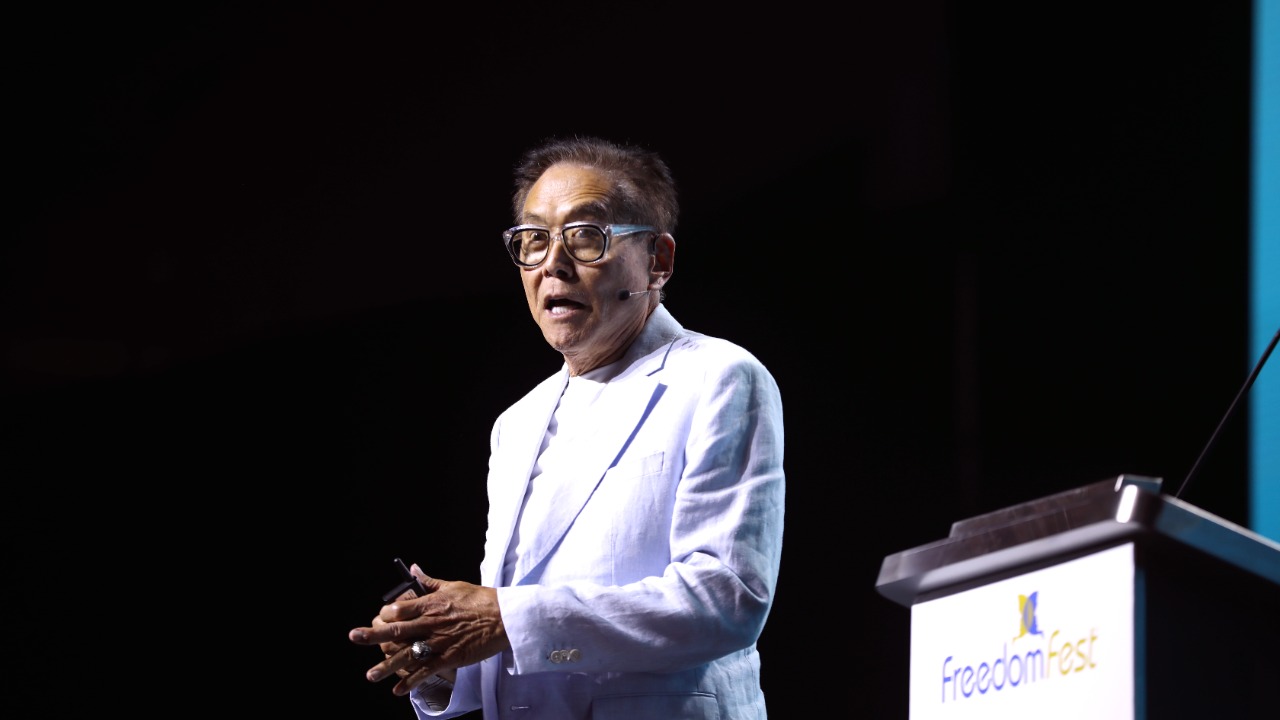
Japan’s once sleepy bond market is suddenly at the center of global risk, and the quiet mechanics of the yen carry trade have burst into public view. As yields rise and the cost of borrowing in yen climbs, Robert Kiyosaki is arguing that a decades long credit boom has hit a breaking point and that a chain reaction could expose bubbles from real estate to artificial intelligence. I want to trace how this funding shift in Japan connects to broader leverage in markets and whether Kiyosaki’s warning of a “30 YEAR BUBBLE BURSTING” is a panic call or a plausible roadmap.
Japan’s yield shock and the end of easy yen money
The starting gun for Kiyosaki’s alarm is the sharp move higher in Japanese government bond yields, which has quietly upended one of the cheapest funding sources in global finance. As yields climb, the cost of borrowing in yen rises, eroding the basic math that made it attractive to borrow in Japan and invest in higher yielding assets abroad. Analysts tracking the move note that this shift in yields is not a local curiosity but a global event, because Japan held a net 3.62 trillion dollars of foreign assets that were effectively funded through this structure, a scale that can move markets when it reverses.
Higher domestic yields also change incentives inside Japan itself, encouraging investors to bring money home rather than chase returns in U.S. stocks or emerging market bonds. Reporting on the recent surge in Japanese yields stresses that this carry trade actually carries global risk, because when the spread that once made it profitable disappears, capital can rush out of America and other destinations that benefited from cheap yen funding, amplifying volatility in equities and bonds linked to that flow, a dynamic highlighted in analysis of Japan’s yield surge.
How the yen carry trade became a “sleeping giant”
To understand why Kiyosaki sees a systemic threat, I need to unpack how the yen carry trade grew from a niche strategy into what one Chartered Accountant has called a “silent giant” in global liquidity. For years, investors borrowed in yen at ultra low interest rates, converted the proceeds into dollars or other currencies, and bought higher yielding assets, pocketing the difference as long as exchange rates and funding costs stayed stable. Japan’s financial role in the world, as a major creditor nation with deep savings pools, meant that this quiet strategy scaled until its consequences could echo across continents once conditions changed.
That same Chartered Accountant describes the current phase as “The Sleeping Giant Stirs,” a vivid way of capturing how a once benign funding source can become destabilizing when it starts to unwind. With Japan now reassessing its ultra easy stance, the margin of safety in the carry trade narrows, and the unwinding of this silent giant threatens to pull liquidity out of markets that had grown dependent on it, a risk detailed in analysis of Japan’s financial role.
Japan as second largest U.S. creditor and the repatriation squeeze
The pressure is not just theoretical, because Japan is deeply embedded in the plumbing of U.S. government finance. With Japan, the second largest holder of U.S. Treasuries, now facing incentives to repatriate capital to stabilize its domestic markets, the impact reaches directly into the world’s benchmark safe asset. If Japanese institutions sell Treasuries to cover losses or to chase higher yields at home, that selling can push U.S. yields higher, tightening financial conditions far beyond Tokyo.
In that scenario, the margin of the carry trade compresses from both sides, as funding costs in yen rise and returns on foreign holdings become more volatile. The LinkedIn analysis of how Japan’s yen carry trade could trigger a global liquidity event notes that with Japan, the second largest holder of Treasuries, shifting its stance, the margin of the carry trade is at risk, which is precisely the kind of squeeze that can force leveraged investors to unwind positions quickly and feed a broader sell off in risk assets, a chain described in detail in the discussion of Japan’s Treasury holdings.
Carry trades 101: from textbook strategy to global shock absorber
At its core, a carry trade is simple: borrow in a currency with low interest rates and invest in assets that pay higher yields, capturing the spread as profit. As Simon Torkington explains, this strategy became especially prominent in dollar yen carry trades, where investors borrowed cheaply in yen and bought higher yielding dollar assets, a pattern that helped fuel cross border flows into everything from U.S. corporate bonds to emerging market debt. The Japanese stock market collapse in early August, which caused knock on effects on the global economy, showed how quickly this structure can transmit stress when investors rush to unwind.
The World Economic Forum’s explainer notes that when these trades reverse, they can amplify volatility because investors are forced to sell the higher yielding assets they bought, often at the worst possible time. The Japanese market turmoil earlier this year, described by Simon Torkington in the context of The Japanese stock market collapse, underlined how carry trades that once seemed like a free lunch can become a transmission belt for shocks, a dynamic captured in the overview of carry trades and global markets.
The simple math that turns into complex contagion
The appeal of the yen carry trade has always rested on what one analysis calls “The Simple Math Behind the World’s Biggest Funding Trade.” Investors borrow money in a currency with low interest rates, such as the yen, and invest in higher yielding assets, counting on stable exchange rates and predictable funding costs to lock in a spread. As long as volatility stays low, this simple math works, and the trade can scale into the hundreds of billions without drawing much attention.
The problem, as the same analysis stresses, is that when volatility spikes, the very structure of the trade forces investors to sell into both rallies and sell offs, turning a stabilizing flow into a destabilizing one. The description of how Investors borrow money in a currency with low interest rates and then become forced sellers when conditions change shows why a funding strategy that once looked like free money can morph into a source of contagion, a risk spelled out in the discussion of the world’s biggest funding trade.
Kiyosaki’s deflation warning and the “30 year bubble” claim
Robert Kiyosaki has seized on this turning point in Japan to argue that the world is not just facing a liquidity squeeze but the end of a multi decade credit supercycle. In his view, the unwinding of the Japan carry trade risks triggering deflation, as forced deleveraging leads to falling asset prices and weaker demand, a scenario he links to the bursting of what he calls a 30 year bubble in real estate, stocks, and employment. Kiyosaki, the renowned author of “Rich Dad Poor Dad,” has been urging investors to move into assets that preserve value, framing the carry trade reversal as a catalyst rather than a standalone shock.
One detailed report on his stance notes that Robert Kiyosaki warns of deflation risk amid Japan carry trade unwinding and that he is positioning this as a global event rather than a Japan only story. By tying the end of ultra cheap yen funding to a broader reset in valuations, Kiyosaki is effectively arguing that the same leverage that inflated prices across multiple asset classes will now work in reverse, a thesis laid out in coverage of deflation risk.
From AI exuberance to infrastructure strain: where the next bubble may sit
While Kiyosaki focuses on the funding side, other high profile investors are zeroing in on where the excess capital has gone, particularly into artificial intelligence. Michael Burry, whose “Big Short” on the housing market became famous, is now warning that some Big Tech companies are already wobbling on their commitments to massive AI spending. He points to examples such as Microsoft canceling data center projects as evidence that a bubble is forming in AI infrastructure, where expectations for future revenue may not match the debt and risky terms being used to finance the build out.
That concern lines up with broader reporting that Tech companies are pouring billions into AI chips and data centers and increasingly relying on debt and risky terms to do it, raising fears of an AI bubble that will soon pop if revenue fails to keep pace. When I connect those dots back to Japan, the picture that emerges is of a world where cheap yen funding helped lubricate a surge in speculative investment, and where the reversal of that funding could expose weak spots in AI infrastructure spending, a link underscored in coverage of Michael Burry’s next “Big Short” and the NPR analysis of AI bubble risks.
Kiyosaki’s own playbook: hard assets and energy over paper wealth
Kiyosaki is not just sounding alarms, he is also broadcasting how he is positioning his own money for what he sees coming. In a recent social media post, he wrote that he invests in energy such as oil and natural gas and that he plans on getting richer although tragically millions will become unemployed, poorer, and most likely lose their homes, a stark framing of the distributional impact he expects from a global reset. That message fits with his long standing preference for hard assets over paper wealth, and with his current emphasis on hedges that can withstand both inflation and deflation scares.
His latest warnings on Instagram point to stress in global markets after sharp moves in Japan’s bond and currency environment, and they explicitly steer investors toward hard asset hedges as protection against what he sees as a looming meltdown. At the same time, more detailed reporting on his outlook notes that Robert Kiyosaki has forecasted a potential global financial meltdown following Japan’s carry trade closure and that he has proposed a 10 point investment strategy that leans heavily on gold, silver, and cryptocurrencies like Bitcoin and Ethereum, a stance laid out in coverage of his energy focused investing, his Instagram warning on hard asset hedges, and the Yahoo Finance breakdown of how Kiyosaki (Robert Kiyosaki) has proposed a 10 point strategy.
Triple bubble fears: AI, crypto, and debt meet the carry trade unwind
Beyond individual calls, some analysts argue that the world is facing what they describe as a three bubble problem in AI, crypto, and debt, a combination that could reshape the global economy if all three deflate at once. The World Economic Forum warns that the global economy faces three potential bubbles in AI, crypto, and debt and that historical analogies suggest such clusters of excess rarely unwind smoothly, especially now when leverage is high and policy space is constrained. In that framing, the yen carry trade is not the bubble itself but the lubricant that allowed these sectors to inflate.
Another analysis of bubble dynamics notes that every generation believes they have figured out how to prevent the next financial crisis, yet the anatomy of a bubble tends to repeat, with easy money, rising leverage, and a belief that “this time is different” until confidence breaks. The same piece argues that you just need confidence to keep a bubble going, and that once that confidence is shaken, the unwind can be brutal, a pattern that would fit a scenario where Japan’s decision to end the carry trade punctures optimism across AI, crypto, and heavily indebted sectors, as described in the WEF’s look at the three bubble problem and the Yahoo Finance essay on the anatomy of a bubble.
Market stress signals and what a “global meltdown” could look like
Some of the early stress signals Kiyosaki points to are already visible in equity and currency markets. Reporting from New York notes that the three major New York indices closed lower as the Bank of Japan hinted at a shift away from its ultra loose stance, and that revived yen carry trade liquidation concerns weighed on sentiment. The same report describes how the Bank of Japan’s signals helped push the Nikkei down by 88.40 points, or 0.38 percent, to 23,275.92, a reminder that even modest policy hints can trigger sizable moves when markets are positioned one way.
Against that backdrop, Kiyosaki’s rhetoric has escalated. One detailed account states that Robert Kiyosaki predicts global financial meltdown following Japan’s carry trade closure and says “30 YEAR BUBBLE BURSTING,” framing Japan’s decision to end the carry trade as the end of an era in which cheap funding propped up valuations in real estate, stocks, and employment.
More From TheDailyOverview
- Tennessee loses $2.6B megafactory and faces major layoffs
- Retired But Want To Work? Try These 18 Jobs for Seniors That Pay Weekly
- What to do with your pennies after the U.S. stops minting them
- Home Depot CEO warns of a troubling customer trend in stores

Grant Mercer covers market dynamics, business trends, and the economic forces driving growth across industries. His analysis connects macro movements with real-world implications for investors, entrepreneurs, and professionals. Through his work at The Daily Overview, Grant helps readers understand how markets function and where opportunities may emerge.