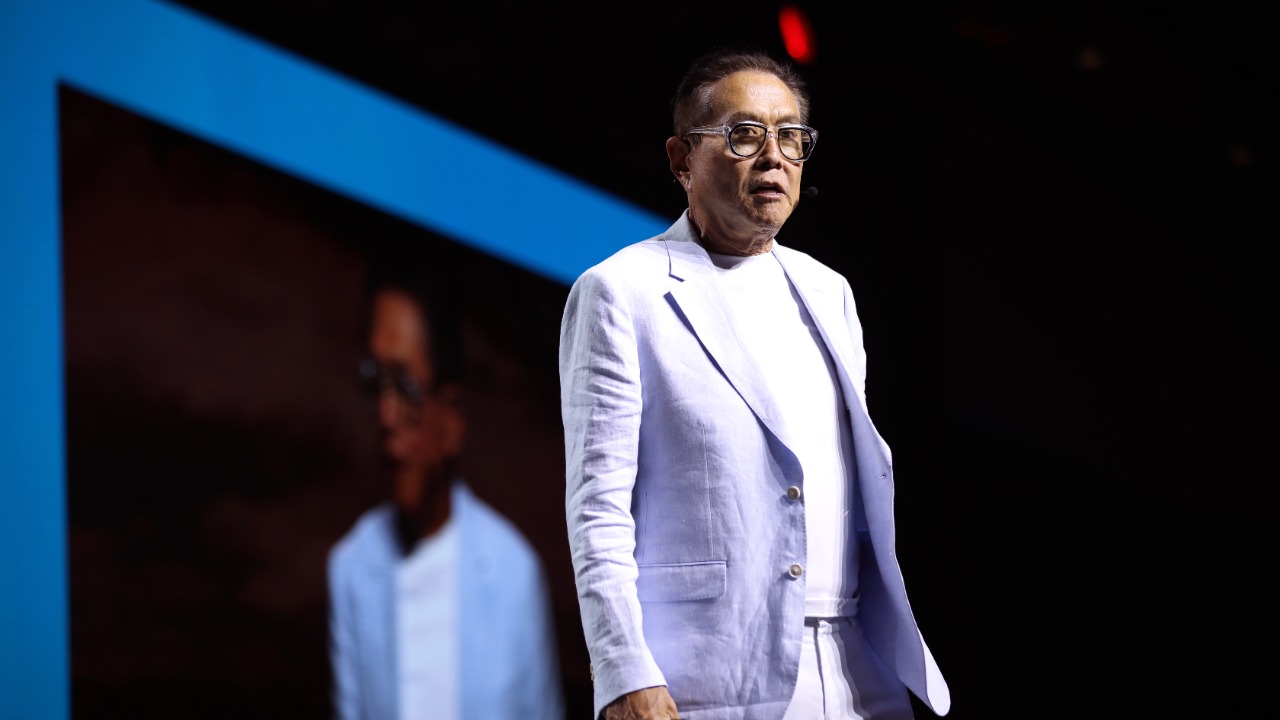
Robert Kiyosaki has built a global following on a simple but provocative idea: use debt to buy income-producing real estate, then lean on the tax code so that very little of that cash flow ever shows up as taxable income. The promise is not just higher returns, but a path to build wealth that looks nothing like the traditional “pay off your mortgage and hope your home appreciates” script. I want to unpack how that philosophy actually works in practice, where the tax advantages are real, and which other property strategies can complement or challenge his approach.
At the core of Kiyosaki’s message is a blunt claim that the rich do not fear leverage or the IRS, they study both. His own portfolio and public comments offer a live case study in how aggressive use of loans, depreciation and reinvestment can reshape a balance sheet. Around that, a broader ecosystem of real estate plays, from BRRRR to house hacking to passive rental funds, shows how far investors can go with similar tools, and where the risks start to outweigh the rewards.
Kiyosaki’s “good debt” obsession and the $1.2 billion headline
Kiyosaki’s starting point is that not all borrowing is created equal. In his world, “good debt” is money borrowed to acquire assets that put cash in your pocket, while “bad debt” funds consumption that never pays you back. He has pushed that distinction to an extreme, telling audiences that he is comfortable carrying roughly $1.2 billion in obligations tied to income-producing properties. The point is not the shock value of the number, but his argument that when tenants and tax rules service that debt, it becomes a tool rather than a threat.
In that same spirit, Kiyosaki has described owning a vast portfolio of rental units, using loans as the primary fuel. He has said that he holds 12,000 rental units and that the more he borrows to buy them, the less tax he pays. I see that as the purest expression of his thesis: scale up with leverage, let rents cover the payments, and rely on the tax code to turn what looks like a mountain of debt into a surprisingly light tax bill.
How “buy with debt, pay no tax” actually works on paper
Strip away the slogans and Kiyosaki’s tax playbook rests on a few specific mechanics. When investors finance a purchase with a mortgage, they can typically deduct the interest portion of those payments as a business expense, which lowers taxable rental income. Guides to the Tax Benefits of Real Estate Investing highlight that mortgage interest, property taxes, insurance and maintenance often reduce the income that shows up on a return, even when the property is generating positive cash flow in the real world.
On top of that, the IRS allows owners to depreciate the building over a set schedule, treating a portion of its value as a non-cash expense each year. That depreciation can offset rental income so effectively that some landlords report little or no taxable profit despite steady rent checks. One breakdown of Real estate deductions notes that operating costs, interest and depreciation are all considered tax-deductible expenses. When I map that onto Kiyosaki’s rhetoric, the “pay no tax legally” line is less magic trick and more aggressive use of rules that already favor leveraged property owners.
Why he prefers apartments to single-family homes
Kiyosaki has long argued that multifamily buildings are a more powerful wealth engine than single-family homes, largely because they concentrate income and scale. In his view, a 50-unit complex spreads vacancy risk across dozens of tenants and supports professional management, while a single house leaves an investor exposed to one renter and one roof. Commentary on Feb notes that private investors often turn to multifamily as an alternative to the stock market because it can generate more reliable cash flow and offers more units under one loan than the average home.
That preference also dovetails with his tax strategy. Larger properties tend to come with bigger mortgages, more operating expenses and more depreciation, all of which create larger deductions. When I look at his emphasis on scale, it is not just about bragging rights, it is about stacking enough interest and depreciation to neutralize taxable income across a portfolio. Multifamily assets, in his telling, are simply more efficient vehicles for that kind of financial engineering than a handful of suburban houses.
“Nothing wrong” with a home, but he would rather rent and buy more rentals
Despite his criticism of treating a primary residence as an investment, Kiyosaki has softened his tone in some recent conversations. He has said there is “nothing wrong” with buying a house to live in, but he personally prefers to use debt to acquire properties that pay him rather than tying up capital in a home that only costs him money. In one exchange recounted by Moneywise and Ya, he was asked whether he rents or owns his residence and pivoted quickly to the idea that the real asset is not the house, it is the investor’s financial education.
I read that nuance as a recognition that lifestyle and investing are separate decisions. A home can be a place to live and a form of forced savings, but it rarely throws off the kind of cash flow or tax benefits that a well-bought rental does. Kiyosaki’s advice, taken literally, is to avoid overinvesting in a personal residence and instead channel borrowing capacity into assets that tenants and the tax code help support. For people who already own homes, the implication is not to sell, but to think carefully before pouring every spare dollar into extra principal payments instead of a down payment on a small rental.
BRRRR and the art of recycling the same dollars
If Kiyosaki’s philosophy is about using debt as a tool, the BRRRR method is the blueprint for using the same dollars repeatedly. BRRRR stands for Buy, Rehab, Rent, Refinance, Repeat. Investors purchase a distressed property, renovate it to raise its value, rent it out to stabilize income, then refinance based on the new higher valuation and pull out cash to fund the next deal. A breakdown of The BRRRR Method notes that this cycle can rapidly build a portfolio while still generating income through renting out the property.
From a tax perspective, the key is that the cash pulled out during a refinance is loan proceeds, not income, so it is not taxed when received. Meanwhile, the investor still benefits from interest deductions and depreciation on the improved property. Education pieces on With the BRRRR method explain that investors often use the refinanced equity as the down payment on a subsequent property, effectively recycling their initial capital. When I connect that to Kiyosaki’s message, BRRRR looks like a practical, if demanding, way to live out his mantra of expanding with leverage while keeping taxable income surprisingly low.
House hacking, long-term rentals and the “wise uncle” persona
Not every investor can or should jump straight into large multifamily deals or complex BRRRR projects. Some of the most accessible plays that still echo Kiyosaki’s thinking are house hacking and simple long-term rentals. House hacking typically involves buying a small multifamily or a home with extra bedrooms, living in one part and renting out the rest so that tenants cover most or all of the mortgage. A guide to Understanding Kiyosaki and his Philosophy on Real Estate Investing describes house hacking and long-term rentals as strategies that align with his emphasis on cash flow and using other people’s money to build equity.
Long-term rentals, by contrast, are the classic buy-and-hold approach: acquire a property in a stable area, rent it out to a tenant for years at a time, and let time, amortization and modest appreciation do the heavy lifting. That same overview of Real Estate Investing notes that Robert Kiyosaki is often portrayed as the “wise uncle” who nudges people toward these straightforward plays before they chase more exotic deals. I see house hacking as the on-ramp to his world: it uses debt, taps tax benefits and builds landlord experience, but it does so on a scale that a first-time buyer can realistically manage.
Where the tax code really helps: deductions, depreciation and exchanges
Beyond Kiyosaki’s personal story, the broader tax landscape for landlords is unusually generous. Owners can typically deduct a wide range of expenses tied to operating a rental, from repairs and property management to travel and office supplies. One overview of the Tax benefits of owning rentals notes that One of the biggest advantages is the ability to write off costs like advertising, legal fees, stationery and business cards as part of running the investment.
Depreciation and like-kind exchanges add another layer. As noted in a separate discussion of 1031 Exchange rules within the broader Tax Benefits of Real Estate Investing, investors can defer capital gains by rolling proceeds from a sale into another like-kind property, effectively kicking the tax bill down the road while they scale up. Combined with the earlier Tax Benefits of Real Estate Investing such as the mortgage interest deduction, these provisions explain why Kiyosaki and others see real estate as a uniquely tax-efficient asset class. From my vantage point, the code does not guarantee zero tax, but it clearly tilts the playing field toward those who own leveraged property and hold it for the long term.
What the skeptics and small investors see from the ground
For all the enthusiasm around “tax-free” real estate income, practitioners on the ground often describe a more nuanced reality. Landlords on forums point out that while depreciation can shelter income in the early years, the IRS expects that building value to be written down over time, and there are limits to how much can be claimed each year. One widely shared Rental discussion notes that the IRS has a specific schedule for depreciating the value of the building, and that aggressive write-offs can trigger scrutiny if they are not backed by real numbers.
There is also the practical matter of risk. Highly leveraged investors are more exposed to interest rate spikes, vacancies and unexpected repairs. While Kiyosaki’s portfolio can absorb a bad year at one property, a small investor with one or two rentals does not have that cushion. That is why many educational resources, including broad overviews of the world of property investing, stress that the sector is as diverse as it is dynamic, with no shortage of avenues to explore but also no guarantee that any one strategy will fit every risk profile. From where I sit, the lesson is that Kiyosaki’s tactics can be powerful, but they are not a free lunch, especially for investors without deep reserves.
Other real estate plays that do not require Kiyosaki-level leverage
For readers who like the idea of real estate but not the idea of carrying millions in loans, there are plenty of alternatives that still tap some of the same tax and income dynamics. Turnkey single-family rentals, small duplexes and triplexes, and even fractional ownership platforms all offer exposure to rent checks and potential appreciation without the operational complexity of large multifamily projects. Overviews of the broader property investing landscape emphasize that there is no shortage of avenues to explore, from short-term rentals to commercial units, each with its own balance of risk, return and effort.
Even within the tax code, investors can benefit from many of the same deductions without pushing leverage to the limit. Guides to One of the key tax benefits of real estate investing point out that ordinary expenses like maintenance, insurance and property management are considered tax-deductible, regardless of whether the property is heavily mortgaged or owned free and clear. In my view, that means the real decision is not whether to copy Kiyosaki’s balance sheet, but how far along the leverage spectrum an investor is comfortable going while still sleeping at night.
More From TheDailyOverview

Elias Broderick specializes in residential and commercial real estate, with a focus on market cycles, property fundamentals, and investment strategy. His writing translates complex housing and development trends into clear insights for both new and experienced investors. At The Daily Overview, Elias explores how real estate fits into long-term wealth planning.