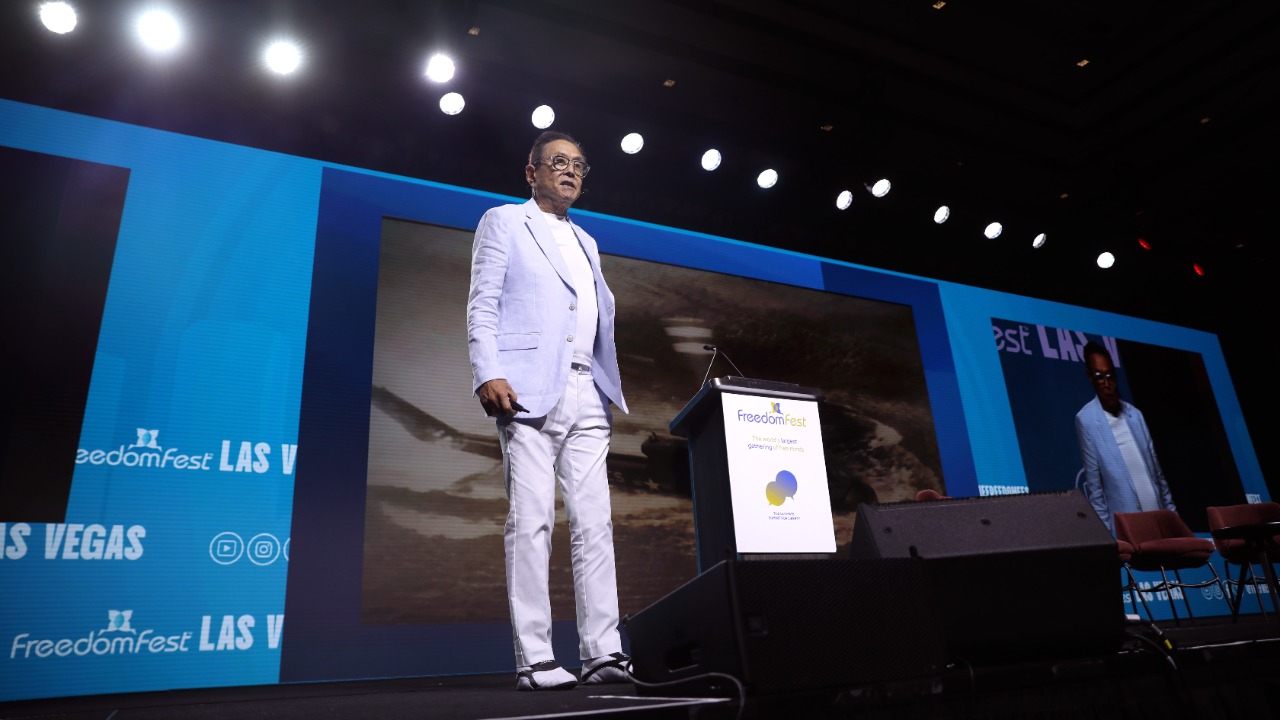
Artificial intelligence is moving from buzzword to baseline infrastructure, and one of its most vocal critics says the fallout will hit paychecks long before it feels routine. Robert Kiyosaki is warning that the “BIGGEST CHANGE in MODERN HISTORY” could trigger “massive unemployment” by 2026, particularly for people who did everything by the book and still carry student debt. I want to unpack how his alarmist forecast stacks up against mainstream economic projections and what it really means for your job risk over the next few years.
Rather than treating AI as a distant threat, I see it already reshaping hiring plans, job descriptions and salary bands, especially in white-collar roles that once looked untouchable. The question is not whether automation will change work, but whether you are positioned on the right side of that shift, with skills, assets and habits that benefit from the transition instead of being steamrolled by it.
Kiyosaki’s “biggest change” warning, in context
Robert Kiyosaki built his reputation by challenging conventional career advice, starting with his bestseller Rich Dad Poor Dad, and he is now turning that contrarian lens on AI. In an X post earlier this year, he described artificial intelligence as the “BIGGEST CHANGE in MODERN HISTORY” and predicted that it will wipe out jobs for “smart students” who followed the traditional script of college, grades and corporate careers. His concern is not just about low-wage work, but about highly educated professionals who assumed their degrees were a permanent safety net, a theme that runs through his recent comments on massive unemployment.
In interviews and social posts, Kiyosaki has gone further, tying AI to what he calls the “Biggest crash in history starting,” arguing that technology-driven disruption will collide with fragile markets and heavy debt loads. He has pointed back to his earlier book RICH DAD PROPHECY to argue that AI will accelerate job losses, weaken fiat currencies and push investors toward hard assets. When he talks about “massive unemployment,” he is not picturing a mild slowdown, but a structural break where traditional career ladders no longer work the way they did for previous generations.
Who he says is most at risk in 2026
When I read Kiyosaki’s latest warnings, what stands out is how sharply he focuses on people who did everything “right” by conventional standards. He has argued that “smart” Americans who chased prestigious degrees and white-collar titles could be hit especially hard, because AI is now encroaching on analytical, writing and coding tasks that once justified high salaries. In his view, the very students who aced exams and loaded up on student loans may find that large language models and automation platforms can do much of their entry-level work faster and cheaper, a point he has hammered home in recent comments about Americans.
He has also warned that people who still have student loan debt are particularly exposed, because they face fixed monthly payments just as their earning power comes under pressure. In one widely shared analysis of his remarks, Kiyosaki framed AI as a filter that will separate those who own assets and businesses from those who rely solely on a paycheck, arguing that the latter group could be swept into the “massive unemployment” he fears by 2026. That argument runs through coverage of his claim that AI will cause many “smart students” to lose jobs while those who adapt their financial strategy may come out ahead, a theme highlighted in his student debt warning.
What mainstream forecasts say about AI and unemployment
Kiyosaki’s rhetoric is stark, but when I compare it with mainstream economic forecasts, I see a more nuanced picture. Analysts at one major investment bank estimate that AI will affect a large share of tasks across the global workforce, yet they expect the overall impact on jobs to be more gradual than apocalyptic. Their research on how AI will affect the global workforce suggests that while automation will displace some roles, it will also create new ones and boost productivity, softening the blow over time. A follow-up analysis notes that, Aug, “Despite concerns about widespread job losses,” AI adoption is expected to have only a modest and relatively temporary impact on unemployment as displaced workers seek new positions, a point underscored in the phrase Despite concerns.
Broader labor market forecasts for 2026 also look more measured than Kiyosaki’s “massive unemployment” framing. One detailed outlook expects Unemployment to peak at exactly 4.5% in 2026 while wage growth stays above pre-pandemic levels, which is painful for some workers but far from a depression-level jobs collapse. Another major forecast projects that labor markets, which cooled markedly in 2025, should stabilize by the end of 2026, helping the unemployment rate to settle near long-run levels while inflation remains above 2% by the close of 2026, according to a Dec outlook. These projections do not dismiss AI risks, but they imply a bumpy adjustment rather than a sudden cliff.
Where AI is already reshaping careers
Even if the headline unemployment rate does not explode, I see AI already redrawing the map of which careers are rising and which are fading. New roles like “prompt engineer,” “AI product manager” and “knowledge architect” have emerged so quickly that many workers struggle to explain what they actually do. One recent feature profiled people with titles like “knowledge architect” whose jobs revolve around training and integrating AI models into everyday workflows, noting that, Dec, “What do these people do? Their jobs all involve work with artificial-intelligence models. But mostly, they feel exasperated trying to explain their roles to friends and family,” a dynamic captured in the line What do these people do.
At the same time, AI is automating slices of work in law, marketing, customer support and software development, which means some traditional entry-level tasks are disappearing or being compressed into fewer roles. Analysts tracking the tech sector note that the impact of the worldwide recession on the tech industry has been uneven, with some firms cutting staff while others double down on AI investment, and they emphasize that the forecasts and analyses of central banks and economists differ from those of commentators on banking and investment groups, each of which has a unique area of emphasis, as highlighted in a study of the impact of the worldwide recession on the tech industry. That divergence helps explain why Kiyosaki’s dire tone can coexist with relatively calm macro forecasts: they are looking at different slices of the same transformation.
How Kiyosaki says to protect yourself
When I look past the headlines, Kiyosaki’s core message is less about fear and more about changing the way individuals build security. He has long argued that relying solely on a paycheck is risky, and his AI warnings simply sharpen that point. In a recent discussion of how AI could replace millions of jobs, he urged workers to focus on financial education, entrepreneurship and ownership of assets that benefit from technological change rather than being replaced by it, advice he framed through the lens of his “rich dad’s” guidance in Jul commentary. He has also tied AI risk to broader concerns about market instability, arguing that those who diversify into real assets and businesses may be better positioned if his “Biggest crash in history” thesis plays out.
His more practical tips focus on tightening personal balance sheets before disruption hits. Coverage of his recent comments has highlighted his questions for readers, such as whether you are spending more than you earn, carrying high-interest debt or relying on a single employer for income, and it notes that expenses can often be significantly reduced with deliberate planning, a point underscored in guidance that asks, Are you spending more than you make. In parallel, another breakdown of his views on “massive unemployment” explains why he believes “smart” Americans will be hit extra hard if they cling to old career assumptions instead of building multiple income streams, a theme that runs through his Oct warning.
Am I really at risk in 2026?
To gauge your own risk, I find it useful to hold Kiyosaki’s alarm in one hand and the more moderate forecasts in the other. On one side, he is adamant that AI will cause “massive unemployment” and that many “smart students” with degrees and debt will be blindsided, a message repeated in coverage that asks, Are you at risk in 2026. On the other, detailed labor market models point to a peak unemployment rate of 4.5% and a stabilization of hiring by the end of 2026, which implies that while some sectors and roles will be hit hard, the overall economy is not expected to collapse. The truth for any individual worker likely sits somewhere between those poles, depending on how exposed your specific tasks are to automation and how quickly you can pivot.
In practical terms, I would start by mapping your current role against what AI already does well: pattern recognition, text generation, code completion and routine analysis. If most of your day involves repeatable digital tasks, your risk is higher, and Kiyosaki’s warnings about “smart” Americans in comfortable office jobs may feel uncomfortably close. If your work leans on relationship building, complex judgment, physical presence or cross-disciplinary problem solving, AI is more likely to augment than replace you, especially as companies follow the kind of gradual adoption path described in research on AI adoption. Either way, the combination of Kiyosaki’s contrarian alarm and mainstream forecasts points to the same conclusion: the safest workers in 2026 will be those who treat AI not as a passing fad, but as a catalyst to upgrade skills, diversify income and rethink what “job security” really means.
More From TheDailyOverview

Grant Mercer covers market dynamics, business trends, and the economic forces driving growth across industries. His analysis connects macro movements with real-world implications for investors, entrepreneurs, and professionals. Through his work at The Daily Overview, Grant helps readers understand how markets function and where opportunities may emerge.

