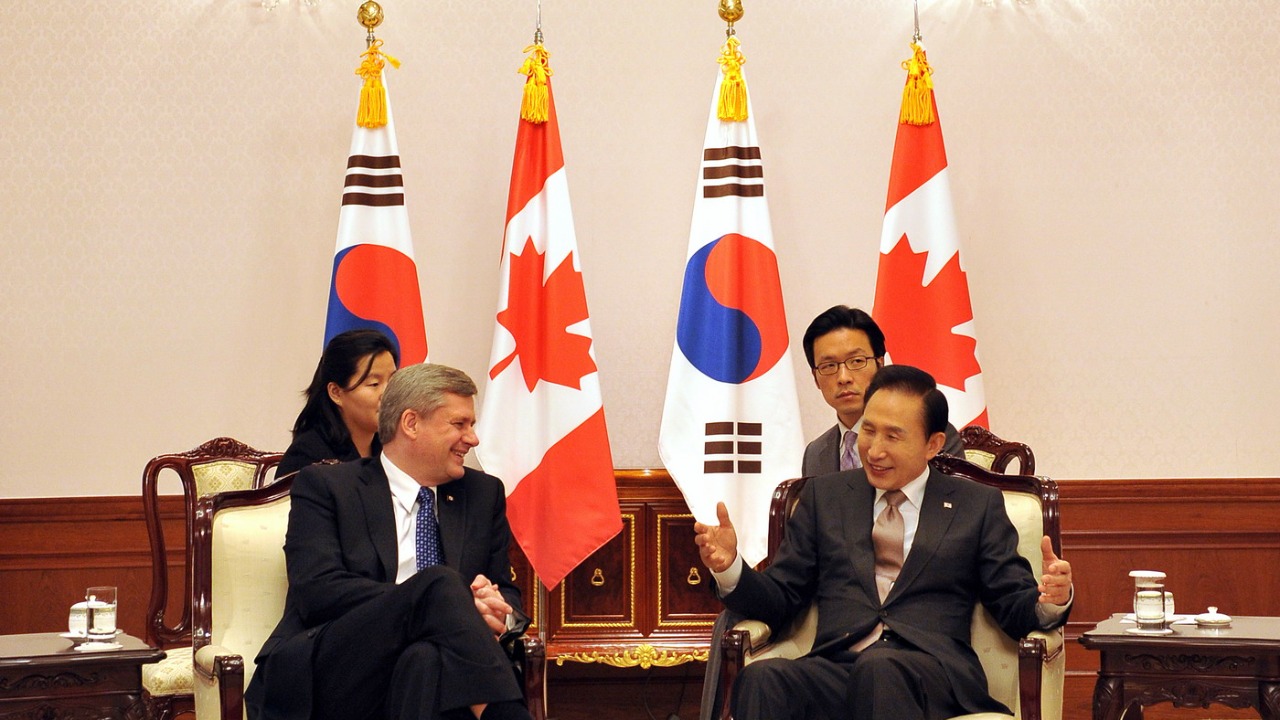
Canada’s new auto pact with South Korea is more than a diplomatic flourish. It is a deliberate attempt to turn the country into a prime landing spot for electric vehicle and battery factories at a moment when global incentives and trade rules are shifting fast. By inviting Korean automakers and battery giants to build on Canadian soil, Ottawa is betting that a deeper industrial partnership can shield its auto heartland from trade shocks and lock in a bigger share of the EV supply chain.
The memorandum of understanding between the two countries sketches out a future in which Korean brands assemble vehicles, batteries and components in Canadian plants, powered by Canadian critical minerals and clean energy. It is still a framework rather than a binding contract, but it signals that both governments see a strategic opening to align their auto sectors and reduce their exposure to policy whiplash in the United States.
The pact that resets the Canada–Korea auto relationship
At the core of the agreement, South Korea and Canada have committed to work together to expand Korean automotive manufacturing inside Canada, with a particular focus on electric vehicles and advanced components. The memorandum explicitly frames the goal as growing a Korean presence in Canadian auto and battery production, turning what has largely been a trade relationship into one built around shared factories and technology. Officials describe it as a way to deepen industrial cooperation between Canada and a leading Asian manufacturing hub without waiting for a full treaty-level overhaul.
The text of the understanding goes beyond finished cars and touches the entire EV ecosystem, from batteries to parts to supporting infrastructure. Reporting on the deal notes that South Korea and Canada have agreed to jointly expand automotive manufacturing and collaborate in future-ready vehicle technologies, including electric and possibly hydrogen-powered platforms, under a framework described as Auto Industry Collaboration. That language matters because it signals that Ottawa is not just chasing any assembly jobs, but specifically targeting the next generation of vehicles where Korean firms already have a technological edge.
Why Ottawa is courting Korean factories now
The timing of the pact is not accidental. Canada is facing new U.S. tariffs that threaten its traditional auto exports, and the federal government has been searching for ways to reduce its dependence on a single market. In that context, the decision to sign an agreement with South Korea to explore bringing more auto manufacturing to Canada is a hedge against trade risk and a way to diversify demand for Canadian-made vehicles and parts. One analysis framed it bluntly, noting that Canada is moving to reduce dependence on the U.S. by deepening ties with South Korea.
There is also a clear North American political backdrop. As the United States under President Donald Trump rolls back Biden-era incentives for electric vehicles, Korean automakers and battery makers are reassessing where to place their next wave of investment. A nonbinding agreement obtained by one outlet describes how Canadian and Korean officials are talking about EV investment at the same time that the U.S. is unwinding some of the support programs introduced under Biden. In that reporting, Zi-Ann Lum, also cited as Ann Lum, notes that the move comes as Washington shifts course and that the memorandum is part of a broader strategy to keep EV capital flowing into North America despite policy uncertainty, with the figure 202 appearing in the context of the coverage.
What the deal promises for EVs, batteries and critical minerals
On the industrial side, the memorandum is explicit about expanding Korean battery manufacturing in Canada and covering the entire supply chain from raw materials to finished packs. The agreement highlights plans to grow what it calls Korea’s battery manufacturing presence in Canada, including mining, processing and cell production, and to link that to vehicle assembly. One detailed account notes that Canada and South Korea have agreed to expand auto and EV manufacturing and to support projects that range from critical mineral extraction to as many as 12 diesel-electric vessels for related logistics, underscoring how broad the cooperation could be across Canada.
Critical minerals are the other pillar of the pact. Ottawa has been clear that it wants to leverage its deposits of lithium, nickel and other inputs to attract foreign manufacturers, and the new understanding with the Republic of Korea folds that strategy into a bilateral framework. In a release tied to the signing, Industry Minister Melanie Joly, identified as Industry Minister Melanie Joly, emphasized that critical minerals are one of the main areas of cooperation and that the memorandum signed in Ottawa with counterparts from the Republic of Korea Canada would support research, development and extraction. A companion description of the deal stresses that Canada and South Korea sign to expand auto and EV manufacturing while also committing to joint work on mineral research, development and extraction, tying the industrial build-out directly to the resource base through a second reference to Canada.
Jobs, regions and the politics of new plants
For Ottawa, the political selling point is straightforward: more factories and more jobs in communities that have long depended on the auto sector. Foreign Affairs Minister Mélanie Joly has argued that the agreement will grow Canada’s auto sector, create good jobs and reinforce the country’s position as a global leader in future-ready vehicles. Coverage of her remarks notes that Joly says the agreement will grow Canada’s auto sector, create good jobs and reinforce Canada’s position as a global leader in future-ready vehicle manufacturing, even as some Korean automakers currently do not manufacture vehicles in Canada at all, a gap she wants to close through the new Canada partnership.
The regional stakes are already visible. In Marie, Ont, a Korean steelmaker has pledged to invest in a new mill that will support the auto supply chain, and the federal and provincial governments have signed a memorandum of understanding that includes $275-million in public funding. The Korean company also said it would put in an additional $275 of its own capital as part of the broader cooperation in the industrial sector, a sign that the auto pact is catalyzing related investments beyond final assembly. Reporting on that agreement notes that Canada is seeking ways to deepen cooperation in the industrial sector and that the Marie, Ont project is one of the first concrete examples linked to the new understanding with The Korean partner.
How the pact fits into a wider strategic realignment
Beyond individual plants, the auto memorandum is part of a broader effort by both countries to reposition themselves in a more fragmented global economy. South Korea has long sought to diversify its export markets and secure stable supplies of critical minerals, and Canada is an attractive partner because of its resource base, political stability and existing trade access to the United States and Mexico. The new understanding builds on an already substantial economic relationship between South Korea and Canada, but it shifts the focus from simple trade flows to joint production and technology sharing in EVs and batteries.
For Canada, the pact also dovetails with a series of recent announcements aimed at attracting Asian investment into its auto corridor. Officials in Ottawa have framed the agreement with South Korea as a pledge to bring auto manufacturing to Canada and to build a more resilient supply chain around auto and battery manufacturing. One account of the signing notes that Ottawa, South Korea pledge to bring auto manufacturing to Canada and that the federal government has signed an agreement with South Korea to deepen cooperation around auto and battery manufacturing, underscoring the central role of Ottawa in steering the strategy. Another description of the same Korea–Canada auto deal stresses that South Korea and Canada have agreed to collaborate on expanding the Korean automotive manufacturing presence in Canada and that, on Thur, officials highlighted the potential for a stronger EV sector between the two nations, reinforcing how central electric vehicles are to the new Canada strategy.
More From TheDailyOverview
*This article was researched with the help of AI, with human editors creating the final content.

Grant Mercer covers market dynamics, business trends, and the economic forces driving growth across industries. His analysis connects macro movements with real-world implications for investors, entrepreneurs, and professionals. Through his work at The Daily Overview, Grant helps readers understand how markets function and where opportunities may emerge.

