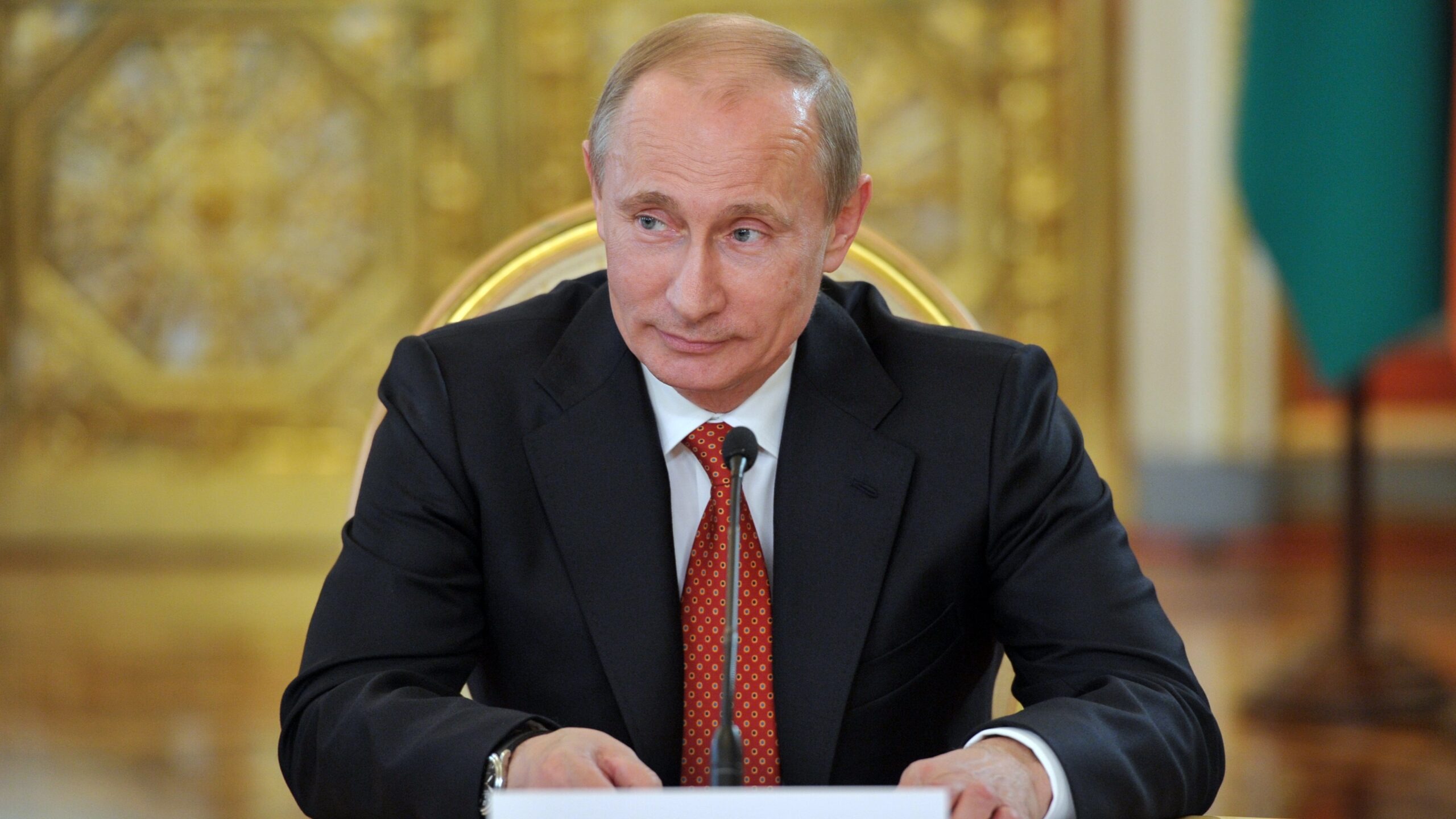
Kremlin spokesman Dmitry Peskov says Moscow has still not received a single formal response to Vladimir Putin’s proposal to pay 1 billion dollars to join Donald Trump’s Board of Peace for Gaza reconstruction. The offer hinges on unblocking frozen Russian assets so the money can be transferred as a “permanent membership” contribution. Putin unveiled the idea at a meeting of the Russian Security Council, and the silence that followed has become a fresh flashpoint in the already fraught dispute over Russian funds held in the West.
The Board of Peace Initiative
Donald Trump’s proposed Board of Peace is pitched as a governance body to coordinate reconstruction in Gaza, with a 1 billion dollar permanent contribution required from each full member. According to AP reporting, the Board of Peace is framed as a long term mechanism to oversee funding flows, contracting and monitoring for rebuilding projects, rather than a short-lived donor conference. The plan envisions a standing board that would sit above individual aid programs and try to keep large reconstruction packages aligned with political commitments on the ground.
The Trump initiative has invited heavyweight regional players to join, including Saudi Arabia and the United Arab Emirates, and AP has reported that both Saudi Arabia and the UAE have accepted the invitation to the Board of Peace. Each participating state is expected to provide the same 1 billion dollar permanent membership fee, which is meant to give them a direct stake in Gaza’s reconstruction and a formal seat at the table. That fixed price tag is what made Putin’s own 1 billion dollar offer immediately legible to diplomats watching the process, since it matched the contribution structure already attached to the Board.
Putin’s Proposal at the Security Council
Vladimir Putin chose a meeting of the Russian Security Council to float Russia’s way into the Board of Peace. In remarks carried by TASS, Putin said Russia could provide the 1 billion dollars required for membership in Trump’s Gaza Board of Peace, and that the money would come from Russian assets frozen in Western jurisdictions. He framed the payment explicitly as Russia’s entry bid, directly tying the amount to the Board’s permanent membership requirement rather than to any separate humanitarian pledge.
Putin’s argument, as relayed in a separate account by Anadolu Agency, is that using frozen Russian funds for Gaza reconstruction would both help Palestinians and demonstrate that Western governments are prepared to unblock at least part of the immobilized money when it serves a shared international purpose. By placing the proposal on the agenda of the Russian Security Council, Putin also signaled that this was not a passing suggestion but a formally endorsed line from Moscow about how frozen assets could be repurposed. The Kremlin has since repeatedly described the 1 billion dollar offer as a concrete, actionable proposal rather than a rhetorical gesture.
Frozen Russian Assets: The Core Sticking Point
The proposal lands in the middle of a heated fight over more than 210 billion dollars in Russian sovereign assets immobilized in the European Union. According to reporting in The Guardian, EU governments have agreed to keep roughly 210 billion dollars in Russian central bank assets frozen “indefinitely” unless Russia compensates Ukraine for the damage caused by its invasion. Much of that money is held at Euroclear in Belgium, turning the Brussels based clearing house into a central player in the legal and political battle over what can be done with Russian state funds.
Debates inside the EU have focused on whether the frozen Russian assets can be used directly, or instead serve as collateral for loans to support Ukraine. A detailed account from AP on the broader frozen assets environment explains that Euroclear has already faced legal actions and political pressure over the interest generated by the immobilized funds, while governments publicly insist the underlying Russian principal must remain blocked. Another analysis of EU deliberations, cited by AP, describes a policy line in which the assets are to remain frozen unless Russia compensates Ukraine, with Belgium’s custody of the funds giving it an outsized role in shaping any eventual mechanism. Against that backdrop, Moscow’s call to “unblock” a slice of the money for Gaza reconstruction collides directly with a carefully constructed Western position that the assets cannot move until there is a Ukraine settlement.
Kremlin’s Frustration and Preconditions
The Kremlin has been explicit that the 1 billion dollar payment to the Board of Peace can only happen if Western governments allow the frozen money to move. Kremlin spokesman Dmitry Peskov, in comments cited by AP, said Moscow has not received any response at all to Putin’s proposal and stressed that Russia requires unblocking of frozen assets as a precondition for sending the funds. Peskov’s language about “no response” has become central to the Russian narrative that the West is ignoring a constructive offer that would benefit Gaza while costing Western taxpayers nothing.
Maxim Oreshkin, identified in Russian reports as a key Kremlin economic official, has gone further in describing how Moscow thinks the transfer could work in practice. According to Sputnik’s account, Oreshkin said Russia would issue an instruction to move 1 billion dollars from frozen accounts, and that U.S. banks would then be obliged to execute the payment order even under existing restrictions. He argued that if the United States and European Union claim to support Gaza reconstruction, they should not block a Russian funded contribution to Trump’s Board of Peace. That framing feeds the Kremlin’s irritation, presenting Western silence as evidence of double standards on the use of frozen assets.
Why the Silence from the West?
Western governments have not publicly engaged with Putin’s 1 billion dollar offer, and the policy context helps explain why. The EU’s stance, set out in detail by The Guardian and echoed in AP coverage, is that Russian sovereign assets should remain frozen as leverage until Moscow pays compensation to Ukraine. Allowing even a limited carve out for Gaza could be seen by European capitals as weakening that leverage and opening the door to a series of politically driven exceptions, each justified by a different humanitarian or diplomatic cause.
U.S. officials, according to diplomatic accounts referenced in AP reporting, have shown little interest in bringing Russia into the Board of Peace, in part because Washington is focused on using frozen Russian assets to support Ukraine rather than to expand Moscow’s influence in Middle Eastern reconstruction efforts. Analysts at Western think tanks quoted in the same reporting argue that any move to unblock Russian funds for Gaza could collide with legislative debates over Ukraine aid, where lawmakers are already divided on how aggressively to tap Russian assets. From that perspective, silence may be a way to avoid validating Putin’s framing that Western capitals get to decide when Russian money can be unfrozen and for whose benefit.
Broader Implications and Uncertainties
The clash over Putin’s 1 billion dollar offer highlights how frozen assets have become a long term pressure tool as well as a bargaining chip. If Western governments continue to ignore the proposal, the Kremlin is likely to keep using it as an example of what it portrays as Western hypocrisy on humanitarian funding, especially when large sums are sitting idle at institutions such as Euroclear in Belgium. At the same time, any move to accept the offer could trigger fresh legal challenges from Russia or from investors affected by broader asset freezes, who might argue that selective unblocking for political reasons undermines the original legal basis for sanctions.
There is also lingering uncertainty about the Board of Peace itself. AP’s description of the initiative makes clear that Trump’s Board is still more of a framework than a fully operational institution, with invited members like Saudi Arabia and the United Arab Emirates backing the concept but with limited public detail on day to day procedures. That thin evidence about the Board’s actual formation leaves open questions about how quickly it could absorb and deploy a 1 billion dollar Russian contribution even if the asset dispute were resolved. With Peskov still talking about “no response” and Oreshkin insisting that U.S. banks could process the payment if instructed, the future of Putin’s proposal may depend less on the mechanics of moving the money and more on whether a new U.S. administration decides that Russian participation in Gaza reconstruction is a price worth paying for a broader diplomatic bargain.
More From The Daily Overview
*This article was researched with the help of AI, with human editors creating the final content.

Grant Mercer covers market dynamics, business trends, and the economic forces driving growth across industries. His analysis connects macro movements with real-world implications for investors, entrepreneurs, and professionals. Through his work at The Daily Overview, Grant helps readers understand how markets function and where opportunities may emerge.

