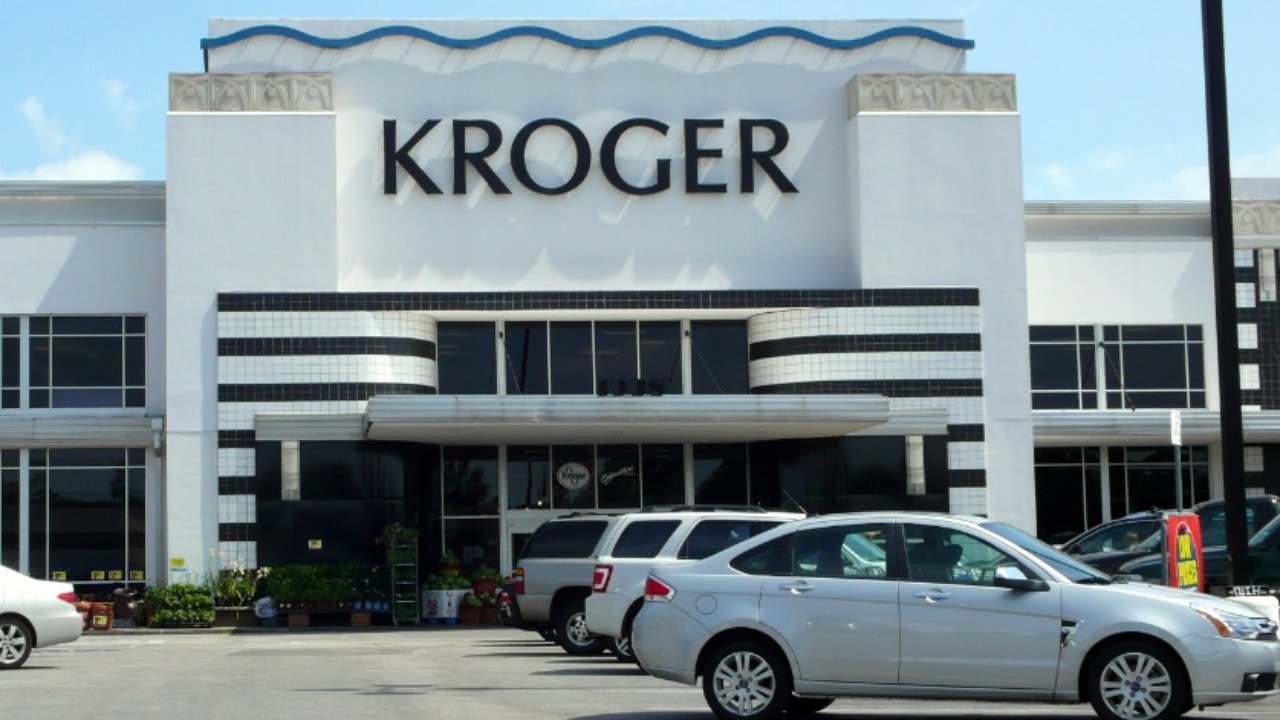
Kroger is walking away from a $121 million automated warehouse in Florida at a moment when the grocer is already under pressure to prove its online strategy and defend a contested megamerger. The decision to close the high-tech facility, built to anchor a delivery-only push in the state, underscores how quickly digital bets can sour when demand, costs, and competitive realities fail to line up.
The shutdown lands during a difficult stretch for Kroger, as it juggles slowing e-commerce growth, intense price competition, and regulatory scrutiny of its proposed tie-up with Albertsons. I see the Florida retreat as more than a one-off write-down; it is a revealing test of how far a traditional supermarket chain can stretch into pure-play online territory before the economics snap back.
Kroger’s $121 million Florida gamble unravels
Kroger’s Florida exit centers on a massive customer fulfillment center in Groveland that was designed as a beachhead for a delivery-only model in a state where the company has no traditional supermarkets. The facility, built with Ocado’s robotics and software, represented a $121 million investment aimed at serving a wide radius of households through spoke sites and last-mile fleets rather than brick-and-mortar stores, a strategy the company framed as a way to leapfrog into new markets without buying real estate or legacy chains. According to regulatory filings and local reporting, Kroger has now decided to shutter the Groveland hub, effectively unwinding its Florida experiment and acknowledging that the economics of a stand-alone automated warehouse in the state did not meet expectations, even with the scale and efficiency promised by Ocado’s technology Groveland facility.
The closure affects a network that had been built out around the Groveland site, including smaller cross-dock locations that depended on the central hub’s volume to make delivery routes viable. Kroger had promoted the Florida operation as a way to reach customers in Orlando, Tampa, Jacksonville, and South Florida with next-day and same-day service, but the company is now unwinding those routes and eliminating associated roles as the warehouse winds down. Local officials in Lake County have highlighted the scale of the investment and the impact on jobs, noting that the Groveland center was one of the area’s most advanced logistics sites before Kroger’s decision to pull back warehouse layoffs. The move crystallizes a hard lesson: even sophisticated automation cannot guarantee profitability if the surrounding market density, customer adoption, and competitive pricing do not align.
Automation, Ocado, and the limits of the pure-play delivery model
The Florida shutdown also raises pointed questions about Kroger’s broader partnership with Ocado, which has underpinned a network of similar automated customer fulfillment centers across the United States. The Groveland site was one of the earliest Ocado-powered hubs Kroger brought online, intended as proof that a centralized, highly automated model could support a delivery-only presence in markets where Kroger lacked stores. By closing one of the flagship facilities, Kroger is implicitly acknowledging that the pure-play delivery model, at least in Florida’s competitive grocery landscape, has struggled to generate the order density and margin needed to justify the capital outlay and ongoing operating costs tied to Ocado’s robotics and software stack Ocado-powered CFC.
Ocado’s technology remains central to Kroger’s e-commerce ambitions in other regions, and the company has not signaled a wholesale retreat from automated fulfillment. However, the Florida retrenchment suggests a recalibration toward markets where Kroger can layer online orders on top of existing store footprints, using automation to complement, rather than replace, traditional retail. Analysts have noted that Ocado’s model tends to work best when high order volumes can be concentrated around a hub, something that proved difficult in Florida where Kroger was effectively starting from zero brand presence and had to win customers away from entrenched rivals like Publix and Walmart. The Groveland closure, then, is less a verdict on automation itself and more a warning about deploying capital-intensive robotics in markets where customer acquisition and delivery economics are inherently uphill battles Florida warehouse.
A tough backdrop: inflation, price wars, and a contested megamerger
Kroger’s decision to walk away from a nine-figure facility is easier to understand against the backdrop of a grocery sector squeezed by inflation, shifting consumer behavior, and regulatory scrutiny. Food-at-home prices have moderated from their sharp spikes earlier in the inflation cycle, but shoppers remain highly price sensitive, trading down to private labels and chasing promotions in ways that compress margins for full-service grocers. At the same time, Walmart, Costco, and hard discounters have leaned into aggressive pricing, forcing Kroger to balance investment in digital growth with the need to keep shelf prices competitive and preserve profitability in its core supermarket business retail sales data. In that environment, a capital-heavy, delivery-only operation in a non-core market becomes a prime candidate for cuts.
The timing also intersects with Kroger’s proposed acquisition of Albertsons, a $24.6 billion deal that has drawn intense scrutiny from the Federal Trade Commission and state attorneys general. Regulators have argued that the merger could reduce competition and raise prices, while Kroger has countered that the combination is necessary to compete with larger national and digital players and to fund investments in technology and lower prices. As the company fights to convince courts and regulators that it can deliver efficiencies and consumer benefits, high-profile setbacks like the Florida closure complicate the narrative that its tech-heavy strategy is a clear path to stronger, more efficient operations. The Groveland retreat underscores how difficult it is to translate scale and automation into consistent returns, a reality that will likely feature in ongoing debates over whether Kroger can deliver on the promises it has made around the Albertsons deal FTC complaint.
What the Florida retreat signals about Kroger’s e-commerce strategy
Stepping back from the specifics of Groveland, I see the closure as a signal that Kroger is pivoting toward a more disciplined, hybrid approach to e-commerce. Rather than using automated hubs to leap into entirely new territories without stores, the company appears more likely to focus on markets where it can blend store-based picking, micro-fulfillment, and larger Ocado centers to support both pickup and delivery. That shift aligns with broader industry trends, where many grocers have concluded that click-and-collect and ship-from-store models can deliver acceptable service levels with lower capital intensity than stand-alone, fully automated warehouses. The Florida experience, in other words, is pushing Kroger closer to a model that treats automation as a tool to enhance existing networks, not a silver bullet for rapid geographic expansion e-commerce strategy.
The retrenchment also reflects a more sober view of online grocery demand after the pandemic surge. During the height of COVID-19, many retailers, including Kroger, saw digital volumes spike and projected that elevated adoption would be durable enough to justify large, long-term investments in dedicated infrastructure. As growth has normalized and some shoppers have returned to in-store habits, the economics of pure-play delivery have become more challenging, especially in markets where delivery fees and higher online prices face resistance. By closing the Groveland facility, Kroger is effectively admitting that its Florida bet was calibrated to a demand curve that did not fully materialize, and is now reallocating capital toward initiatives with clearer payback, such as store remodels, price investments, and more targeted digital capabilities online grocery growth.
Implications for workers, communities, and rivals
The human and local economic fallout from Kroger’s decision is significant, even if it is overshadowed by the strategic narrative. The Groveland facility supported hundreds of jobs across warehouse operations, maintenance, and last-mile delivery, roles that are now being phased out as the site winds down. Local officials have expressed concern about the loss of high-tech employment and the potential impact on surrounding businesses that had grown up around the logistics hub. While the building itself may eventually be repurposed by another operator, the immediate effect is a contraction in one of Lake County’s more advanced logistics clusters, a reminder that ambitious corporate bets can leave communities exposed when strategies change local jobs.
For competitors, Kroger’s retreat from Florida’s delivery-only battlefield opens space for incumbents and digital specialists to consolidate their positions. Publix, which dominates the state’s supermarket landscape, has been expanding its own online ordering and delivery options, often through partnerships with platforms like Instacart. Walmart continues to push its Walmart+ membership and same-day delivery, leveraging its dense store network to keep costs in check. Pure-play services such as Amazon Fresh and Uber Eats are also vying for grocery share in key metro areas. Kroger’s decision to exit a market where it lacked stores underscores how difficult it is for a traditional grocer to outflank rivals on their home turf using a capital-intensive, delivery-only model, and it may embolden other chains to double down on more flexible, asset-light approaches to digital growth Florida grocery rivals.
More From TheDailyOverview
- Dave Ramsey warns to stop 401(k) contributions
- 11 night jobs you can do from home (not exciting but steady)
- Small U.S. cities ready to boom next
- 19 things boomers should never sell no matter what

Grant Mercer covers market dynamics, business trends, and the economic forces driving growth across industries. His analysis connects macro movements with real-world implications for investors, entrepreneurs, and professionals. Through his work at The Daily Overview, Grant helps readers understand how markets function and where opportunities may emerge.