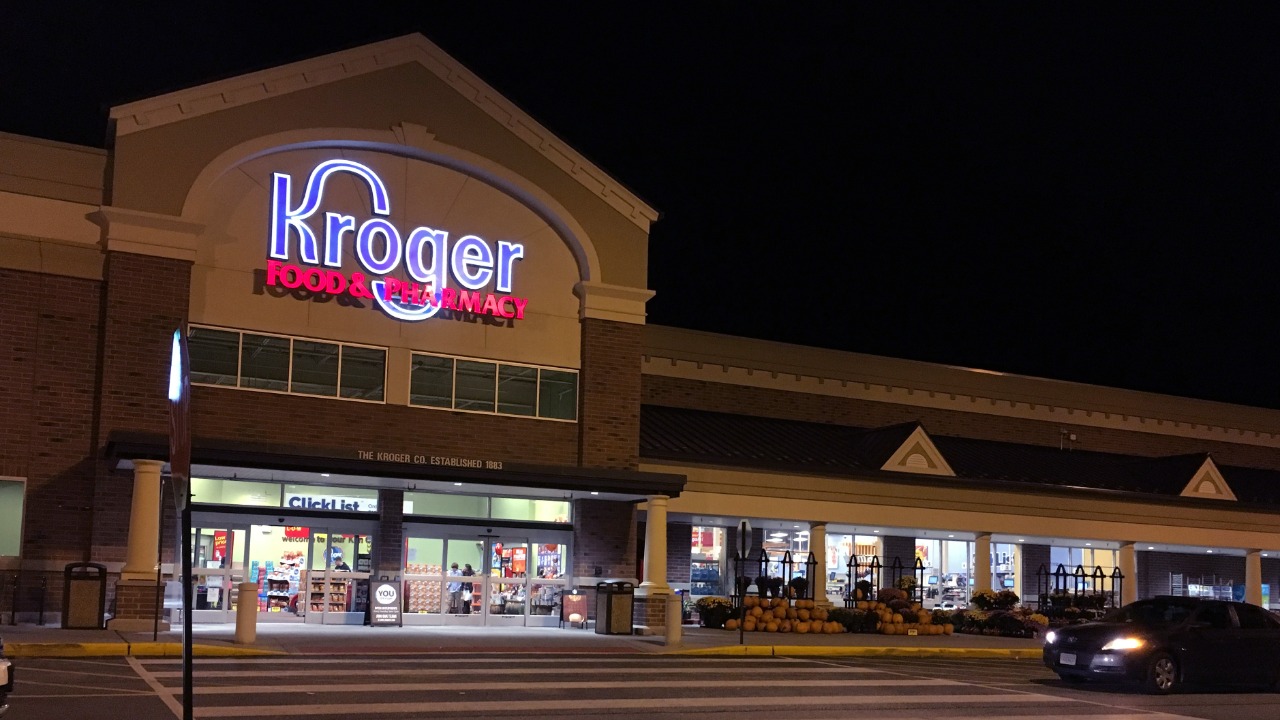
Kroger Co. has started winding down operations at roughly 60 underperforming U.S. stores over an 18‑month timeline, a direct consequence of the failed merger with Albertsons Companies that two separate courts blocked late last year. The closures, disclosed in the grocer’s most recent earnings report and tied to a broader profitability push, represent Kroger’s sharpest portfolio contraction in years and raise immediate questions about job losses and grocery access in affected communities. With a $600 million termination fee still in dispute and active litigation between the two grocery giants, the fallout from the deal’s collapse is far from over, and is reshaping strategic choices across the supermarket sector.
For regulators, the failed combination is being treated as a landmark antitrust win that tested new theories about labor markets and local concentration in everyday consumer goods. For Kroger and Albertsons, it has become a costly detour that consumed years of management attention, invited public scrutiny, and now leaves both companies recalibrating in a market where scale still matters but consolidation faces higher legal hurdles. The store closures, the ongoing Delaware lawsuit, and the Federal Trade Commission’s winding down of its own case together mark the transition from a proposed megamerger to a long tail of consequences that will play out in communities, courtrooms, and corporate boardrooms well into the future.
Two Courts Killed the Deal
The merger between Kroger and Albertsons did not die quietly. It was stopped by two independent legal actions in rapid succession that left the companies with no practical path forward. The U.S. District Court for the District of Oregon granted the Federal Trade Commission’s request for a preliminary injunction, blocking Kroger from completing the acquisition. In its public statement on the ruling, the FTC framed its case around protecting consumer prices and preserving worker bargaining power, arguing that combining two of the country’s largest traditional grocery chains would concentrate too much market control in a single operator and risk higher prices and weaker labor leverage.
Separately, King County Superior Court Judge Marshall Ferguson permanently enjoined the merger under Washington state law, creating a second, independent barrier. In an order summarized by the Washington Attorney General’s office, Judge Ferguson concluded that the proposed divestiture to C&S Wholesale Grocers would not adequately restore competition in local markets, particularly in regions where Albertsons and Kroger both operated. With a federal injunction in Oregon and a state‑level injunction in Washington, the companies faced a legal pincer that made any appeal strategy uncertain and time‑consuming, and undermined the core premise that the deal could close within a commercially reasonable window.
Kroger Pulls the Plug, Albertsons Sues
Once it became clear that the merger could not proceed on its original terms, Kroger issued a formal termination notice to Albertsons on December 11, 2024, officially ending the proposed combination. But termination did not resolve the financial issues between the parties. Albertsons had already gone to court, filing a complaint in the Delaware Court of Chancery on December 10, 2024, one day before Kroger’s notice, as documented in a detailed SEC filing. At the heart of that lawsuit is a $600 million termination fee, with each company arguing that the other’s actions triggered or voided the obligation to pay.
Kroger responded by filing an answer and counterclaims in the same Delaware proceeding, turning what had been a shared regulatory fight into a direct corporate conflict over who bears the financial blame for the failed transaction. The SEC documentation describes a contested narrative in which Kroger contends that regulatory conditions and Albertsons’ alleged conduct justified ending the agreement without paying the fee, while Albertsons asserts that Kroger failed to use sufficient efforts to overcome legal obstacles. With neither side signaling any public appetite for settlement, the dispute over the termination fee is poised to become a multi‑year legal battle that could influence how future merger agreements allocate risk when antitrust challenges are likely.
Why 60 Stores Are Closing Now
Kroger’s decision to shut approximately 60 stores over 18 months is not a routine housekeeping exercise or a small pruning of a vast network. The plan, outlined in the company’s earnings report and highlighted in coverage by the Associated Press, is explicitly tied to improving profitability now that the Albertsons deal is off the table. Executives had expected the combined company to gain substantial economies of scale in purchasing, logistics, and technology that could help offset weaker locations. Without that expanded base, underperforming stores that might have been absorbed into a larger portfolio instead become more visible drags on margins, prompting a sharper retrenchment than Kroger has undertaken in years.
The closures also signal a strategic reset after more than two years spent planning for integration. During the merger campaign, management attention, capital planning, and technology roadmaps were all oriented toward operating as a single, much larger enterprise. With that future now foreclosed, Kroger appears to be refocusing on its existing footprint, culling locations that do not meet internal thresholds for traffic, profitability, or growth potential. The 18‑month timeline suggests a phased process that may allow for lease negotiations, attempts to sell sites, and potential transfers of workers, but the company has not publicly released a full list of affected stores or a detailed schedule, leaving communities to wait for local announcements that will determine whether their neighborhood supermarket survives.
The FTC Closes Its Own File
On the regulatory side, the FTC’s administrative case against the merger has reached its procedural end, even as the broader policy debate it sparked continues. After the federal court granted a preliminary injunction and the companies terminated their agreement, the FTC and the merging parties jointly asked to end the in‑house proceedings. The Commission’s public docket for the matter, listed under Docket No. 9428, shows a Joint Motion to Dismiss followed by an Order Dismissing the Complaint, reflecting the straightforward reality that there was no longer an active transaction to adjudicate.
The dismissal, however, should not be read as a retreat from the agency’s underlying antitrust concerns. In its now‑closed complaint and related public statements, the FTC set out a detailed theory of harm that emphasized not only higher prices for groceries but also reduced bargaining power for workers in regions where Kroger and Albertsons competed for labor. That framing, later echoed in the Oregon court’s injunction, is likely to inform how the FTC evaluates future consolidation attempts in food retail and other sectors with highly local competition. While the docket is closed and the administrative law judge will not issue a merits decision, the analytical framework developed in this case effectively becomes a template for future enforcement actions involving regional chains and essential consumer goods.
What the Divestiture Failure Revealed
One of the most telling aspects of the merger’s collapse was the rejection of the proposed divestiture plan involving C&S Wholesale Grocers, which was intended to address antitrust concerns by spinning off hundreds of stores. Kroger and Albertsons argued that selling these locations to C&S would maintain robust competition in markets where their footprints overlapped, allowing regulators to approve the broader combination. Judge Ferguson’s ruling in Washington state, as described by the Attorney General’s office, dismantled that premise by concluding that C&S (primarily a wholesaler with limited retail operations) lacked the demonstrated capacity to operate the acquired stores as strong, independent competitors capable of disciplining prices and service levels.
The FTC voiced similar skepticism in its federal case, questioning whether the proposed divestiture buyer could realistically maintain the divested stores as going concerns with competitive pricing, adequate staffing, and sufficient investment. This convergence between state and federal enforcers underscores a broader shift in how regulators view remedy packages in large mergers. Instead of accepting divestitures on paper, agencies and courts are increasingly scrutinizing whether proposed buyers have the financial strength, operational expertise, and strategic incentives to succeed. The C&S plan has thus become a cautionary example for dealmakers: future divestiture proposals in the grocery industry will likely be judged not only on the number of stores sold but on the credibility of the buyer’s ability to replicate the competition that would otherwise be lost.
Local Impact and the Grocery Access Question
The 60 store closures raise acute concerns about grocery access, particularly in rural areas and lower‑income urban neighborhoods where Kroger may be one of the few full‑service supermarkets. When a major chain exits a community, the void is not always filled by another large operator; in many cases, small convenience outlets with higher prices and limited fresh food options are the only replacements, effectively creating or deepening food deserts. The FTC’s framing of the merger case acknowledged these local dynamics, warning that increased concentration in grocery markets can leave consumers with fewer nearby options, higher transportation costs to reach distant stores, and diminished leverage to push back against price increases.
For workers at the affected stores, the closures translate into job losses or, at best, offers to transfer to other locations that may be far from home or lack comparable hours. Kroger’s earnings disclosures have emphasized the financial rationale for shutting underperforming sites but have not detailed specific commitments on severance, retraining, or relocation support. Consumers and employees who believe they are affected by unfair or deceptive practices in the marketplace can submit complaints through the FTC’s online reporting portal, which serves as a central intake for a wide range of issues. The agency also provides specialized resources for victims of identity‑related crimes at IdentityTheft.gov and offers tools to limit unwanted sales calls through its Do Not Call Registry, underscoring its broader consumer protection role even as its specific case against the merger has been dismissed.
A Grocery Industry Without Its Biggest Deal
The collapse of the Kroger‑Albertsons merger leaves the U.S. grocery sector in a kind of holding pattern, with the status quo preserved but underlying pressures unresolved. The deal would have created the largest traditional supermarket operator in the country, combining thousands of stores across dozens of states under a single corporate umbrella. Instead, both companies remain independent, with Kroger shrinking its footprint through targeted closures and Albertsons focused on extracting what it views as contractually owed compensation through Delaware litigation. From the FTC’s perspective, the competitive dynamics it sought to protect (multiple large chains vying for shoppers and workers in overlapping markets) remain largely intact, at least for now.
Yet the outcome also exposes a tension at the heart of modern antitrust enforcement: blocking a merger can preserve competition on paper while still leading to fewer stores and local job losses if the would‑be acquirer responds by cutting back. Kroger’s 60 closures are a concrete example of how corporate strategies adjust when scale‑driven growth is taken off the table, and they raise difficult questions about how regulators and policymakers should weigh national competition benefits against localized harms. For communities losing their neighborhood supermarket, the distinction between a merger‑driven consolidation and a post‑merger retrenchment may feel academic. As the Delaware fee dispute grinds on and both companies reassess their options, the industry is left to navigate an environment where large‑scale deals face steeper legal odds, divestiture remedies face tougher scrutiny, and the balance between consumer protection and corporate flexibility is still being renegotiated in real time.
More From The Daily Overview
*This article was researched with the help of AI, with human editors creating the final content.

Grant Mercer covers market dynamics, business trends, and the economic forces driving growth across industries. His analysis connects macro movements with real-world implications for investors, entrepreneurs, and professionals. Through his work at The Daily Overview, Grant helps readers understand how markets function and where opportunities may emerge.