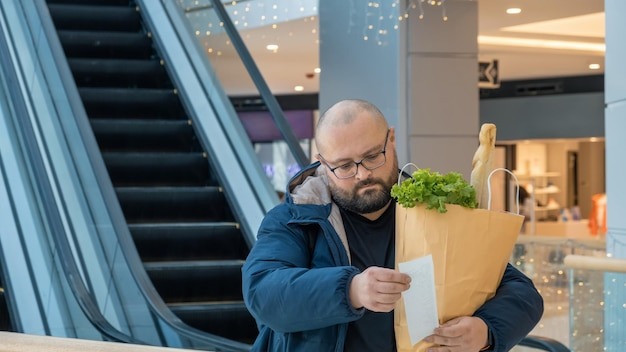
Los Angeles shoppers are still adjusting to a county sales tax that already jumped to 9.75 percent in many communities, yet local leaders are now weighing another half‑cent increase that would land squarely on everyday purchases. The proposal is framed as a lifeline for a health care system facing deep federal cuts, but for families watching grocery and restaurant tabs climb, it looks more like another hit to the household budget. The political question is no longer whether the need is real, but whether the dinner table should keep footing the bill.
The stakes are especially sharp for lower income Angelenos, who spend a larger share of their paychecks on food and often rely on inexpensive restaurants when time or housing conditions make cooking at home difficult. A new tax on top of already elevated rates would not only nudge up the cost of a burger or a burrito, it would quietly widen the gap between those who can absorb higher prices and those who cannot. That is the core tension running through Los Angeles’ latest tax debate.
From federal cuts to local cash register: how the half‑cent would work
The half‑cent proposal did not appear in a vacuum. County health officials are staring at a major loss of Medi‑Cal funding tied to H.R.1 and the Trump administration’s “One Budget” approach, which shifts more of the safety‑net burden onto states and counties. A newly formed health care coalition wants to plug that hole by asking Angeleno voters to approve a countywide sales tax increase in June, explicitly pitched as a way to offset Medi Cal losses at facilities such as Martin Luther King Jr. Community Hospital. Supporters argue that without new revenue, clinics and emergency rooms that serve the poorest residents will be forced to cut services or close.
County leaders have been briefed on the idea in a series of presentations that frame the tax as a targeted response to federal retrenchment. A PCEO report describes how the Los Angeles County Board of Supervisors is considering the measure as a direct answer to The Trump administration’s One Budget strategy, which has already squeezed the County Department of Health Services. Separate coverage of the same push notes that groups across California are exploring similar local taxes to offset health care cuts, with Lynn La of CALMATTERS detailing how advocates have zeroed in on county sales taxes as the most politically viable tool despite their regressive impact, particularly around the Martin Luther King Jr. Community campus in South Los Angeles, in a piece republished by Pasadena Now.
Inside the county, the conversation has already moved from concept to mechanics. A recent segment on how LA County considers a sales tax increase to cover federal health care cuts explained that the County would place a half‑cent measure before voters, with revenue earmarked for the County Department of Health Services, and that the tax would sit on top of existing local add‑ons that already push some cities close to 11 percent, a point echoed in a separate CBS video. Veteran local politics reporter Frank Stoltze has also been covering how democracy is, and at times is not, working around this debate, with LAist noting that Frank Stoltze is a veteran reporter who covers local politics in a piece on how LA County considers a sales tax increase to deal with the federal funding cut, a description repeated in a separate LAist link.
Grocery carts, taco nights and a tax system tilting on its axis
On paper, a half‑cent sounds trivial. At the checkout line, it is anything but. County residents already saw their sales tax jump when voters approved Measure A for homelessness services, pushing the base rate to 9.75 percent and higher in cities like Lancaster and Palmdale. Coverage of that earlier increase spelled out that, under Measure A, the average L.A. County family would pay about 5 dollars more each month in sales tax, with the countywide rate rising from 9.5 percent to 9.75 percent and some communities climbing above 10 percent, according to a breakdown of what you will pay that explained how the new County rate interacts with local add‑ons in What. A separate analysis noted that, as of Tuesday when the new levy took effect, County residents saw sales tax on purchases jump to 9.75 percent and higher in some jurisdictions, a shift described in detail in a piece headlined about how, As of Tuesday, L.A. County residents will see a sales tax increase, which underscored that the County rate is now among the highest in the state and was linked through As of Tuesday.
More From The Daily Overview
*This article was researched with the help of AI, with human editors creating the final content.

Julian Harrow specializes in taxation, IRS rules, and compliance strategy. His work helps readers navigate complex tax codes, deadlines, and reporting requirements while identifying opportunities for efficiency and risk reduction. At The Daily Overview, Julian breaks down tax-related topics with precision and clarity, making a traditionally dense subject easier to understand.

