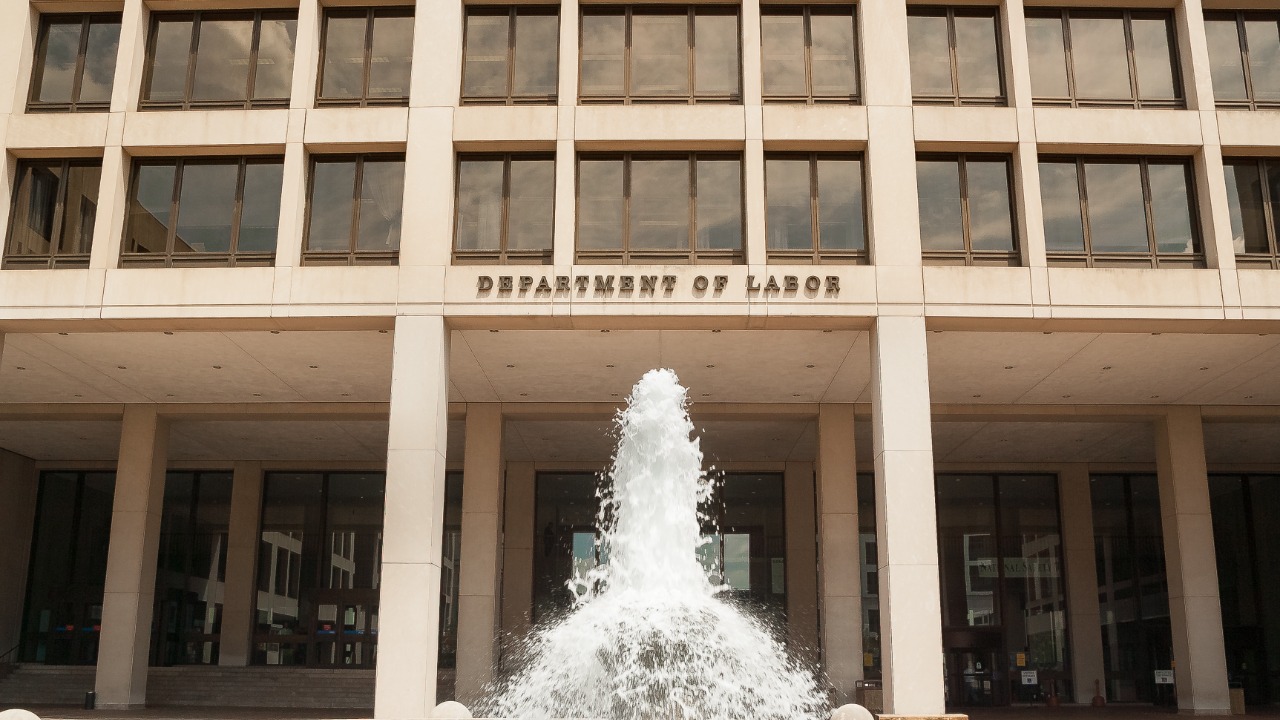
The U.S. Department of Labor announced on February 18, 2026, that it is sending a specialized “strike team” to examine California’s unemployment insurance program, targeting roughly $21 billion in outstanding federal loan debt and persistent fraud concerns. Labor Secretary Lori Chavez-DeRemer framed the intervention as a direct response to years of insolvency in the state’s UI trust fund and a pattern of improper payments that state auditors have flagged repeatedly. According to the department’s news release, the team will work directly with California officials to review program integrity, payment accuracy, and customer service, putting the state’s Employment Development Department under the most intense federal scrutiny it has faced since the pandemic-era fraud wave.
Federal Strike Team Targets EDD’s Debt and Fraud Record
The strike team will focus on program integrity inside EDD, which manages the largest state unemployment system in the country. California’s UI trust fund holds state-collected payroll taxes used strictly to pay the state portion of unemployment benefits, but that fund has been insolvent for years, forcing the state to borrow from the federal government. According to federal data on state solvency, California carries approximately $21 billion in outstanding federal loans, a figure that dwarfs every other state’s borrowing balance and has persisted well beyond the pandemic emergency. The department’s announcement indicates that the strike team will review how California plans to restore solvency and whether current tax and benefit policies are sufficient to stop the debt from growing.
The Labor Department’s announcement cited the California State Auditor’s findings as part of the rationale for the probe. That auditor designated EDD as a high-risk agency in 2023 because of inadequate fraud prevention, poor claimant service, and an unusually high rate of eligibility decisions overturned on appeal. A follow-up assessment reaffirmed the high-risk label, documenting continued high improper-payment levels and customer service failures. The federal intervention, then, is not a surprise audit but rather a response to a well-documented trail of dysfunction that California’s own watchdog has been cataloging for years, now paired with Washington’s concern that federal dollars are being mismanaged.
Employer Tax Hikes Compound the Financial Pressure
The $21 billion debt carries a direct cost for California businesses that most coverage of the probe has treated as background noise rather than the slow-moving crisis it represents. Under longstanding federal law, when a state carries outstanding Title XII advances for multiple consecutive years and fails to repay by the statutory deadline, its employers lose a portion of their normal credit against the Federal Unemployment Tax Act. The Labor Department’s determinations on FUTA credit reductions confirm that California is currently subject to this penalty, which increases the effective federal unemployment tax rate employers must report on IRS Form 940. For firms that have never laid off significant numbers of workers, the higher bill can feel disconnected from their own behavior but is unavoidable as long as the state’s loan remains outstanding.
The practical result is a payroll tax surcharge that grows each year the debt remains unpaid. California’s Legislative Analyst’s Office projected in January 2024 that this surcharge would increase by $300 million in 2024-25 alone. For small and mid-size employers already managing thin margins, the annual escalation functions as a hidden tax driven not by their own claims history but by the state’s failure to restore its trust fund to solvency. The strike team’s work could accelerate reforms that eventually shrink the debt, but in the near term, the tax penalty will keep climbing until the outstanding balance is retired, leaving businesses to shoulder costs that might otherwise have been avoided through earlier policy adjustments.
Fraud Prosecutions Show the Scale of the Problem
The “fraud fears” in the federal announcement are not hypothetical. The DOL’s Office of Inspector General maintains a running tally of national UI fraud enforcement actions, including search warrants, criminal charges, convictions, and monetary recoveries, all documented through its UI oversight work portal. California has been a frequent subject of those enforcement actions, and individual cases illustrate how insiders exploited pandemic-era controls. In one prosecution handled by the U.S. Attorney’s Office for the Central District of California, a former state government employee and her former boyfriend pleaded guilty to fraudulently obtaining COVID-era jobless benefits through identity theft. The case involved specific loss amounts, multiple counts, and a scheme that leveraged the defendant’s access to government systems, underscoring how vulnerable EDD’s processes were to internal abuse.
That prosecution is just one data point in a much larger pattern. The California State Auditor’s reports have noted that the pandemic surge, rapid program changes, and weakened EDD controls created conditions where fraud risk expanded dramatically. The auditor found that EDD’s eligibility decisions were overturned on appeal at rates far above national norms, a signal that initial claims processing was both too loose in some cases and too error-prone in others. When a system simultaneously overpays fraudulent claims and wrongly denies legitimate ones, the credibility gap becomes a structural problem, not just an accounting issue, and it is precisely that systemic breakdown that the federal strike team has been tasked with diagnosing and, ultimately, helping to repair.
EDD Points to Its Own Anti-Fraud Gains
California’s EDD has pushed back against the narrative of unchecked failure by highlighting its own enforcement record. The department’s investigators received national recognition for their work alongside DOL-OIG and federal strike-force efforts, according to agency reporting. The department has cited figures for claims blocked, dollars recovered, and operational changes including increased investigative activity, arrests, and convictions. Those numbers suggest that EDD has not been entirely passive in the face of fraud, even if the scale of losses has overwhelmed its capacity and left policymakers skeptical that enforcement alone can restore trust.
Still, the gap between EDD’s claimed progress and the auditor’s repeated high-risk designation raises a question that the federal strike team will likely have to answer: whether the state’s reforms are producing meaningful systemic change or simply generating enforcement statistics while the underlying vulnerabilities persist. The most recent state auditor updates continue to emphasize high improper-payment levels and unresolved customer service failures, suggesting that technology upgrades and staffing changes have not yet translated into consistent, accurate decision-making. The federal review could force a more rigorous assessment of which anti-fraud tools are actually reducing losses and which have become public-relations talking points rather than durable safeguards.
What Comes Next for Workers and Employers
For workers, the strike team’s arrival could ultimately mean a more reliable unemployment safety net, but the path there may involve short-term friction. A tighter focus on program integrity can translate into additional identity checks, document requests, and delays, particularly if EDD implements new verification tools while still working through existing backlogs. The Labor Department’s online compliance guidance for workers and employers highlights how complex eligibility rules already are, and California’s challenge will be to strengthen fraud controls without making it even harder for legitimately unemployed people to access benefits. If the strike team recommends clearer communication standards and streamlined appeals, claimants could see faster, more predictable decisions over time.
For employers, the federal review raises the possibility of structural reforms that might eventually slow or reverse FUTA credit reductions, but any relief is likely years away. In the interim, businesses must plan around steadily rising federal unemployment taxes and the potential for state-level payroll tax changes designed to accelerate loan repayment. Some employers are responding by investing more heavily in retention and training, including participation in registered apprenticeship programs that can reduce turnover and stabilize payrolls. If the strike team’s work leads to a more solvent trust fund and a less fraud-prone system, both workers and employers could benefit from lower long-run costs and a safety net that functions as intended rather than as a recurring crisis point in California’s budget.
More From The Daily Overview
*This article was researched with the help of AI, with human editors creating the final content.

Grant Mercer covers market dynamics, business trends, and the economic forces driving growth across industries. His analysis connects macro movements with real-world implications for investors, entrepreneurs, and professionals. Through his work at The Daily Overview, Grant helps readers understand how markets function and where opportunities may emerge.