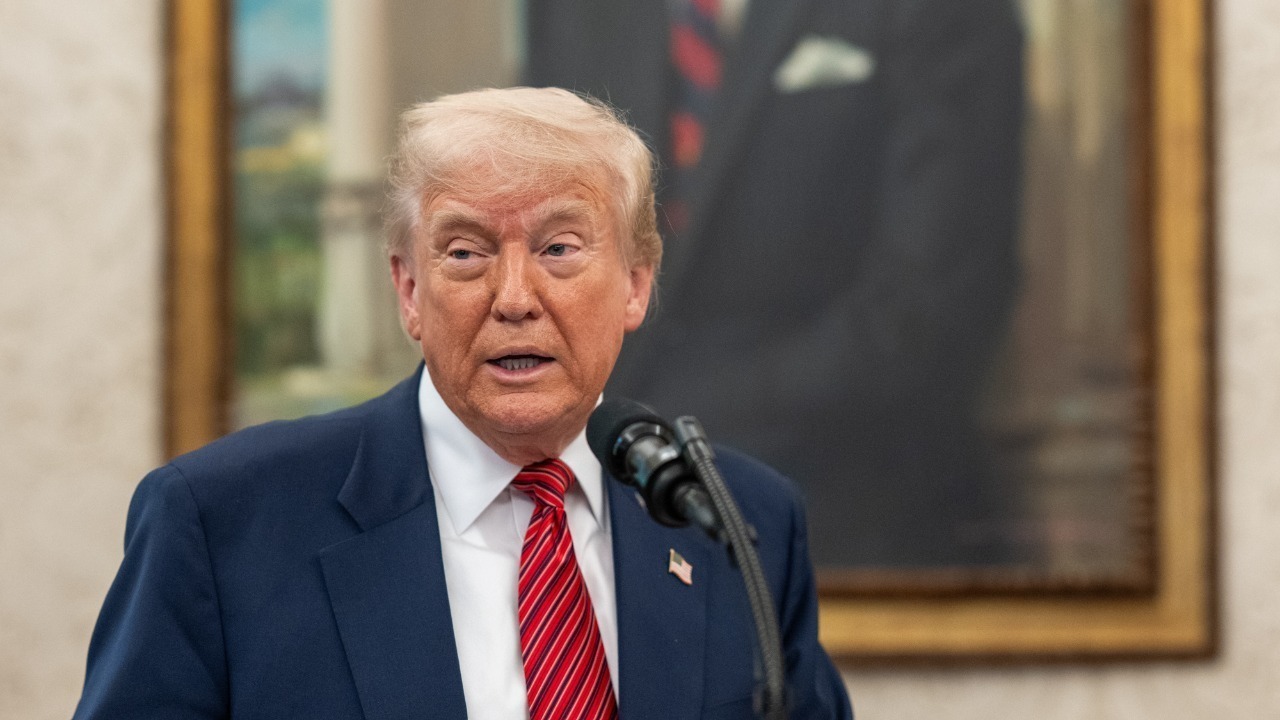
President Donald Trump is signaling that he wants to unwind a looming change to how gambling winnings are taxed, setting up a clash between a fresh revenue-raising rule and a White House eager to court bettors, casinos, and swing-state tourism hubs. The fight centers on a 2026 shift that would sharply limit how much gambling loss you can write off, effectively taxing people who only broke even, and on Trump’s counterproposal to slash or even scrap federal tax on gambling wins altogether. I see a high-stakes policy collision coming, with the Internal Revenue Service caught between enforcing a tougher regime and responding to a president who has made tax cuts a political calling card.
The 2026 rule that changes how gamblers settle up with the IRS
The starting point for this brewing reversal is a new rule that kicks in at the start of 2026 and reshapes how casual gamblers reconcile wins and losses. Instead of the long-standing approach that let you offset your jackpots with an equal amount of losing bets, the updated framework caps how much of those losses you can deduct, even if your overall year at the tables was a wash. Beginning January 1, 2026, Americans who gamble in the United States will find that the tax code treats a portion of their “break even” year as taxable income, because the deduction for losses no longer fully matches what they actually wagered and lost.
In practical terms, that means a weekend warrior who hits a few big slot payouts but then gives it all back could still owe federal income tax on the wins that show up on their forms, even though their net result is zero. The new rule, highlighted in a widely shared explanation that starts with the phrase Starting January, warns that this mismatch between reported winnings and capped deductions can turn a neutral gambling year into a tax liability. For millions of casual players who rely on casinos, online sportsbooks, and state lotteries for entertainment, the change transforms what used to be a relatively straightforward “wins minus losses” calculation into a more punishing equation that favors the Treasury over the bettor.
How current IRS rules treat gambling income and losses
To understand why the 2026 shift is so jarring, I need to start with how the Internal Revenue Service handles gambling today. Under existing guidance, the IRS treats gambling winnings as fully taxable income, whether they come from slot machines, poker tournaments, sports bets, raffles, or even noncash prizes like cars and trips. At the same time, casual gamblers who are not in the trade or business of gambling can deduct their gambling losses, but only up to the amount of their reported winnings, and only if they itemize deductions rather than taking the standard deduction.
The agency’s own topic page spells out that these rules apply to “casual gamblers” and that every dollar of gambling income must be reported, even if it is not captured on a Form W-2G. The same guidance explains that prizes such as vehicles or travel packages are treated as income at their fair market value, which means the tax bill can be substantial even when the winner never sees a cash payout. The IRS section labeled More In Help and “Gambli” makes clear that meticulous recordkeeping is essential, because without detailed logs of wagers and losses, taxpayers cannot substantiate the deductions they are allowed to claim under current law.
The OBBBA and the 90% cap that set the stage for a backlash
The 2026 change does not appear out of thin air, it grows out of a broader tax package that already clipped gamblers’ ability to offset their wins. Earlier legislation known as The OBBBA introduced a key limitation that replaced the traditional full offset with a partial one, and that shift is now colliding with Trump’s push to roll back the new regime. The law’s central feature is a Key Change described as a “Deduction Cap,” which restricts how much of your gambling losses can be used to reduce taxable income.
Instead of allowing a full write-off, The OBBBA imposes a ceiling so that taxpayers can only deduct 90% of their gambling losses against their winnings, eliminating the prior ability to claim a 100% deduction even when they broke even for the year. That 10 percent gap might sound modest on paper, but for high-volume bettors and frequent casino visitors it can translate into thousands of dollars in extra taxable income. By locking in this partial offset, the OBBBA effectively laid the groundwork for the 2026 rule that formalizes a world where the government always takes a cut, even when the gambler’s net result is zero.
Trump’s emerging pitch: soften or scrap tax on gambling wins
Against that backdrop, President Donald Trump is now positioning himself as the champion of gamblers who feel squeezed by the new caps. In public comments, Trump has floated the idea of cutting taxes on gambling winnings and has even mused about eliminating them entirely, a dramatic contrast with the tightening rules scheduled for 2026. His political instinct is clear, he sees a chance to turn frustration with the OBBBA and the upcoming deduction limits into support from casino workers, tourism-dependent cities, and the growing universe of online sports bettors.
One detailed analysis of the proposal frames it as a potential “Law Reversal Looming,” noting that Trump Eyes a Gambling Winnings Tax Change that could cost the federal government billions over the next decade while delivering a windfall to frequent players. That same reporting describes how the IRS would have to adjust enforcement if Congress embraced a Trump gambling tax overhaul, since the agency is currently preparing to collect more from gamblers under the new caps. The idea that a sitting president might push to unwind a revenue-raising rule just as it takes effect is at the heart of the Trump gambling tax debate, and it is already prompting questions about who benefits most from such a reversal.
What Trump has already said about ending these taxes
Trump’s interest in this issue is not hypothetical, he has already told voters he is actively weighing a plan to end federal tax on gambling winnings. In remarks earlier this month, he said he was considering the idea of scrapping these taxes altogether, signaling that he sees political upside in siding with gamblers over the Treasury. That kind of language goes beyond a technical tweak to the OBBBA or the 2026 rule and moves into the territory of a sweeping exemption that would treat gambling wins differently from wages, interest, or capital gains.
Reporting on those comments notes that Trump, speaking as President Donald Trump, framed the idea as a way to help a specific portion of the U.S. population that spends heavily on casinos, lotteries, and sports betting. The account of how Trump mulls ending taxes on gambling winnings underscores that he is not just talking about minor relief, he is openly entertaining a full exemption that would wipe out the federal claim on jackpots. For taxpayers staring at a 90 percent cap on loss deductions and a 2026 rule that taxes them even when they break even, that promise lands as a direct challenge to the current direction of tax policy.
How the 2026 cap would work for everyday bettors
To see why this fight resonates beyond high rollers, I find it useful to walk through how the 2026 cap would hit a typical gambler. Imagine someone who spends weekends at a regional casino, occasionally visits Las Vegas, and places NFL bets on a mobile app like DraftKings or FanDuel. Under the old rules, if that person won 10,000 dollars over the course of the year but lost 10,000 dollars chasing those wins, they could deduct the full amount of their losses, leaving them with no net taxable gambling income as long as they itemized and kept good records.
Under the OBBBA framework and the 2026 rule, that same bettor would only be able to deduct 90 percent of those losses, or 9,000 dollars, leaving 1,000 dollars of taxable income even though their actual net result is zero. The Instagram explainer that begins with Starting January in the United States describes how this structure means break-even gamblers are effectively treated as if they had real income. For someone in the 22 percent federal bracket, that could mean a surprise bill of 220 dollars on a year they thought was financially neutral, and the numbers only grow for higher earners or more active players.
Why the IRS is preparing for more enforcement, not less
From the IRS perspective, the 2026 change and the OBBBA cap are part of a broader effort to tighten compliance and raise revenue from activities that have historically been underreported. The agency has long struggled to track every poker pot or sports bet, relying heavily on W-2G forms from casinos and self-reporting from taxpayers who may not realize that even small wins are taxable. With the new rules, the IRS is effectively shifting the baseline so that more of the gambling economy is captured as income, regardless of whether the player’s net result is positive.
Internal guidance like the “Gambli” topic under the More In Help section already emphasizes that taxpayers must report all gambling income and can only deduct losses up to the amount of their winnings. The 90 percent cap and the 2026 rule build on that foundation by ensuring that the government always collects tax on at least a slice of reported wins, even when losses nearly match them. For an IRS that has been tasked with improving enforcement and closing the tax gap, the idea of reversing course and exempting gambling winnings entirely would represent a dramatic pivot away from its current trajectory.
Political calculus: who wins and who loses if Trump prevails
Politically, Trump’s push to roll back the 2026 change and potentially erase tax on gambling winnings is a targeted play at a coalition that spans income levels and regions. Casino workers in Nevada and New Jersey, tribal gaming operations in states like Oklahoma and Arizona, and online bettors scattered across the country all have a stake in how these rules evolve. For them, a world where the federal government no longer taxes jackpots, or at least restores a full 100 percent loss deduction, could mean more disposable income and a perception that Washington finally understands how modern gambling works.
On the other side of the ledger, the federal budget would lose a projected stream of revenue that analysts estimate could reach into the billions over the next decade if the 90 percent cap and 2026 rule remain in place. The detailed breakdown of the Law Reversal Looming scenario notes that ending taxes on gambling winnings entirely would blow a sizable hole in projected receipts, forcing Congress to either accept higher deficits or find offsets elsewhere. That tradeoff is at the heart of the coming debate, whether the political gains from siding with gamblers outweigh the fiscal cost of walking away from a revenue source that the IRS is only now gearing up to tap more aggressively.
What gamblers should watch as the tax fight heats up
For now, the 2026 rule and the OBBBA cap remain the law of the land, and the safest assumption for taxpayers is that the IRS will enforce them unless and until Congress acts. Casual gamblers should be preparing for a world where meticulous recordkeeping is even more important, because the gap between reported winnings and deductible losses will directly affect their tax bill. That means saving casino win/loss statements, tracking sports bets in apps that export transaction histories, and keeping receipts or logs for lottery and raffle purchases.
At the same time, anyone who spends meaningful money on gambling should keep a close eye on how Trump’s proposal evolves from a talking point into potential legislation. If the White House and allies on Capitol Hill move forward with a bill to restore a 100 percent deduction or to exempt gambling winnings altogether, the timeline for any “law reversal” will matter just as much as the substance. Until then, the collision between a tougher IRS regime and a president eager to cut taxes on gamblers is set to be one of the more unusual fiscal storylines heading into 2026, with billions of dollars and countless weekend wagers hanging in the balance.
More From TheDailyOverview

Julian Harrow specializes in taxation, IRS rules, and compliance strategy. His work helps readers navigate complex tax codes, deadlines, and reporting requirements while identifying opportunities for efficiency and risk reduction. At The Daily Overview, Julian breaks down tax-related topics with precision and clarity, making a traditionally dense subject easier to understand.


