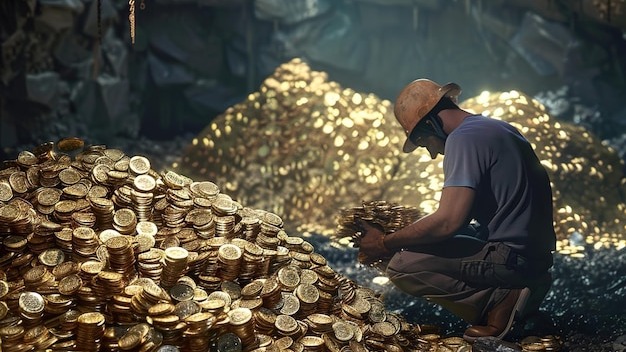
Across the old Gold Rush map, locals are still prying valuable metal out of riverbeds, desert washes and even organized treasure chests, turning forgotten deposits into rent money and, in some cases, life‑changing windfalls. What looks like a relic of the 1800s has quietly become a modern side hustle, powered by cheap gear, online how‑to videos and a new appetite for outdoor adventure. From California creeks to Canadian backcountry, the hunt for hidden treasure has rarely felt more alive.
California’s second life as a Gold Rush paydirt
In the foothills of California, I keep hearing the same refrain from people swirling muddy pans in cold water: the Gold Rush never really ended, it just went quiet. More than 170 years after the first big strike, locals are once again pulling dust, flakes and small nuggets from streams that earlier generations worked hard but never fully exhausted. One social post spells it out bluntly, noting that it has been more than 170 years since the California Gold Rush, yet residents are still finding new color in the same hills.
For many, the appeal is as financial as it is nostalgic. One prospector told a reporter, “I could pay my bills off the gold,” describing how regular weekend trips to hunt remaining deposits from the California Gold Rush have turned into a reliable income stream. Another report profiles a man who spends his days on the Bear River, where he insists that “Gold’s all around,” as he methodically sifts gravel and black sand in search of specks that add up over time. His quiet confidence reflects a broader belief that the state’s historic mining districts, from the Sierra foothills to remote canyons, still hold enough metal to make the effort worthwhile for anyone willing to put in the hours.
‘Gold’s all around’: the locals cashing in
The modern prospector’s toolkit looks very different from the pickaxes and rocker boxes of the 19th century, and that shift is helping ordinary residents turn curiosity into cash. On the Bear River, a prospector named Manny Goza works with a pan and sluice, explaining that the low water levels and exposed gravel bars make it easier to spot promising streaks of black sand. “Gold’s all around,” he says, but he is quick to add that not everyone will find it, a reminder that skill and patience still separate the lucky from the merely hopeful. His stretch of the Bear River has become a kind of open‑air classroom, where newcomers watch how he reads the current and tests different pockets of gravel before committing to a spot.
Others lean on more structured guidance. One Local resident told Moneywise and Yahoo Finance that years of careful research into old mining maps and geology, combined with consistent weekend trips, meant prospecting for gold has literally “paid off.” That same Local voice captures a broader pattern I see in interviews and field reports: people are not just chasing a fantasy, they are building repeatable routines that turn small but steady finds into a meaningful supplement to wages or retirement income. In a state where housing and groceries are expensive, a few extra grams of Gold each month can be the difference between treading water and getting ahead.
Desert washes and hidden caches in the American Southwest
The renewed hunt is not confined to the Sierra foothills. In Arizona, prospectors are chasing a different kind of opportunity, one shaped by flash floods and wide desert washes. A recent video from the gold fields shows a team heading out with both PI and VLF metal detectors, explaining that a massive flood had stripped away overburden and left nuggets sitting almost in plain sight. The host, identified only as Jan, walks viewers through how a VLF detector can pick out small, shallow targets while a pulse‑induction unit hunts deeper, heavier pieces that older miners missed.
Across the state line, the same logic applies in the rugged basins and ranges that define much of the interior West. Search data for Arizona prospecting hotspots shows a spike in interest around flood‑prone gullies and abandoned claims, where erosion can expose fresh layers of paydirt each season. In Southern California, another creator named Jan documents an “EPIC Day of Exploration” in the desert, hiking into inhospitable canyons and dry washes where old timers once worked hand‑stacked rock piles. His footage from Southern California underscores how much potential still lies in remote corners of the Mojave and Colorado deserts, especially for people willing to combine satellite imagery, historical records and long days on foot.
From California creeks to Canadian treasure chests
What starts in a creek or wash often spills across borders, and the current wave of treasure hunting is no exception. In California, tourism boards quietly lean into the Gold Rush legacy, promoting historic districts and river access points where visitors can try their luck for a day. One mapping tool highlights a cluster of old mining towns and interpretive sites, including preserved diggings and museums that sit within a short drive of modern suburbs. A separate place listing points to a specific historic settlement, accessible through an online viewer, where the grid of streets and nearby river bends still mirror the patterns that drew 19th‑century miners.
Farther north, the same appetite for adventure is being channeled into more organized hunts. In Canada, a $1 million treasure hunt has been launched in the wilderness, inviting participants to decipher clues and bushwhack through remote terrain in search of a hidden chest. Writer Andrew Paul notes that the contest is designed to celebrate the country’s heritage and spirit of exploration, and that organizers capped entries at 41 teams to keep the odds meaningful. Search interest around the event shows a surge of curiosity about backcountry navigation and survival skills in Canada, suggesting that the lure of a big payday is intertwined with a desire to unplug and test oneself in the wild.
The new rules of chasing old gold
For all the romance, modern treasure hunting is increasingly shaped by rules, technology and a culture of shared knowledge. In California, prospectors swap GPS coordinates and regulatory tips in online forums, reminding each other to respect private property and stay within the limits of recreational panning on public land. Social posts about the Gold Rush revival often include reminders about permits and environmental impact, a sign that the community understands how quickly a few bad actors could trigger tighter restrictions. At the same time, search trends for California prospecting gear show growing interest in lightweight sluices, classifiers and entry‑level detectors that make it easier for beginners to get started without tearing up streambanks.
Technology is reshaping the hunt in the desert as well. In Arizona, Jan’s field videos double as tutorials on how to tune a VLF detector to ignore hot rocks while still hearing faint signals from small nuggets, and how to use a PI machine to punch through mineralized soil. Another clip from Jan in Southern California shows him cross‑referencing old mine records with satellite imagery to locate forgotten adits and tailings piles, then hiking in with minimal gear to sample them. Even the Canadian treasure hunt has a digital layer, with Mon coverage explaining how clues are distributed online at a set time in UTC, prompting teams to coordinate across time zones and devices. Together, these examples show how the age‑old dream of striking it rich is being rewired for an era of GPS, social media and streaming tutorials, even as the core appeal remains stubbornly analog: the feel of cold water, the weight of a nugget in your hand, and the possibility that the next pan or target tone might finally be the big one.
More From TheDailyOverview
*This article was researched with the help of AI, with human editors creating the final content.

Cole Whitaker focuses on the fundamentals of money management, helping readers make smarter decisions around income, spending, saving, and long-term financial stability. His writing emphasizes clarity, discipline, and practical systems that work in real life. At The Daily Overview, Cole breaks down personal finance topics into straightforward guidance readers can apply immediately.