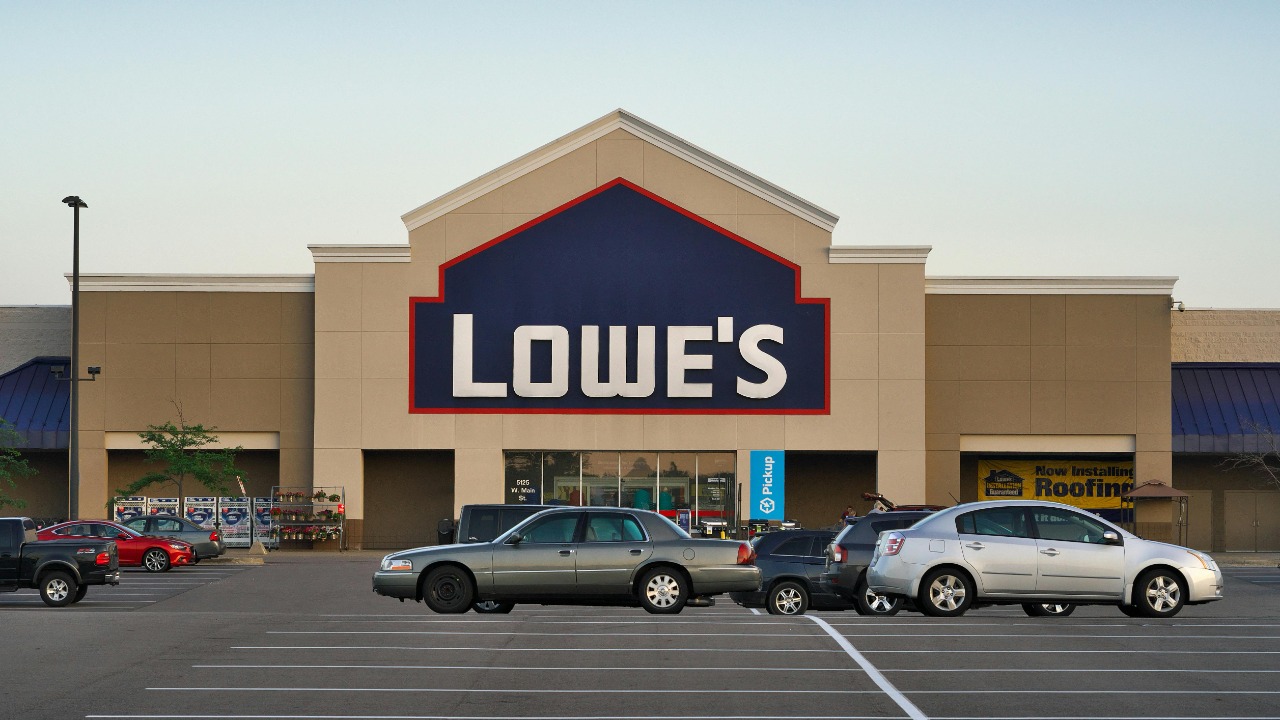
Lowe’s is quietly turning one of retail’s most old-school formats into a test bed for AI, computer vision and spatial computing. After years of running stores on 1990s-era systems and early-2000s merchandising software, the chain has rebuilt its tech stack so that digital tools now shape everything from how shoppers find a box of screws to how they “try on” an entire kitchen. The result is a new kind of interaction with the store itself, where apps, headsets and AI assistants act less like add-ons and more like the operating system of the shopping trip.
What is emerging is not a single gadget but a multi-layered ecosystem: an AI adviser in your pocket, immersive design studios in select aisles, navigation that treats the store like a searchable map, and back-end intelligence that steers associates and inventory in real time. If it works, Lowe’s will not just sell more lumber and lighting; it will redefine what a big-box visit feels like, and potentially reset expectations for the entire home improvement category.
The quiet overhaul behind the flashy tech
Before customers ever saw a headset demo or an AI chat bubble, Lowe’s had to rip out the plumbing of its legacy systems. The company’s stores were long powered by technology built in the 1990s, with merchandising tools dating to the early 2000s, a setup that limited how quickly it could change prices, reflow assortments or connect in-store behavior to digital profiles. Executives have described a multi-year modernization that replaced those brittle platforms with cloud-based services and a digital payment system that can support new experiences without slowing checkout.
That overhaul matters because it turns AI from a novelty into infrastructure. With modern services in place, Lowe’s can let algorithms optimize replenishment, personalize promotions and orchestrate tasks in the background while shoppers simply experience faster lines and better-stocked shelves. The company has framed this as a way to put “all the fun of home improvement in the process and take all the friction out,” a line that captures how its investment in modern services is meant to disappear into the background rather than dominate the visit.
Mylow and the rise of the AI project coach
The most visible expression of this new architecture for many shoppers is Mylow, the AI-powered app Lowe’s launched to coax hesitant homeowners into actually starting projects. The company has long known that a large share of DIY customers stall out between inspiration and action, intimidated by the skills, tools or time required. Mylow steps into that gap as a virtual adviser that breaks jobs into steps, surfaces how-to content and nudges users toward the exact products they will need.
Early results suggest that this digital coach is not just a feel-good feature but a conversion engine. Lowe’s has reported that users of the Mylow app convert at roughly twice the rate of comparable shoppers, helped by project plans, videos and in-app purchasing that keep them from abandoning their carts when uncertainty creeps in. She, a Lowe’s executive quoted in separate reporting, has said that data from the company’s loyalty ecosystem now directly fuels Mylow’s recommendations, allowing the adviser to suggest products or repair instructions that reflect a customer’s actual home and past purchases rather than generic advice.
Loyalty data as the connective tissue
Behind Mylow sits a broader bet that loyalty programs are no longer just about points but about training data. Lowe’s has built an “ecosystem” of different loyalty offerings for The Pro customers and homeowners, recognizing that a contractor who visits multiple times a week has very different needs from a weekend painter. The Pro shopper, who already comes to Lowe’s significantly more often than DIY customers, gets speed-focused perks like dedicated check-in, volume discounts and tailored services that reduce time off the job site.
Those interactions generate a rich stream of signals that now feed into the company’s AI engines. Executives have described how loyalty data helps Mylow and other tools understand whether a user is more likely to be a Pro or a DIYer, what kind of property they maintain and which brands they favor, which in turn shapes the guidance they receive. The company has also revamped its loyalty programs alongside an online marketplace, expecting to improve its close rate on complex orders by using expedited quoting and targeted offers to capture more spend from home improvement professionals, according to recent disclosures.
Immersive design: Style Studio and the Apple Vision Pro bet
If Mylow is the quiet coach in your pocket, Style Studio for Apple Vision Pro is the showpiece that signals how far Lowe’s is willing to push spatial computing. In select Stores in Austin, Texas, the company has installed dedicated spaces where shoppers can put on an Apple Vision Pro headset and “try on” different kitchen designs at full scale, swapping cabinets, countertops and layouts in a shared immersive environment. The experience is branded as Style Studio and is explicitly framed as a way to bring everyone involved in a renovation to the same virtual table, from spouses to contractors.
Lowe’s has since extended this concept to the Bay Area, inviting residents in Sunnyvale to experiment with kitchen configurations using the same Style Studio tool. The company describes how the experience turns vague ideas into concrete, shared visuals that build clarity and confidence, a critical step in high-ticket projects where indecision can delay or derail a sale. By anchoring these pilots in Austin and Sunnyvale, Lowe’s is effectively using two tech-savvy markets as laboratories for how spatial computing might scale across its fleet, as detailed in its Austin rollout and its separate Bay Area invitation.
Turning the store into a navigable interface
While headsets grab headlines, the more transformative shift for everyday trips may be how Lowe’s is making its aisles searchable. In a Silicon Valley location that serves as a proving ground for innovation, customers can search for a product in the app and then follow In-Store Navigation that leads them directly to the correct bay and shelf. The feature, sometimes referred to as Store Navigation, effectively overlays a digital map on the physical layout, shrinking the time between intent and discovery.
This is where the idea of the “intelligent store” becomes tangible. Industry research on computer vision and artificial intelligence has argued that one goal of an Intelligent Store is to empower customers by reducing friction in the buying experience, including touchless checkout and real-time staff redeployment. Lowe’s experiments in its Silicon Valley store align with that vision, using navigation and sensing to make the building itself feel more like an app interface than a static warehouse.
AI for associates: from backroom scripts to real-time copilots
The other half of Lowe’s AI strategy lives in the hands of its employees. The company has deployed what it describes as the first at-scale AI assistant for retail associates, rolling it out to thousands of workers across its network. The tool is designed to answer product questions, check inventory, surface installation guidance and even help with complex order status queries, all through natural language prompts that mirror how a customer might ask for help.
Lowe’s has framed this rollout as central to its ambition to be the most assistive home improvement retailer, arguing that a well-equipped associate is still the best differentiator in a category where projects are complex and stakes are high. The assistant’s scale and positioning as a retail industry first are highlighted in the company’s own announcement, which emphasizes that the goal is not to replace staff but to let them spend more time on higher-value interactions instead of hunting through binders or terminals for answers.
Agentic commerce and the new shopping concierge
Lowe’s is not alone in building generative AI shopping assistants, but its approach is shaped by the particular quirks of home improvement. Retailers including Amazon, Walmart and Lowe have all introduced generative AI tools that crawl their catalogs to help shoppers find relevant products, a trend sometimes described as “agentic commerce” because the bots can take actions on the customer’s behalf. In Lowe’s case, that means an AI that can recommend a full bill of materials for a deck, not just a single drill, and then route the order through the right fulfillment channels.
Company leaders have discussed how these virtual agents sit alongside Mylow and other tools as part of a broader AI reshaping of the retail experience, a theme explored in corporate videos such as Lowe’s AI overview and a separate look at how the chain became more agile through data and automation in another briefing. The strategic throughline is clear: if a shopper can describe an outcome in plain language, the system should be able to translate that into products, services and a fulfillment plan without forcing them to master SKU codes or aisle maps.
More From The Daily Overview
*This article was researched with the help of AI, with human editors creating the final content.

Grant Mercer covers market dynamics, business trends, and the economic forces driving growth across industries. His analysis connects macro movements with real-world implications for investors, entrepreneurs, and professionals. Through his work at The Daily Overview, Grant helps readers understand how markets function and where opportunities may emerge.