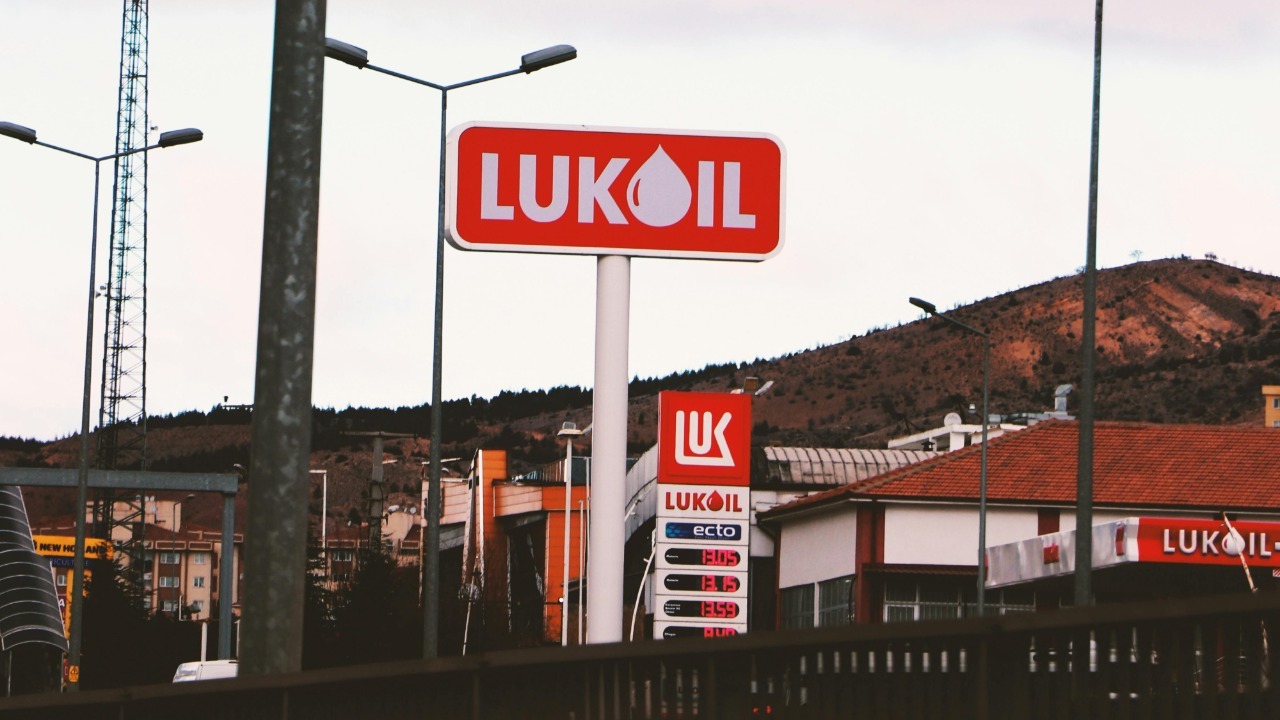
Russia’s Lukoil, a 75% stakeholder in Iraq’s West Qurna 2—one of the world’s biggest oil fields—is suddenly losing its grip on the project’s operations after U.S. sanctions forced the company into a rushed divestment of its international holdings. Iraq announced plans to nationalize the field’s operations as Lukoil faces a January 17 deadline to sell its foreign assets. The convergence of American sanctions pressure and Iraqi state action has effectively stripped the Russian oil giant of a prized asset in OPEC’s second-largest producing country.
How U.S. Sanctions Cornered Lukoil
The chain of events traces back to the U.S. Department of the Treasury, which designated Lukoil under Executive Order 14024 as part of a broader campaign targeting Russia’s energy sector. The designation carries blocked-property implications and extends to subsidiaries at the 50% ownership threshold, meaning Lukoil’s global web of joint ventures and operating companies fell under sanctions restrictions in one stroke. In announcing the move, U.S. officials used the sanctions to press for a halt to the war, explicitly urging Russia to agree to a ceasefire in the accompanying Treasury statement.
For a company with extensive operations outside Russia, the designation created immediate operational risks. Force majeure clauses and disruption scenarios became real concerns for every joint venture partner, service contractor, and bank doing business with Lukoil internationally. The sanctions did not merely restrict future deals; they threatened to freeze the company’s ability to function as an operator of complex oil fields that require constant coordination with Western-linked supply chains, drilling contractors, and financial institutions. In that environment, Lukoil’s foreign portfolio shifted almost overnight from being a strategic asset to a compliance liability for counterparties worried about secondary exposure.
The Carlyle Deal and OFAC’s Tight Leash
Faced with the prospect of losing its international portfolio entirely, Lukoil entered negotiations to sell those assets. Private equity investors saw an opportunity, and Carlyle Group moved to acquire the portfolio, reaching what was described as a tentative agreement to purchase Lukoil’s overseas business, according to reporting on the talks. Yet the structure of the deal highlighted just how little leverage Lukoil retained: the sale could only proceed with U.S. regulatory clearance, and any proceeds would likely be locked in restricted accounts rather than flowing freely back to the Russian group.
Those constraints were hardwired into the U.S. licensing regime. Washington granted a narrow authorization that allowed negotiations for Lukoil’s international business within set time windows and under strict conditions, including complete separation from the Russian parent and the use of blocked accounts for any consideration paid. Details of the licensing framework, described in further coverage of the sanctions process, underscored that U.S. officials were not simply punishing Lukoil but orchestrating an orderly handover of assets away from Russian control. With a January 17 deadline looming, the company was effectively racing a regulatory clock it did not control.
Iraq Moves to Nationalize West Qurna 2
While sanctions and divestment talks played out between Washington, London, and Moscow, Baghdad made its own calculation. Iraqi officials announced plans to bring West Qurna 2 under state operation, signaling that they would not wait for a sanctions-constrained private transaction to determine who would run one of the country’s most productive fields. Lukoil held a dominant 75% operating stake, but with the sanctions deadline approaching and its foreign assets up for sale, Iraq faced the prospect of an operator that could no longer legally and financially function in many parts of the global system, a situation described in detail by Reuters reporting.
The nationalization decision reflects practical risk management more than ideological resource nationalism. Iraq needs West Qurna 2 to keep producing without interruption, and a sanctioned operator creates legal and financial exposure for every entity involved in lifting, shipping, insuring, and refining the crude. By transferring operations to its national oil company, Baghdad sidesteps uncertainty over whether a Carlyle-led acquisition will close on time, whether OFAC will sign off on the structure, and whether blocked proceeds will complicate future financing and reinvestment in the field. In effect, Iraq is using state control as a hedge against both geopolitical volatility and regulatory delay.
What This Means for Global Oil Markets
The loss of West Qurna 2 is more than a corporate setback for Lukoil; it is a vivid example of how sanctions can reshape the ownership and operation of major oil assets far from the sanctioning country’s borders. Much of the policy debate around energy sanctions focuses on export bans, price caps, and shipping restrictions. The West Qurna 2 saga reveals a different channel of impact: by making it legally and operationally untenable for a designated firm to manage a foreign field, sanctions can push host governments to reassert control, regardless of their prior preferences. The result is a transfer of operational authority driven not by contract disputes or politics in the host country, but by compliance pressure generated in Washington.
For Iraq, the immediate effect is tighter state control over a critical revenue source, but the longer-term implications for output are uncertain. International oil companies typically contribute not just capital but advanced drilling technology, reservoir modeling, and access to a network of global service providers. If Iraq’s national operator struggles to replicate that technical and financial ecosystem, West Qurna 2’s production could plateau or decline over time, trimming supply from a top-tier exporter. At the same time, the state may gain flexibility to align production decisions more closely with national budget needs and OPEC coordination, without having to accommodate a large foreign partner’s commercial priorities.
Lukoil’s Shrinking International Footprint
For Lukoil, the forced exit from West Qurna 2 is emblematic of a broader contraction in its global presence. The company once used international ventures to diversify away from domestic risks, but sanctions have turned that strategy on its head, making foreign assets among its most vulnerable holdings. Even where buyers such as Carlyle are willing to step in, Lukoil’s role is reduced to that of a compelled seller whose influence over timing, pricing, and post-sale governance is heavily circumscribed by regulators. The reliance on special licenses and blocked accounts means that, in many cases, the company may see little practical benefit from disposals beyond avoiding even harsher restrictions.
This retrenchment also carries reputational and strategic costs. Lukoil’s diminished footprint weakens its standing as a global operator and may limit its ability to participate in future projects, even in jurisdictions that have not aligned with U.S. sanctions, because banks, insurers, and service contractors remain wary of entanglement. By contrast, the episode underscores how Western financial and regulatory systems can still shape outcomes far beyond their borders, even as alternative capital sources emerge. The dynamic mirrors, in reverse, the way Western-backed ventures and innovation networks rely on cross-border capital and rules-based frameworks: when that framework turns hostile, the same interconnectedness accelerates the unravelling of international positions.
The Carlyle negotiations also highlight how sanctions-era transactions are increasingly intermediated by complex legal and subscription frameworks. Potential investors and counterparties are steered through detailed compliance journeys, including paywalled deal coverage and specialist analysis, such as those accessed via dedicated financial information services. Similar subscription-based briefings on the licensing side, like those linked to OFAC’s treatment of the negotiations, are available through tailored compliance platforms, illustrating how specialized information has become integral to navigating sanctions-driven restructurings. For Lukoil and its counterparts, the new reality is that access to such expertise is now as critical as access to rigs or pipelines when the geopolitical ground shifts beneath major energy projects.
More From The Daily Overview
*This article was researched with the help of AI, with human editors creating the final content.

Grant Mercer covers market dynamics, business trends, and the economic forces driving growth across industries. His analysis connects macro movements with real-world implications for investors, entrepreneurs, and professionals. Through his work at The Daily Overview, Grant helps readers understand how markets function and where opportunities may emerge.

