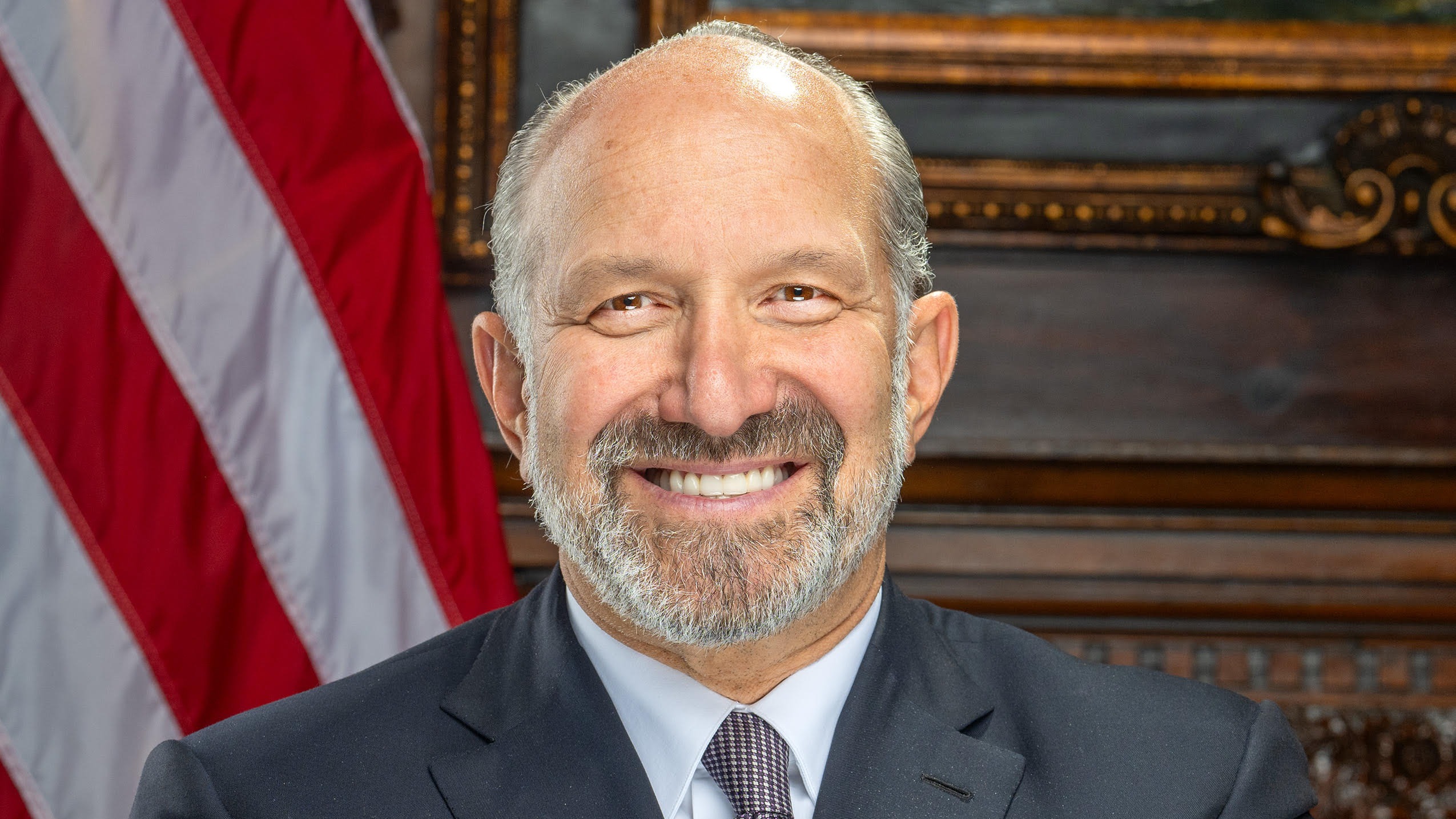
The Biden-era language of “friendshoring” has given way to something blunter. U.S. Commerce Secretary Howard Lutnick is now pairing upbeat talk about an American manufacturing boom with a stark warning to foreign memory chipmakers: invest in U.S. plants or face tariffs of up to 100% on key products. The message is aimed squarely at South Korean and Taiwanese firms that dominate global memory supply and have so far kept much of their most advanced capacity offshore.
By tying the promise of a growing U.S. market to the threat of punitive duties, Lutnick is testing how far Washington can push allies in the name of economic security. I see his approach as a high-stakes bet that the lure of tariff-free access to American consumers will outweigh the cost and complexity of building new fabs on U.S. soil.
The boom narrative behind Lutnick’s hard line
Lutnick’s tariff threat is rooted in a simple political story: the United States is in the middle of what he casts as a manufacturing revival, and foreign chipmakers can either be part of it or pay for staying away. In his public remarks, the U.S. Secretary of Commerce Howard Lutnick has framed the choice for memory producers as a binary one, arguing that companies which expand production capacity inside the United States will enjoy access to a large and growing market with no new trade barriers, while those that hold back could see their exports hit with duties of up to 100%. That framing is designed to turn industrial policy into a commercial opportunity, not just a security demand.
According to reporting on his recent meetings, Lutnick has been explicit that the goal is to reduce America’s dependence on chip imports by using both incentives and pressure on foreign suppliers. One account of his push notes that he has been pressing companies to invest with tariff as a backdrop, making clear that the administration sees domestic fabrication as central to sustaining the broader U.S. economic upswing. I read that as an attempt to fuse the narrative of a “U.S. boom” with a concrete ultimatum for the companies that supply its most strategic components.
Targeting South Korean and Taiwanese memory champions
The pressure campaign is not aimed at the chip industry in general but at a specific group of firms that dominate memory production. Lutnick has singled out South Korean memory chipmakers and their Taiwanese peers, warning that some of these Korean and Taiwanese firms risk 100% chip tariffs if they do not commit to substantial U.S. investments. In practice, that means companies like Samsung Electronics, SK Hynix, and Nanya Technology, which have deep roots in places like Icheon, Cheongju, and Taoyuan, but have been slower to build equivalent capacity in Texas, Arizona, or New York.
In one detailed account, Lutnick is described as telling South Korean memory chipmakers that they face a choice between expanding production capacity in America or confronting potential 100% chip tariffs on certain products. Another report on his outreach to Asia notes that he has been pressing companies in hubs such as the Taiwanese city where Nanya Technology is headquartered to consider new U.S. fabs, with the same tariff warning in the background, and that he has used his position as Commerce Secretary to pressure chipmakers directly. I see that as a deliberate effort to move the center of gravity for memory production closer to U.S. consumers and defense users, even if it strains ties with long-standing partners in Seoul and Taipei.
The 100% tariff threat and how it would work
At the heart of Lutnick’s message is a number that is hard for any exporter to ignore: 100%. He has warned that South Korea and Taiwan could face tariffs of 100% on certain memory chips if they refuse to invest in American manufacturing, turning what might have been a gradual reshoring push into a sharp binary choice. For companies that ship billions of dollars’ worth of DRAM and NAND into the U.S. market each year, a duty at that level would effectively close off the market unless they absorb massive margin hits or pass the cost on to customers.
One detailed account of his warning to South Korea and Taiwan of 100% tariffs describes how U.S. Commerce Secretary Howa, identified as U.S. Secretary of Commerce Howard Lutnick, has delivered this message directly to executives at Samsung Electronics, SK Hynix, and TSMC, tying the threat to their willingness to invest in American manufacturing. Another report on his remarks to Korean and Taiwanese chipmakers notes that he has told them they could face 100% tariffs if they do not move ahead with U.S. fabs, while those that build plants in America would retain tariff-free access. I interpret that as a classic “carrot and stick” structure, but with the stick set at a level that would fundamentally alter global pricing and supply chains if it were ever fully applied.
Allied pushback and White House calibration
So far, the public response from U.S. allies has been measured rather than confrontational. South Korea’s government has argued that the immediate impact of the proposed U.S. chip tariffs will be limited, pointing to carve-outs that protect some current trade flows. According to one account, The White House has said the tariffs would be narrowly focused and would not apply to chips and derivative devices imported for U.S. manufacturing, a design that aims to shield American factories that still rely on foreign semiconductors while putting pressure on finished consumer imports.
That same reporting notes that the U.S. administration is trying to balance its desire to support domestic chipmakers with the need to avoid sudden shocks for manufacturers in places like Taiwan that supply critical components to U.S. firms. By signaling that the measures will be narrowly focused, The White House is effectively giving allies time to adjust their investment plans while backing Lutnick’s broader push. I see that as an attempt to keep the diplomatic temperature down even as the economic stakes rise.
From China-focused controls to allied pressure
Lutnick’s strategy does not emerge in a vacuum. Over the past few years, Washington has steadily tightened controls on semiconductors from China, using export restrictions and targeted tariffs to limit Beijing’s access to advanced chips. In one discussion of those measures, U.S. officials described how semiconductors from China would face a “special-focus type” of scrutiny, with exemptions for some electronics such as smartphones and laptops that had previously benefited from looser treatment. That earlier focus on Chinese-origin products laid the groundwork for a broader rethinking of how the U.S. treats chip imports across the board.
What is new in Lutnick’s approach is the willingness to extend that pressure to close partners, not just strategic rivals. The same conversation that highlighted the “special-focus type” treatment for Chinese semiconductors, captured in a video discussion about tariff exemptions, underscored how trade tools that began as a way to counter China are now part of a wider industrial strategy. I read Lutnick’s 100% tariff warning to South Korean and Taiwanese chipmakers as the next step in that evolution, signaling that no supplier, friendly or not, is exempt from the expectation that critical capacity should sit closer to U.S. shores.
More From TheDailyOverview

Grant Mercer covers market dynamics, business trends, and the economic forces driving growth across industries. His analysis connects macro movements with real-world implications for investors, entrepreneurs, and professionals. Through his work at The Daily Overview, Grant helps readers understand how markets function and where opportunities may emerge.

