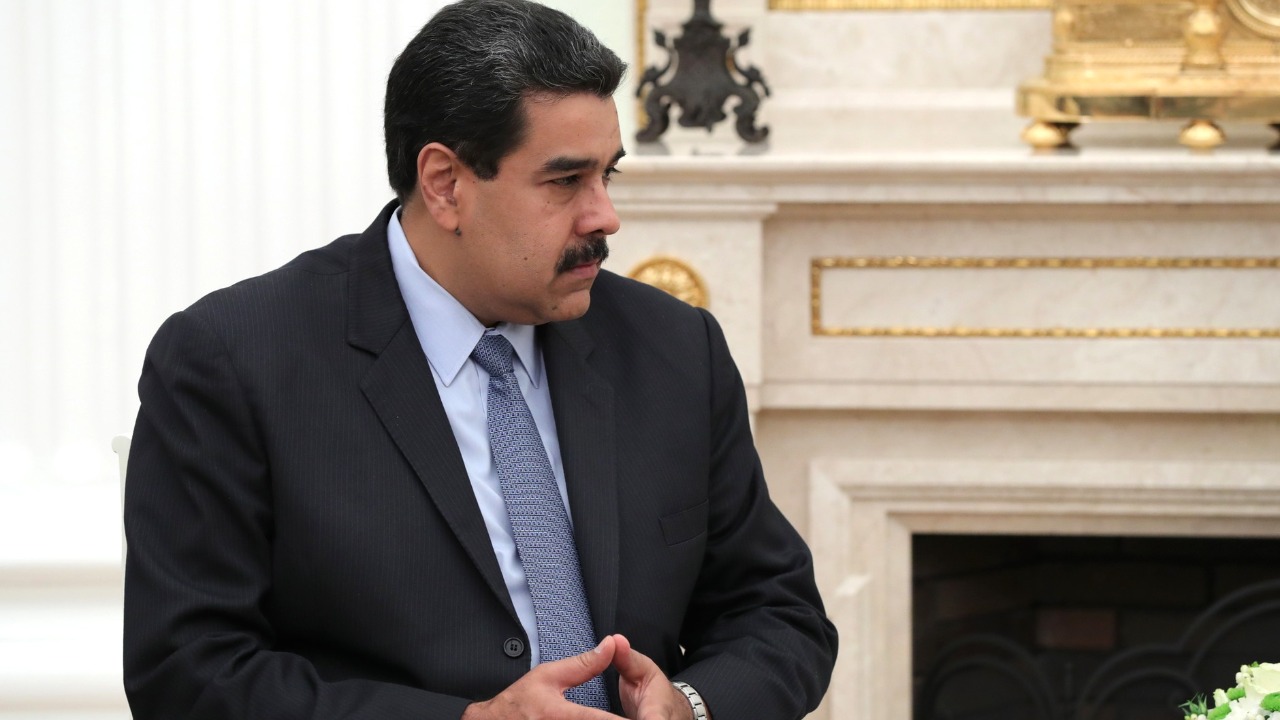
Nicolás Maduro is signaling that he is ready for direct talks with Washington just as the United States tightens the screws on his government with new pressure at sea and in the financial system. His sudden openness to dialogue, framed as a willingness to sit down even with President Donald Trump, is less a change of heart than a recognition that the balance of power around Venezuela is shifting.
As U.S. warships move closer to the Caribbean and sanctions deepen Venezuela’s isolation, Maduro is trying to recast himself as a pragmatic negotiator rather than a besieged strongman. The question is whether this overture reflects genuine readiness to compromise or a tactical pause aimed at easing the pressure without altering the fundamentals of his rule.
Maduro’s offer of direct talks with Washington
Maduro has gone out of his way in recent days to say he is prepared for direct, high-level talks with the United States, including a face-to-face meeting with President Trump. In public remarks carried by state media and amplified abroad, he has framed this as a personal readiness to sit down “wherever, whenever,” casting himself as the one extending an olive branch after years of mutual recriminations. Reports on his televised comments describe him stressing that he wants “respectful” relations and is willing to discuss all issues on the table, a message that has been echoed in coverage of his pledge to meet Trump “personally” if that is what it takes to reset ties, as reflected in detailed accounts of his call for a direct encounter with the U.S. president in which he said he was ready to talk “face to face” about sanctions and political conditions in Caracas, a stance highlighted in analyses of his bid to appear open to a personal summit with Trump that would bypass lower-level envoys and intermediaries, including one report that notes his insistence on a direct channel with the White House rather than through third parties, a posture that underscores how much he wants to be seen as an equal counterpart rather than a pariah.
In parallel, Maduro has used interviews and speeches to insist that his government is not afraid of dialogue, even as he rails against what he calls U.S. “aggression.” Coverage of his latest media appearances shows him repeating that he is “always ready” to talk with Washington while accusing the United States of trying to “strangle” Venezuela’s economy, a dual message that allows him to claim the moral high ground at home while signaling flexibility abroad. One detailed report on his recent statements notes that he explicitly invited U.S. officials to Caracas and said he would welcome a delegation to discuss sanctions relief and the status of opposition figures, while another account of his outreach to Washington emphasizes that he framed talks as a way to normalize diplomatic relations that have been frozen for years, even as he refused to concede any wrongdoing in his handling of elections or human rights, a pattern that suggests his offer is calibrated to ease external pressure without undermining his domestic narrative of resistance.
Rising U.S. pressure at sea and through sanctions
Maduro’s new tone is not emerging in a vacuum, it comes as the United States steps up military and economic pressure around Venezuela. U.S. officials have announced expanded maritime deployments in the Caribbean, with American warships moving closer to Venezuelan waters in what Washington describes as a counternarcotics and security operation that also sends a clear political signal to Caracas. Reporting on the buildup notes that U.S. Navy and Coast Guard vessels have increased their presence near Venezuela, with senior U.S. figures explicitly linking the operation to efforts to disrupt alleged drug trafficking networks tied to Maduro’s inner circle, and one detailed account of the deployment describes how the approach of American warships has coincided with sharper rhetoric from U.S. officials about the need for democratic change in Venezuela, a convergence that has not been lost on Maduro’s advisers.
At the same time, sanctions remain the core tool of U.S. pressure, and they are biting more deeply as time goes on. Washington has targeted Venezuela’s oil sector, financial system, and key individuals around Maduro, measures that have made it harder for the government to access foreign currency and maintain patronage networks that underpin its power. Analyses of the sanctions regime describe how restrictions on state oil company PDVSA and related entities have slashed export revenues and forced Caracas to rely more heavily on opaque deals and intermediaries, while detailed reporting on the broader economic squeeze notes that U.S. measures have been layered over an already severe domestic crisis marked by hyperinflation, fuel shortages, and a collapse in public services, creating a context in which Maduro’s room for maneuver is shrinking even if he remains firmly in control of the security apparatus.
Domestic calculations inside Venezuela
Inside Venezuela, Maduro’s talk of dialogue serves multiple audiences at once, and the domestic calculus is as important as the international one. By presenting himself as open to negotiations with Washington, he can reassure parts of the business community and segments of the political elite who fear that unrelenting confrontation with the United States will only deepen the country’s isolation. Coverage of his recent speeches in Caracas notes that he has paired his outreach to Washington with promises of economic stabilization and limited reforms, signaling to domestic stakeholders that he is looking for a way to ease sanctions and attract investment without ceding control, while detailed accounts of his internal messaging describe how he has framed potential talks as a way to protect Venezuelan sovereignty rather than as a concession, telling supporters that dialogue would be conducted “from a position of dignity” and that any agreement would respect the country’s institutions as they currently exist.
At the same time, Maduro’s overture complicates the position of the Venezuelan opposition, which has long relied on U.S. pressure as leverage in its struggle against his government. If he can portray himself as the one seeking a negotiated solution while opposition leaders appear divided or sidelined, he may be able to weaken their claim to represent the country’s democratic aspirations. Reporting on the opposition’s reaction indicates that some figures are wary of being cut out of any direct channel between Caracas and Washington, especially if talks focus on sanctions relief and security guarantees rather than on a clear roadmap for competitive elections, and one detailed analysis of the internal political landscape notes that Maduro’s camp has used previous negotiation rounds to sow divisions among opposition parties, offering selective concessions and legal recognition to some while marginalizing others, a pattern that could repeat if new talks proceed on his terms.
How Washington is weighing the opening
For the United States, Maduro’s offer presents both an opportunity and a dilemma, and officials in Washington are weighing how to respond without undercutting their own stated goals. On one hand, direct talks could provide a channel to secure humanitarian access, discuss the fate of detained Americans, and explore steps toward freer elections, outcomes that many in the region and in Europe have urged the United States to prioritize. Reporting on U.S. deliberations notes that some advisers see value in testing Maduro’s willingness to make concrete commitments, particularly on electoral conditions and the release of political prisoners, while detailed accounts of recent diplomatic contacts suggest that U.S. officials have quietly sounded out regional partners about how to structure any potential talks so that they reinforce, rather than replace, multilateral pressure for democratic reforms.
On the other hand, there is a clear risk that high-profile engagement could legitimize Maduro without extracting meaningful concessions, something critics of dialogue have warned about after previous negotiation efforts faltered. Analyses of past talks, including those hosted in Norway and Mexico, describe how agreements on electoral guarantees and institutional reforms were announced with fanfare but then only partially implemented or rolled back once international scrutiny faded, leaving the opposition weakened and the government entrenched. Detailed reporting on the current U.S. debate highlights concerns that a photo-op style meeting between Trump and Maduro could be used by Caracas to claim international recognition while offering only symbolic gestures in return, which is why some in Washington argue that any direct contact should be conditioned on verifiable steps such as allowing independent observers, restoring banned candidates, or setting a clear timeline for competitive national elections.
Regional and global stakes of a potential thaw
The stakes of any shift in U.S.–Venezuela relations extend well beyond Caracas and Washington, touching energy markets, migration flows, and the broader geopolitical contest in the Americas. Venezuela still holds some of the world’s largest proven oil reserves, and even in its diminished state, its production capacity matters for global supply calculations, particularly as other producers adjust output and as energy markets respond to conflicts elsewhere. Analyses of the potential impact of sanctions relief on Venezuela’s oil sector describe how even modest increases in production could alter regional trade patterns and provide Caracas with new revenue streams, while detailed reporting on recent discussions between Venezuelan officials and foreign energy companies notes that many investors remain cautious, citing legal uncertainties and the risk that sanctions could snap back if political conditions do not improve in a durable way.
Beyond energy, the humanitarian and migration dimensions are central to how neighboring countries view Maduro’s latest move. Millions of Venezuelans have left the country over the past decade, straining public services in Colombia, Brazil, Peru, and other states that have absorbed large numbers of migrants and refugees. Regional governments have repeatedly called for a political solution that would stabilize Venezuela and allow some of those who left to return, and coverage of their reactions to Maduro’s new rhetoric suggests a mix of guarded optimism and deep skepticism. Detailed accounts of regional diplomacy describe how countries in Latin America and the Caribbean have urged both Caracas and Washington to prioritize humanitarian access and respect for human rights in any talks, while also warning that a purely bilateral deal that sidelines Venezuelan civil society and opposition voices could entrench authoritarian practices rather than resolve them, a reminder that the path from an opening gesture to a durable settlement is long and fraught.
Maduro’s declaration that he is ready to talk as U.S. pressure rises is therefore less an endpoint than an inflection point, a moment when both sides must decide whether to convert rhetoric into a structured process or revert to familiar patterns of confrontation. The balance of incentives has shifted enough to bring both the threat of escalation and the possibility of limited accommodation into view, but whether that yields real change will depend on what each side is willing to put on the table, and on whether Venezuelans themselves are given a genuine voice in shaping whatever comes next.
More From TheDailyOverview
- Dave Ramsey warns to stop 401(k) contributions
- 11 night jobs you can do from home (not exciting but steady)
- Small U.S. cities ready to boom next
- 19 things boomers should never sell no matter what

Grant Mercer covers market dynamics, business trends, and the economic forces driving growth across industries. His analysis connects macro movements with real-world implications for investors, entrepreneurs, and professionals. Through his work at The Daily Overview, Grant helps readers understand how markets function and where opportunities may emerge.