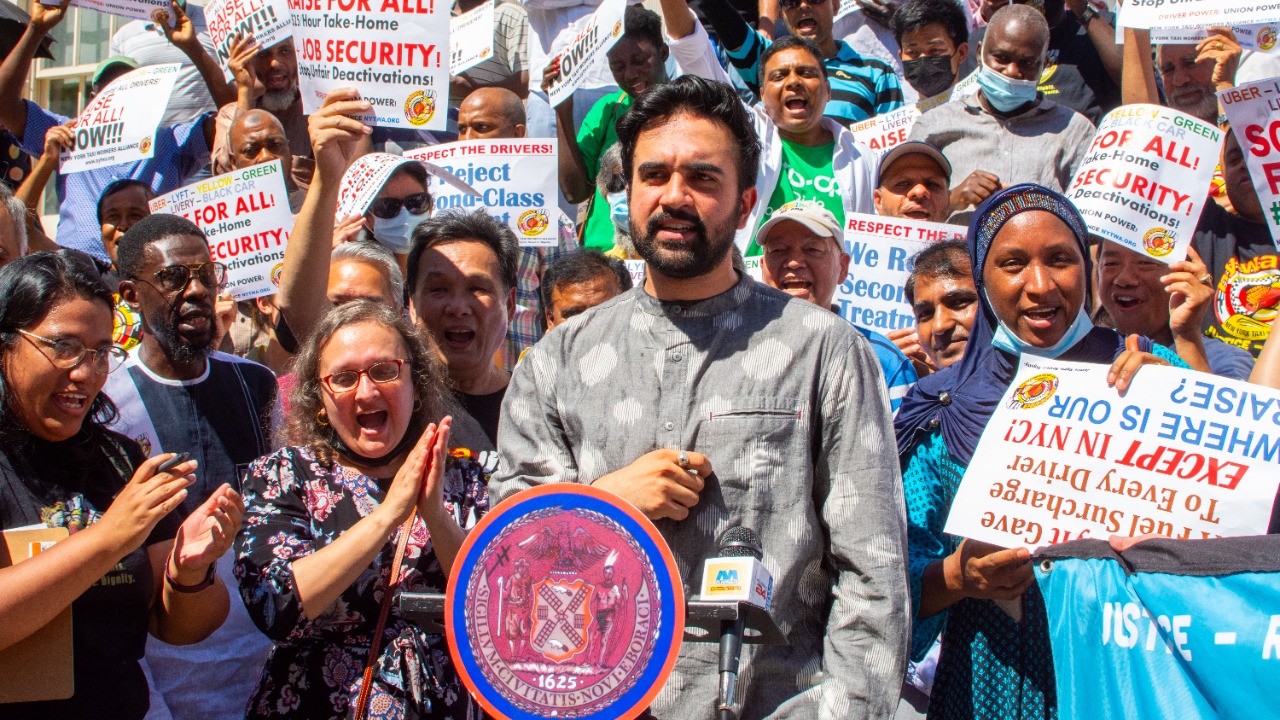
New York City Mayor Zohran Mamdani’s preliminary budget for fiscal year 2026 cancels the planned hiring of 5,000 new NYPD officers, redirecting those funds toward an expanded racial equity apparatus that includes hundreds of new positions under the Commission on Racial Equity. The decision scraps a hiring timeline set by former Mayor Eric Adams just months ago and reignites a fierce debate over whether the city’s limited dollars should flow to policing or to community-level equity programs. With a possible 9.5% property tax increase also on the table, the fiscal and political stakes for New York taxpayers are immediate.
Adams’s 5,000-Officer Plan and Its Sudden End
The expansion Mamdani is dismantling was not a vague campaign promise. Former Mayor Eric Adams formally announced additional funding for 5,000 new NYPD officers in a November 2025 plan that included phased start dates and a target of bringing the department’s uniform headcount to 40,000 by fiscal year 2029. The initiative came with dedicated budget lines and recruitment timelines, making it one of the most concrete policing commitments in recent city history and a central pillar of Adams’s public safety agenda.
Mamdani’s preliminary budget effectively flatlines those recruitment lines. City Council fiscal year 2026 budget documents, hosted on the Council’s budget portal, include NYPD headcount tables alongside Commission on Racial Equity budget entries, both drawn from Office of Management and Budget data. The contrast is stark: where Adams planned a steady ramp-up in officer hiring, the new administration redirects that spending toward equity coordinators, community outreach staff, and related roles under the commission. For the roughly 35,000 uniformed officers currently on the force, the message is that reinforcements are no longer coming, and for communities that expected a surge in police presence, the policy amounts to an abrupt reversal.
Racial Equity Spending Takes Center Stage
A city press release dated February 17, 2026, declared that a racial equity framework must guide the mayor’s preliminary budget, calling for targeted investments in neighborhoods where disparities are most severe. The language signals that the administration views the budget not merely as a ledger but as a tool for correcting systemic inequities, with the Commission on Racial Equity positioned as the primary vehicle for that work. Officials argue that redirecting dollars from police hiring to equity infrastructure will allow the city to tackle root causes of crime (such as housing instability, unemployment, and educational gaps) rather than relying primarily on enforcement.
What remains unclear is the precise number of new equity positions being created and the salary bands attached to them. The Council’s budget page links to PDF reports with line-item tables for both the NYPD and the commission, but granular staffing breakdowns for the commission’s expansion have not been released in a publicly accessible format. Pending legislation tracked through the Council’s Legistar system has yet to produce a voted bill codifying the reallocation, leaving the initiative in a liminal space between proposal and policy. Until the executive budget is finalized later this spring, the full scale of the equity payroll surge is based on preliminary numbers rather than enacted law, and advocates on both sides are racing to shape the narrative before those details harden.
Mamdani’s Record on Policing and the NYPD
The budget pivot did not come out of nowhere. During his mayoral campaign, Mamdani built a record of sharp criticism directed at the police department, aligning himself with activists who view the NYPD as overfunded and insufficiently accountable. The New York Times reported in September 2025 that he had previously pushed to cut 1,300 officers from what he called a “racist” NYPD, language he used in writing as far back as 2022. That earlier proposal was smaller in scope than what his budget now attempts, but it established a clear ideological through line: fewer officers, more investment in non-police services, and a willingness to use the budget to force that shift.
Canceling 5,000 planned hires goes well beyond cutting 1,300 existing positions, though the practical effect differs in an important way. Adams’s 5,000-officer plan involved new recruits who had not yet been hired, so the Mamdani budget is technically halting an expansion rather than laying off current officers. Critics, however, argue the distinction is academic. Attrition, retirements, and transfers steadily reduce headcount, and without new classes entering the academy, the department’s effective strength will shrink over time. City records accessible through the NYPD recruitment page reflect the prior administration’s framework for bringing in new officers, which is now effectively frozen, and police unions warn that response times and specialized units could suffer as staffing thins.
Property Tax Pressure and Fiscal Tradeoffs
The policing-versus-equity debate does not exist in a vacuum. Mamdani is simultaneously floating a 9.5% property tax increase as a fallback if Albany refuses to impose new taxes on millionaires, according to reporting in the Guardian. The threat puts homeowners and landlords on notice that the administration’s spending ambitions may land directly on their tax bills, particularly if state-level revenue does not materialize. For renters, the downstream effect could mean higher rents as property owners pass along increased costs, adding another layer of anxiety in a city already grappling with affordability and displacement pressures.
City Hall has described the fiscal constraints it faces as real and binding. Federal pandemic-era aid has dried up, pension obligations continue to grow, and the city’s debt service consumes an ever-larger share of the operating budget. In that context, the choice to cancel a large police hiring plan and redirect funds to equity programs is not just a policy preference but a direct resource allocation decision with winners and losers. Neighborhoods that rely heavily on visible police presence, particularly in parts of the Bronx and Brooklyn, worry that they will see fewer patrols just as economic stress intensifies, while proponents of the shift argue that investments in equity staff and services will eventually reduce the need for aggressive policing and stabilize communities in more durable ways.
Public Safety, Services, and the Stakes for New Yorkers
For residents trying to make sense of the changes, the tradeoffs are concrete. New Yorkers who call 911 for emergencies or use the 311 non-emergency system have become accustomed to a certain level of police responsiveness, and any perceived slowdown is likely to fuel backlash against the mayor’s budget. At the same time, communities that have long complained of over-policing see an opening to redirect resources toward youth programs, housing support, and mental health services that do not involve armed officers. The Commission on Racial Equity is being cast as the institutional home for those priorities, tasked with coordinating agencies so that the city’s most underserved neighborhoods receive targeted assistance rather than sporadic pilot projects.
The broader ecosystem of city services is also implicated. Residents seeking information about crime prevention, neighborhood watch programs, or victim assistance are often routed through the city’s public safety information channels, which sit at the intersection of police operations and social services. If the NYPD’s footprint contracts while equity-focused staff expand, the balance of who shows up first (an officer, a social worker, or a community liaison) could shift in visible ways. Whether New Yorkers view that shift as overdue reform or as a risky experiment will depend on how the changes play out on their blocks: how quickly ambulances arrive, whether shootings and thefts rise or fall, and whether new equity programs feel tangible or remain buried in budget spreadsheets. In the months ahead, as the Council negotiates the final budget and the administration refines its plans, those lived experiences are likely to shape the political verdict on Mamdani’s decision to trade 5,000 future officers for a larger racial equity infrastructure.
More From The Daily Overview
*This article was researched with the help of AI, with human editors creating the final content.

Grant Mercer covers market dynamics, business trends, and the economic forces driving growth across industries. His analysis connects macro movements with real-world implications for investors, entrepreneurs, and professionals. Through his work at The Daily Overview, Grant helps readers understand how markets function and where opportunities may emerge.