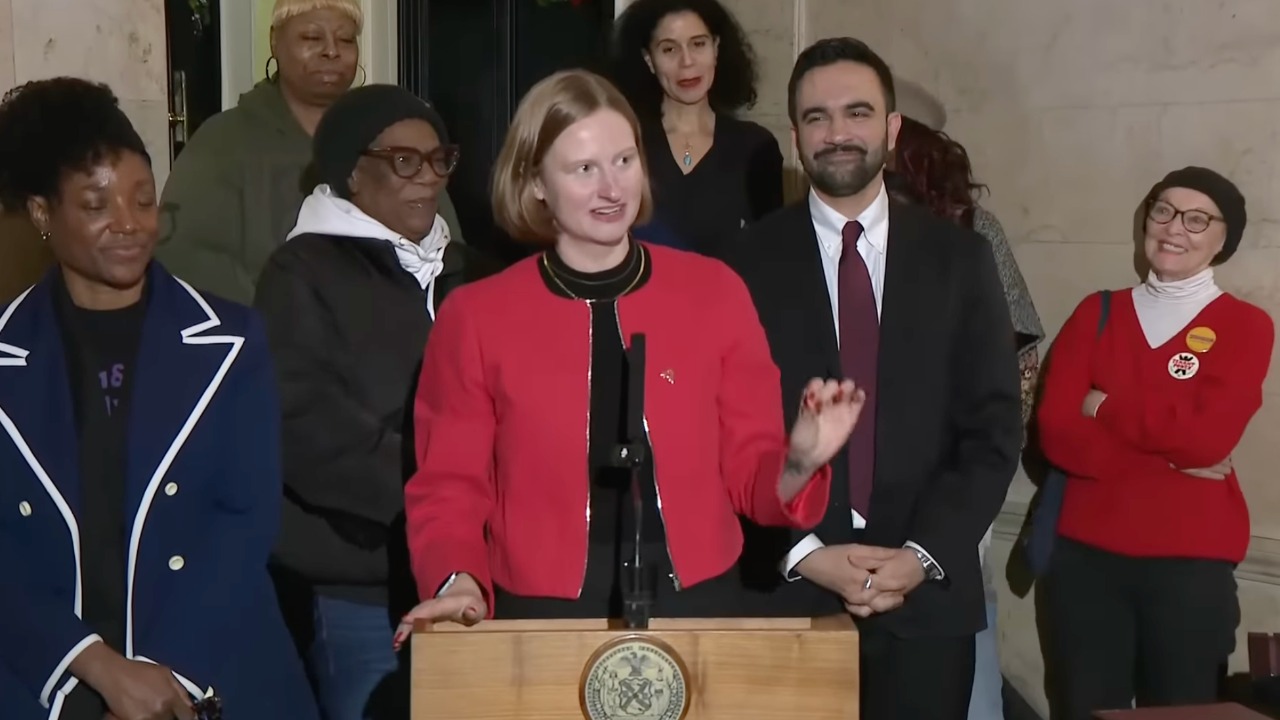
New York City’s new housing regime is taking shape around a partnership that many landlords see as a warning sign and many tenants view as overdue course correction. By elevating Cea Weaver, a veteran organizer who has spent years attacking the city’s speculative real estate model, Mayor Zohran Mamdani is turning his campaign rhetoric into governing reality and inviting a fierce test of how far City Hall can go in rebalancing power between renters and property owners.
The alliance is not just about personnel. It is embedded in a broader housing plan that mixes aggressive tenant enforcement, legal experimentation and a push to treat land and shelter as collective assets, a strategy that has already triggered federal scrutiny and an early courtroom defeat. The question now is whether this high‑risk approach can deliver stability for renters without freezing investment or driving the next wave of political backlash.
Mamdani’s housing blueprint moves from slogans to structure
From his first days in office, New York City Mayor Zohran Mamdani has tried to hard‑wire tenant power into the machinery of government rather than treat it as an outside pressure campaign. His executive order creating the LIFT Task Force, formally the Land Inventory Fast Track, is designed to comb through city‑owned parcels and move them quickly into housing production, signaling that public land will be a central tool in his affordability push. The same order folds that work into a revitalized mayoral apparatus that is explicitly framed as the Mayor’s office to protect tenants, a structural bet that enforcement and new construction can be coordinated rather than left to siloed agencies, according to the city’s description of the LIFT Task Force.
That institutional redesign is paired with a more confrontational posture toward landlords who profit from opaque fees and shoddy conditions. The administration’s “Our Rental Ripoff” hearings are pitched as a venue where working‑class tenants can document how they have been “ripped off without recourse or protection,” with the explicit goal of arming regulators and the Department of Consumer and Worker Protection with evidence to crack down on abusive practices. By branding the initiative as Our Rental Ripoff, Mamdani is signaling that the city will treat predatory rent charges less as a private dispute and more as a consumer fraud problem, a framing that dovetails with Weaver’s long‑standing argument that housing should be regulated like a basic utility rather than a luxury good.
Cea Weaver’s rise from street organizer to “tenant tsar”
Cea Weaver arrives in City Hall with a résumé that reads like a manifesto for the new housing order. Before joining the administration, Weaver led the Housing Justice for All coalition, a statewide alliance that was widely credited with helping to convince legislators to halt efforts to deregulate rent‑stabilized apartments and to expand protections for low‑income tenants. That track record, which includes years of organizing rent strikes and lobbying in Albany, is precisely why Mamdani wants her shaping policy and why critics fear that the city’s housing bureaucracy is being turned into an extension of the Housing Justice for playbook.
Weaver’s appointment has also drawn national attention because of resurfaced social media posts in which she described homeownership as a tool or “weapon” of white supremacy and promoted a “collective” model of property. Those comments, highlighted in coverage of Mamdani’s top housing pick, have been seized on by opponents as proof that the administration is hostile to traditional paths to middle‑class wealth and is instead bent on treating housing as a “collective good,” language that has already surfaced in legal challenges to the city’s market interventions. The controversy has given new ammunition to critics who argue that Weaver’s elevation from activist to senior official marks a sharp ideological turn, one that federal officials such as U.S. Assistant Attorney General for Civil Rights Harmeet Dhillon have cited while questioning the city’s approach in the context of the DOJ.
Backlash, white supremacy posts and a mayor who will not blink
The political blowback arrived almost as soon as Weaver’s new title was announced. Within a week of Mamdani taking office, an appointee of New York City Mayor Zoh, identified in social media posts as a senior housing figure, was facing a storm over a now‑deleted X post that described homeownership as bound up with white supremacy, a clip that circulated widely after being flagged by accounts such as NEW on Instagram. Conservative media quickly labeled Weaver a “tenant tsar” and framed her comments as an attack on the middle class, while allies argued that she was pointing to the historic role of racially exclusionary lending and zoning in shaping who gets to own property in the first place.
New York City Mayor Zohran Mamdani has chosen to confront the uproar head‑on rather than distance himself from his appointee. In public remarks from NEW YORK, he has defended Weaver as a serious policy thinker and dismissed the focus on a single tweet as a “total detachment from reality,” insisting that the real scandal is the scale of tenant abuse and disinvestment across the city. He has repeated that line in national interviews, where NYC Mayor Zohran Mamdani has argued that his administration is taking “unprecedented” steps against negligent landlords and that the controversy over white‑supremacy posts is a distraction from that work, a stance reflected in his comments reported from NEW YORK and in coverage of how Mayor Zohran Mamdani has framed the dispute.
National conservatives, Trump allies and an early legal defeat
The Weaver fight has quickly spilled beyond city limits, drawing in national conservatives and allies of President Donald Trump who see New York as a test case for a more aggressive tenant‑first politics. Commentators have noted that Weaver has irked powerful people, many of them allies of President Donald Trump, and that shortly after her appointment a number of those figures began pressing the federal government to scrutinize the city’s housing experiments. That pressure has coincided with a broader narrative, amplified by critics, that Mamdani’s team is less interested in fixing the existing market than in replacing it with a new model of collective ownership, a charge that has been repeated in pieces examining how Weaver is reshaping the city’s affordable housing team.
Those ideological clashes are now playing out in court. Earlier this month, a federal judge delivered Mamdani an early legal setback on a signature housing market intervention, siding with plaintiffs who argued that the city had overstepped by treating certain forms of housing as a “collective good” in ways that infringed on property rights. The ruling, which came as national media were still dissecting Weaver’s old tweets, has emboldened opponents who argue that the administration’s approach is not only radical but legally vulnerable, a point underscored in reporting on how the decision has complicated Mamdani’s broader housing agenda.
The risky core: remaking power in the housing market
At the center of all this is a simple but explosive idea: that the city should treat housing as a site of power struggle rather than a neutral marketplace. Mamdani has made clear that he sees Weaver not as a liability but as the embodiment of that shift, a tenant advocate leading his affordable housing team amid scandal because, in his view, only someone who has spent years fighting deregulation can be trusted to reverse it. Commentators such as Mike Crisolago have noted that, within days of taking office, New York City Mayor Zoh was already facing a coordinated backlash from real estate interests and national conservatives who fear that the administration will lock in stronger rent protections and block future efforts to roll back safeguards on rent‑stabilized apartments, a dynamic explored in analysis by Mike Crisolago.
That is why the stakes of the Weaver controversy extend far beyond one official’s social media history. If Mamdani and Weaver succeed, they will have shown that a city can rewire its housing bureaucracy to prioritize tenants, leverage public land through tools like the LIFT Task Force, and use hearings such as Our Rental Ripoff to build a record for tougher enforcement, even in the face of federal pushback and court defeats. If they fail, the episode will be cited as proof that tenant‑led governance is inherently destabilizing, a cautionary tale that opponents will use to chill similar experiments in other cities. For now, the risky core of New York’s housing plan is fully exposed, and as one columnist put it in a piece headlined “Here’s NYC’s real problem,” the real test is whether the city can translate movement energy into durable policy without triggering a backlash that unravels the gains, a tension captured in the argument that Here lies the city’s central housing dilemma.
The political temperature around Weaver is unlikely to cool soon. WASHINGTON coverage from TNND has already framed New York City Mayor Zohran Mamdani and Cea Weaver as symbols of a broader ideological clash over whether home ownership should remain the primary vehicle for building wealth or be supplemented by collective models that de‑emphasize individual title. Tabloids have piled on, describing the episode as the first major crisis of Mamdani’s tenure and highlighting that the story broke alongside a warning from the Trump administration, a detail that appeared in a piece noting that the article was Updated Jan. 6, 2026, 6:32 p.m. ET and that the number 32 was central to the timestamp, coverage that underscored how Mayor Zohran Mamdani has chosen confrontation over conciliation. With national outlets from WASHINGTON (TNND) to local broadcasters dissecting how New York City Mayor Zohran Mamdani and Cea Weaver talk about white supremacy and the middle class, as reflected in reports that quote WASHINGTON, the city’s housing plan is now a national proxy fight over who gets to define fairness in the housing market and who pays the price when that definition changes.
More From TheDailyOverview

Elias Broderick specializes in residential and commercial real estate, with a focus on market cycles, property fundamentals, and investment strategy. His writing translates complex housing and development trends into clear insights for both new and experienced investors. At The Daily Overview, Elias explores how real estate fits into long-term wealth planning.

