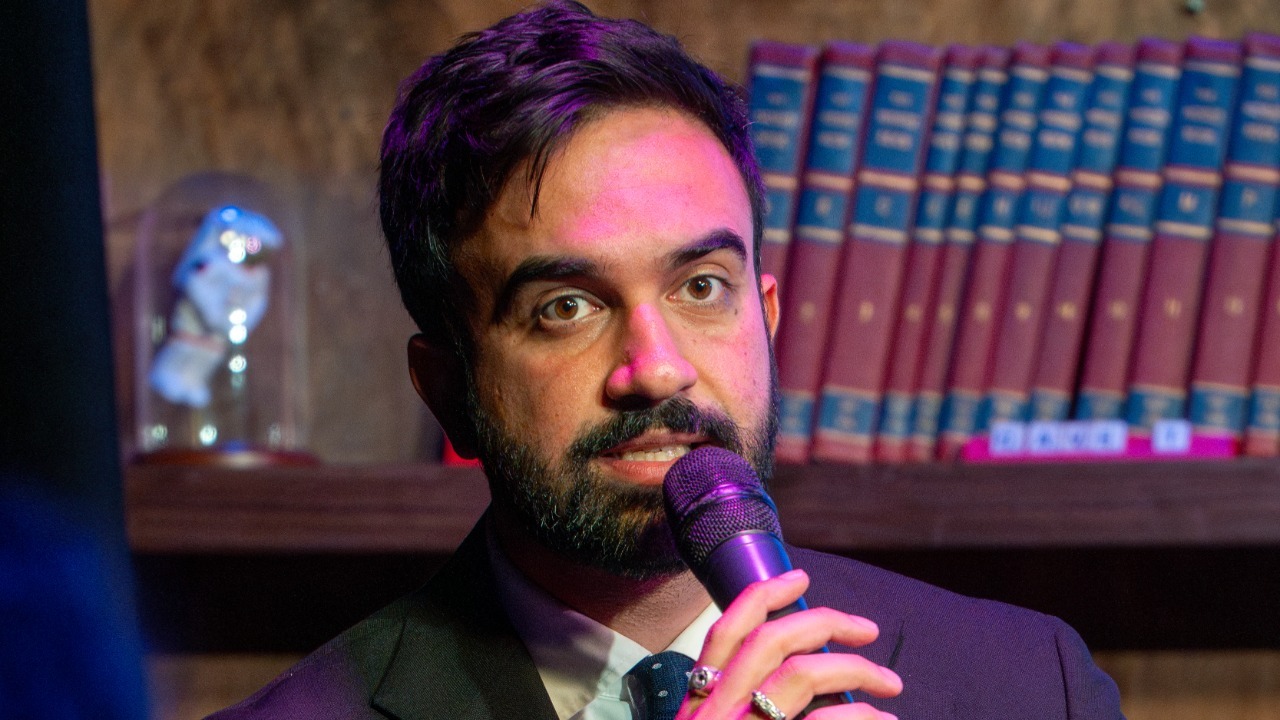
Mayor Zohran Mamdani promised New Yorkers a concrete path to lower costs through rent freezes, universal child care, and fare-free buses. Weeks into office, his administration has already acknowledged a budget crisis inherited from the Adams era, and the fiscal math behind those campaign pledges looks increasingly difficult to reconcile with the city’s actual balance sheet. The gap between what the affordability plan promises households and what the city can fund is widening, not shrinking.
Campaign Promises Meet City Hall Reality
During the campaign, Mamdani built his pitch around what his team called the “Big Commitments”: a rent freeze, universal child care, and fare-free buses. He even rolled out an online affordability tool that let voters plug in their household details and see projected savings. The tool was clever politics, translating abstract policy into personal dollar figures. But a calculator that shows what families could save is not the same as a plan that shows where the money comes from, and the distinction between private benefit and public cost was largely left unexplored on the campaign trail.
That distinction matters because the city’s fiscal position has deteriorated sharply. On January 28, 2026, Mamdani himself held a press conference to outline what he labeled the “Adams Budget Crisis,” telling New Yorkers that his administration was “looking to be honest and open with New Yorkers as to the actual cost of city services and what it’s going to take,” according to a statement from the mayor’s office. The honesty is welcome. The problem is that the affordability agenda was designed for a budget environment that no longer exists, if it ever did, and the administration has yet to fully reconcile its campaign rhetoric with the hard numbers now staring down City Hall.
A $7 Billion Gap and Shifting Numbers
Within roughly two weeks of that January announcement, the administration revised its estimate of the city’s budget gap from $12 billion over two years down to $7 billion. That is a dramatic swing in a very short window, and the speed of the revision raises legitimate questions about the reliability of either figure. Cutting a projected shortfall by nearly half in days suggests that at least one of the two numbers was built on assumptions soft enough to collapse under scrutiny. For a mayor whose brand rests on fiscal transparency, the lack of publicly available internal worksheets explaining the revision is a notable gap, and it risks undermining public confidence just as the administration is asking New Yorkers to accept tough trade-offs.
Even the lower figure of $7 billion represents a serious constraint. Every dollar allocated to closing the inherited deficit is a dollar unavailable for new spending on rent stabilization enforcement, child care subsidies, or transit operations. The city’s 2025 fiscal overview, published by Comptroller Mark Levine’s office, documents the structural budget pressures already baked into city operations before any new entitlement programs are layered on top, including rising labor costs and debt service. Mamdani’s affordability calculator never accounted for a starting position this far underwater, and the administration has not yet laid out a credible sequencing of priorities that explains which promises move forward first and which are delayed or scaled back.
Universal Child Care Without a Funding Blueprint
The universal child care promise is perhaps the most expensive of the three Big Commitments, and the one where the gap between household-level appeal and public-finance reality is starkest. A report on child care affordability from the Comptroller’s office documents the crushing costs families face, with infant and toddler care consuming enormous shares of household income and pushing many parents, especially mothers, out of the workforce. The potential savings for individual families are real and significant, and universal access could bring long-term economic benefits by increasing labor-force participation. But the report also establishes affordability benchmarks that reveal how far current public funding falls short of universal coverage.
Scaling from targeted voucher programs to a system that covers every family would require billions in new annual spending, and no identified revenue stream currently exists to support it. This is where the affordability calculator’s logic breaks down most visibly: the tool showed families what they would save, but it did not show taxpayers what they would pay. With the city already carrying a multi-billion-dollar budget gap, the question is not whether universal child care is desirable but whether it is achievable without either massive tax increases or deep cuts to other services. The Comptroller’s own fiscal reporting suggests the answer is no under current revenue projections, and Mamdani has yet to present a phased plan that ties expansion of child care slots to specific, durable sources of funding rather than optimistic growth assumptions.
Fare-Free Buses and the Capital Squeeze
The fare-free bus commitment has the advantage of a recent empirical test. The MTA ran a limited fare-free pilot on five routes from September 24, 2023, through August 31, 2024, funded through the New York State FY2024 budget. The pilot provided useful data on ridership patterns and showed clear benefits for low-income riders along those corridors, but it covered a tiny fraction of the city’s bus network and did not require the city itself to shoulder the ongoing operating costs. Expanding the concept citywide would require a fundamentally different funding mechanism, and no official projection from the Comptroller or the Office of Management and Budget has been published estimating the full cost of making every bus route in New York City free to ride.
Meanwhile, the city’s existing capital obligations leave almost no room for new large-scale infrastructure or transit spending. The current ten-year capital plan already anticipates $173.4 billion in investment over the coming decade, covering commitments across city agencies from school buildings to water infrastructure. Any significant new housing construction program or transit overhaul would have to compete for borrowing capacity against those pre-existing plans, and the MTA itself faces its own capital needs that are not fully funded. The math here is not ambiguous: the city’s capital pipeline is already stretched, and adding major new programs means either displacing existing ones or increasing the debt load substantially, which in turn would raise future operating costs through higher debt service.
Federal Cuts, Political Headwinds, and the Choices Ahead
The local squeeze is likely to be compounded by national politics. Coverage of Mamdani’s agenda has noted that federal retrenchment could hit New York hard if Republicans in Washington follow through on proposals to cut domestic spending, including transit and social-service grants that cities rely on. The state has already warned that such moves could force Albany and City Hall to absorb costs previously covered by federal dollars, turning what Mamdani calls the Adams Budget Crisis into a broader intergovernmental funding crisis. Counting on Washington to rescue the affordability agenda is therefore risky at best, and the mayor’s own allies acknowledge that any large new federal program would depend on the outcome of the next presidential election.
That leaves Mamdani with a narrower menu of options than his campaign suggested. He can raise local taxes, trim or delay parts of his platform, or pursue incremental reforms that deliver smaller savings to households but fit within the existing fiscal framework. Symbolic gestures—like publishing more user-friendly budget documents or highlighting success stories from the fare-free bus pilot—will not close a $7 billion gap or conjure a universal child care system into existence. The mayor has argued that bold commitments are necessary to match the scale of New York’s affordability crisis, and on that diagnosis he has plenty of company. But unless his administration can pair those commitments with a transparent, numerically grounded financing strategy, the affordability calculator risks becoming less a roadmap than a reminder of promises New York City cannot yet afford to keep.
There is a broader lesson here about the politics of aspiration in an era of constraint. New Yorkers are used to hearing big ideas from City Hall, and some of those ideas have become reality over time. Yet the city cannot wish away structural deficits, nor can it bank on savings from efficiencies that have not been identified or on revenue from economic growth that may not materialize. In other policy arenas, from sports subsidies to cultural programming, leaders have been forced to accept that not every worthy initiative can be funded, even when it enjoys broad public support. Just as medal tables on sites like Olympic scoreboards offer a clear, if unforgiving, tally of wins and losses, the city’s ledgers will ultimately provide a hard accounting of what Mamdani’s administration has actually delivered. The challenge now is to align the mayor’s ambitious affordability rhetoric with a realistic budget strategy before fiscal gravity does that work for him.
More From The Daily Overview
*This article was researched with the help of AI, with human editors creating the final content.

Grant Mercer covers market dynamics, business trends, and the economic forces driving growth across industries. His analysis connects macro movements with real-world implications for investors, entrepreneurs, and professionals. Through his work at The Daily Overview, Grant helps readers understand how markets function and where opportunities may emerge.

