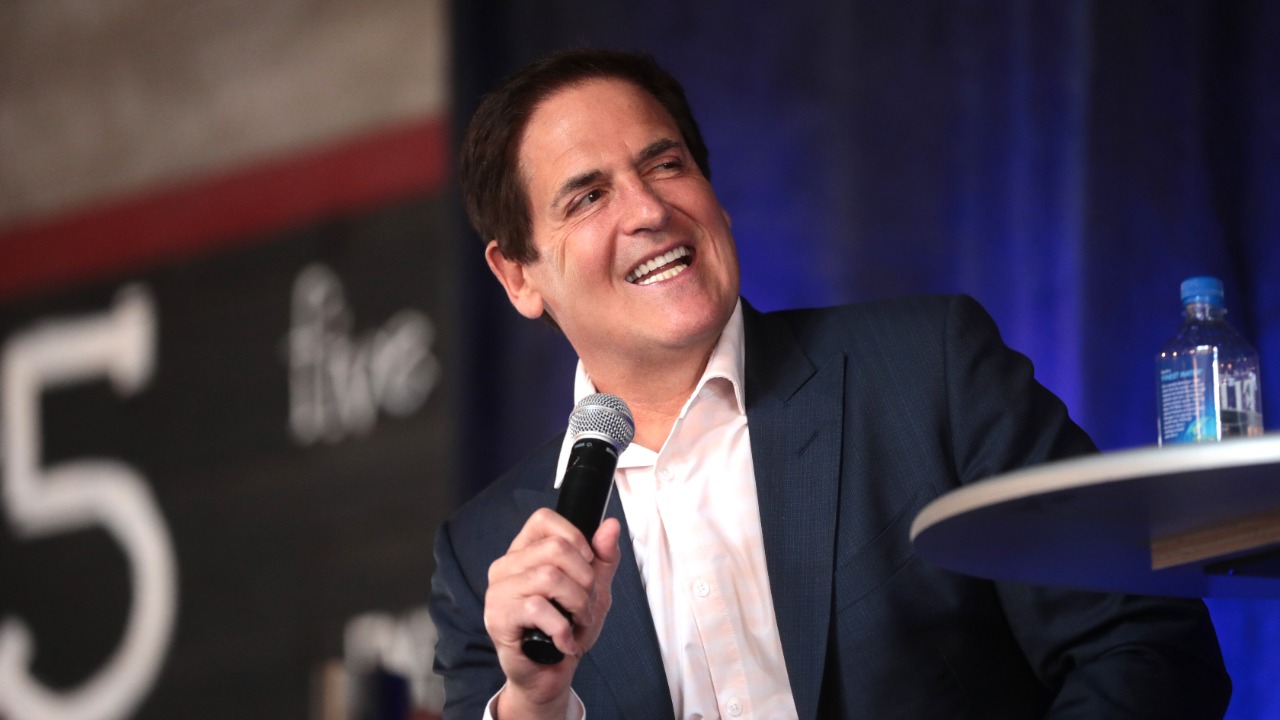
Mark Cuban has spent decades getting richer than almost anyone who will ever read his advice, yet his core message about happiness is stubbornly simple: if you are waiting for a certain number in your bank account to feel content, you are already behind. His argument is not that money is irrelevant, but that joy, purpose and peace of mind are built long before the commas in your net worth start to multiply. When I look at the arc of his career and the way he talks about life now, it is hard to escape the conclusion that he is right.
Happiness, in Cuban’s telling, is a habit you practice when the stakes are small, not a prize you unlock once you hit a jackpot. The more closely you examine his story, the clearer it becomes that the real leverage is not in chasing a fantasy of limitless wealth, but in learning how to be satisfied, curious and grounded while you are still figuring things out.
Mark Cuban’s fortune and the myth of “I’ll be happy when…”
Mark Cuban is not preaching from the sidelines of the economy, he is one of its most visible winners. Long before he became a familiar face as a Shark Tank Star Mark Cuban, he built and sold companies that turned him into a billionaire. That trajectory matters, because it strips away the easy objection that only people who have never had money claim it does not buy happiness. Cuban has had the experience of going from worrying about rent to negotiating deals in the millions, and he still insists that the emotional payoff is not what people imagine.
His early exit from MicroSolutions, which he sold for $6M, and his decision to co-found Broadcast.com, which was later acquired by Yahoo for $5.7 billion, are the kind of milestones that fuel the “I’ll be happy when…” fantasy for everyone watching from the outside. Yet Cuban keeps returning to the same point: the rush of a big deal fades quickly, and if you were restless, anxious or miserable before, those feelings do not magically disappear when the wire transfer clears. The myth that happiness sits on the far side of a windfall simply does not survive contact with his lived experience.
“If you’re happy when you’re poor…”: why mindset comes first
Cuban’s most quoted line on this topic is blunt: if you are happy when you are poor, you are going to be happy when you are rich, and if you are miserable when you are poor, you will be just as miserable when you are rich. That is not a romantic dismissal of financial stress, it is a statement about how much of our day-to-day mood is driven by habits of thought, relationships and health rather than by raw income. The money can change your surroundings, but it does not automatically rewrite your personality or heal old wounds.
Reporting on his comments underscores that he sees the amount of money you have as something that “shouldn’t necessarily be the deciding factor in your happiness,” even while acknowledging that it can provide a sense of financial security and breathing room. In other words, Cuban is not denying that a stable paycheck matters, he is arguing that the deeper work of learning to be content, grateful and engaged has to start before the big payday. That is why his line about being happy when you are poor resonates so strongly in coverage that highlights those Key Points about mindset and security.
Money can ease problems, but it cannot do the inner work
There is a reason Cuban’s message lands differently from the cliché that “money can’t buy happiness.” He is explicit that cash can solve specific problems, from overdue bills to medical emergencies, and that it can buy comfort, options and a buffer against bad luck. What it cannot do, in his view, is the inner work of making you like who you are when you wake up in the morning. If you are already burned out, resentful or disconnected, a bigger paycheck tends to magnify those patterns instead of erasing them.
One analysis of his comments notes that his perspective “challenges this notion” that wealth alone is the key to a good life, and instead emphasizes the importance of personal happiness and health over raw net worth. The same reporting stresses that while money can provide stability and security, it does not guarantee happiness, a nuance that reflects Cuban’s insistence that emotional well-being is built through choices about how you spend your time and who you spend it with. That framing is captured in the way His advice keeps circling back to health, relationships and purpose rather than to luxury purchases.
How Cuban’s own wealth underscores his point
To understand why Cuban’s argument carries weight, it helps to look at just how far he has traveled financially. Analyses that stack his fortune against that of President Donald Trump describe how, compared to most people, President Trump is already extremely wealthy, yet Cuban’s net worth is significantly higher. The comparison is not about bragging rights, it is about illustrating that Cuban is speaking from the vantage point of someone who has climbed to the very top of the financial ladder and can see clearly what is, and is not, up there.
One breakdown of their fortunes notes that the gap between Cuban and Trump looks smaller at a glance than it does once you “do the math,” a reminder that the numbers involved are almost abstract for ordinary households. That same analysis, Written by Jennifer Taylor for a detailed comparison, reinforces the idea that Cuban is not theorizing about money from the outside. He has lived the reality of extreme wealth, and his insistence that happiness depends more on how you live than on how much you have is grounded in that experience.
“Money alone doesn’t…”: values over income
Cuban’s public comments have evolved into a broader philosophy about what actually matters in a career. He encourages people to figure out what really matters to them, even if that means earning less, and to make adjustments that align their work with their values. That might mean choosing a job with more flexible hours over one with a slightly higher salary, or prioritizing a role that lets you build something meaningful instead of chasing the biggest possible bonus.
In one widely shared summary of his views, he is described as having long argued that “money alone doesn’t” deliver a fulfilling life, and that factors like autonomy, impact and relationships are more important than wealth alone. That framing is not just motivational poster material, it is a challenge to the default assumption that the rational move is always to maximize income. By urging people to rethink that assumption, Cuban is effectively telling them that happiness is available now, in the trade-offs they make today, rather than waiting at the end of a long, exhausting climb. The emphasis on what is “more important than wealth alone” is captured in coverage of how Mark Cuban has long argued for that shift in priorities.
Happiness first, then smart money moves
None of this means Cuban is casual about money. On the contrary, he is meticulous about how people should handle it, precisely because he sees financial stress as one of the biggest threats to happiness. His advice often starts with building a safety net, paying down high-interest debt and avoiding lifestyle inflation that locks you into a job you hate. The goal is not to hoard cash for its own sake, but to buy yourself the freedom to make choices that align with your values.
He is also clear that chasing huge returns with reckless bets is a fast way to lose both money and peace of mind. In one list of his recommendations, he warns that if you do take risks in the investment realm, you should “But Invest Only up to 10% in Risky Investments,” limiting the amount you commit to speculative plays. That guidance, which explicitly caps exposure to Risky Investments, reflects the same philosophy that runs through his comments on happiness: protect your baseline stability first, then experiment at the margins. In practice, that means you can pursue upside without putting your entire sense of security, and by extension your well-being, on the line.
Why Cuban’s story resonates with everyday trade-offs
What makes Cuban’s stance compelling is that it maps onto the choices ordinary people face, even if the dollar amounts are wildly different. Most workers are not deciding whether to sell a startup for hundreds of millions, they are deciding whether to accept a promotion that doubles their commute, or to take on a side hustle that eats into time with their kids. Cuban’s insistence that happiness is shaped by how you live now, not by a hypothetical future windfall, speaks directly to those trade-offs.
His own path, from selling MicroSolutions for $6M to co-founding Broadcast.com and seeing it acquired by Yahoo for $5.7 billion, shows that he has had plenty of chances to sacrifice balance for more money. Yet his current messaging leans heavily on health, family and doing work you care about. That evolution mirrors what many people discover on a smaller scale: the promotion that looks irresistible on paper can feel hollow if it crowds out everything else that matters. Cuban’s story gives that realization a high-profile, data-backed endorsement.
Reframing success: from net worth to life satisfaction
Cuban’s critique of money-as-happiness is ultimately a call to redefine success itself. Instead of treating net worth as the primary scoreboard, he pushes people to ask whether they like their daily routines, whether they feel connected to others and whether they are taking care of their bodies and minds. In that sense, he is arguing for a shift from outcome metrics to process metrics, from “How much have I accumulated?” to “How am I actually living?”
That reframing is especially powerful in a culture that often equates success with visible consumption, from luxury SUVs to designer watches. Cuban’s own visibility as a billionaire investor gives him credibility when he says that those symbols do not deliver the deep satisfaction people are chasing. His repeated emphasis that “Money Can” solve certain problems but cannot “Buy Happiness,” a phrase that has followed him since early profiles of his views on Money, invites readers to measure their lives by a different yardstick. It is an invitation to prioritize experiences, relationships and meaningful work over the endless pursuit of more.
Living Cuban’s lesson before the money arrives
The practical implication of Cuban’s argument is straightforward and demanding: if you are not building a life you enjoy now, you are unlikely to enjoy it later just because your income goes up. That does not mean ignoring financial goals, it means pursuing them in a way that does not postpone happiness indefinitely. It might look like choosing a slightly cheaper apartment so you can afford to work four days a week, or turning down overtime to coach a youth soccer team, or using a modest emergency fund as a springboard to switch into a field you actually care about.
Cuban’s own journey, and the way he talks about it, suggests that the people who end up both wealthy and happy are usually the ones who learned to be content and engaged long before they had a fortune. They treated money as a tool, not a verdict on their worth. They invested in their health, their relationships and their curiosity as diligently as they invested in index funds. In that sense, Cuban is not just saying that happiness does not wait for money, he is arguing that happiness is the foundation that makes any amount of money worth having in the first place.
More From TheDailyOverview

Cole Whitaker focuses on the fundamentals of money management, helping readers make smarter decisions around income, spending, saving, and long-term financial stability. His writing emphasizes clarity, discipline, and practical systems that work in real life. At The Daily Overview, Cole breaks down personal finance topics into straightforward guidance readers can apply immediately.
