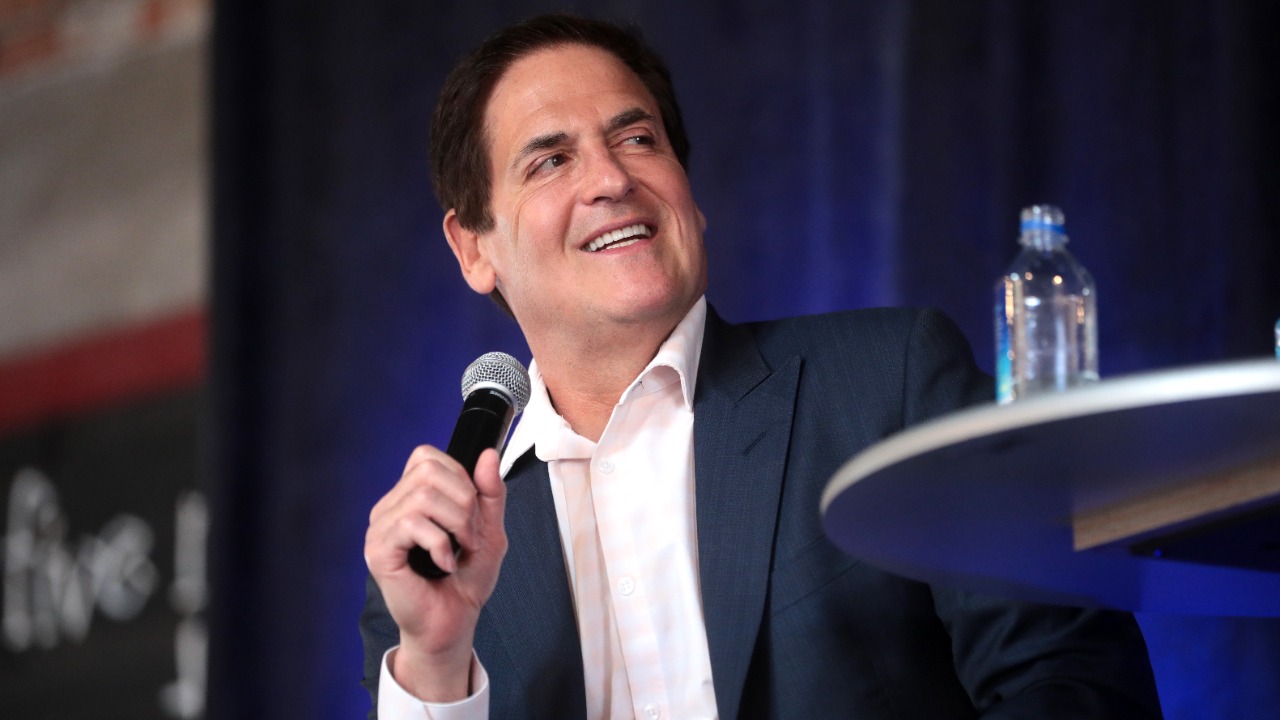
Mark Cuban has turned his fight over high drug prices into a political challenge, urging Donald Trump to “crush big medicine” and back his bare-bones approach to prescription costs. His pitch is simple: strip away middlemen, publish the math, and let patients see exactly what they are paying for. A cardiologist pushing back on that agenda raises a tougher question: how far can you squeeze prices before you start squeezing the science that keeps new treatments coming?
The clash is less about personalities than about competing theories of how medicine should be paid for. Cuban’s model treats drugs like any other product that can be sold close to cost, while his critic worries that heart patients will feel the impact if research and specialized care lose funding. The outcome of that argument could shape how future presidents think about drug pricing power from the White House, especially if they look for simple slogans that promise fast savings.
Cuban’s cost-plus promise
Cuban’s pitch rests on a specific promise: his company will buy a generic drug, reveal its acquisition cost, add a fixed markup, and show patients the final price. On the official company site, the Mark Cuban Cost Plus Drug Company describes a cost-plus model in which it applies a standard markup to the wholesale cost and adds a small pharmacy fee, all laid out in plain language for shoppers. The message is that there is no hidden spread, no opaque rebate, and no secret negotiation that leaves patients guessing why their blood pressure pill costs more this month than last.
The company presents this transparency as its mission, arguing that patients should be able to see how much of their payment actually goes to the medicine versus the supply chain. Its site describes this as a response to a system where list prices, rebates, and insurance formularies often make it impossible for a patient or even a prescribing doctor to know the real cost of a drug. By centering every pitch on that stated mission and pricing approach, Cost Plus Drugs positions itself as a direct challenge to the conventional model of pharmacy benefit managers and confidential discounts, which Cuban has framed as the target he wants Trump to help dismantle through federal power.
What “crushing big medicine” would mean
When Cuban urges Trump to “crush big medicine,” he is not talking about a single company but about a web of drug manufacturers, wholesalers, insurers, and pharmacy benefit managers that profit from the current pricing structure. In practice, that kind of crackdown would likely mean forcing more open contracts, limiting spread pricing, and possibly tying federal purchasing to transparent markups similar to the ones Cuban promotes. For a president who has already attacked high drug prices in speeches, the appeal of a simple cost-plus message is obvious: it sounds like a way to deliver quick savings without raising taxes.
Translating a private company’s model into national policy, however, would be far more complicated than a campaign slogan. Cost Plus Drugs can focus on a subset of generic medications where acquisition costs are low and competition already exists, while a federal program would have to grapple with brand-name therapies, biologics, and cutting-edge heart drugs that dominate cardiology practice. Cuban’s rhetoric suggests that the same transparent markup logic could apply across the board, but the cardiologist pushing back argues that treating all medicines as interchangeable commodities risks ignoring the different economics of a new heart failure drug versus a decades-old generic statin.
The cardiologist’s warning on innovation
The cardiologist who has challenged Cuban’s push frames the issue less as a defense of “big medicine” and more as a warning about what happens when price becomes the only yardstick. From that vantage point, a national shift to a strict cost-plus model could push doctors toward older, cheaper drugs even when newer options offer better outcomes for some patients. In cardiology, where treatment guidelines already weigh cost against benefit, the concern is that political pressure to back the cheapest option could override clinical judgment, especially for therapies that help prevent heart attacks or manage complex arrhythmias.
This critic also points to the upstream effect on research. Cardiovascular innovation depends on investors believing that a breakthrough therapy for heart failure or inherited cholesterol disorders will eventually recoup its development costs. If a federal program were to cap margins tightly using a cost-plus formula, that cardiologist argues, companies might think twice before pouring money into long, expensive trials. The fear is not that research would stop overnight, but that the pipeline of next-generation drugs would thin out over a decade, leaving patients with fewer options when current therapies fail.
Inside Cost Plus Drugs’ own claims
To understand how this debate plays out, it helps to look closely at what Cuban’s company actually says it does. On its official site, the Mark Cuban Cost Plus Drug Company explains that it uses a cost-plus pricing model with a transparent markup and a defined pharmacy fee for each prescription. The site emphasizes that this structure is standard across its offerings, meaning patients can see the acquisition cost, the markup, and the fee as separate line items. That level of detail is unusual in a market where most patients only see a copay number at the pharmacy counter.
The company also presents its mission as a broader push to reform the system, not just to sell cheaper generics. In its own description of its operations, Cost Plus Drugs argues that clear markup language can serve as a template for how drug pricing should work more widely, casting opaque negotiations as a major driver of high costs. By anchoring its identity in that mission and pricing approach, the firm gives Cuban a concrete example when he urges Trump to go after “big medicine”: he can point to a functioning business that claims to operate on the terms he wants Washington to impose.
Patients caught between price and access
For patients, the attraction of Cuban’s model is straightforward. A person paying out of pocket for a common blood thinner or cholesterol drug can compare the acquisition cost and markup on the Cost Plus Drugs site to what they are quoted at a retail pharmacy. If the transparent cost-plus price comes in lower, the savings are immediate and tangible, especially for those who fall into insurance gaps. The company’s mission statement presents this as a way to restore some control to patients who have long been at the mercy of formularies and tiered copays that change with little warning.
The cardiologist’s critique highlights the other side of the ledger. Many of the most effective heart therapies are not cheap generics but newer agents that have gone through large, multi-year trials. If a national policy modeled on Cuban’s approach pushed insurers and government programs to favor only the lowest acquisition cost drugs, patients might see fewer of these advanced treatments covered or face new hurdles to get them. The debate between Cuban and his critic is really about where to draw the line: how much short-term relief on prices is worth the risk of slower progress on therapies that could extend lives or reduce hospitalizations in the future.
Could Medicare adopt a cost-plus template?
One of the big political questions hanging over this fight is whether a future administration might try to graft a cost-plus template onto Medicare. Cuban’s argument to Trump suggests that if the federal government demanded transparent markups similar to those used by Cost Plus Drugs, it could claim victory on drug prices. That could mean publishing acquisition costs, capping allowable markups, or tying reimbursement to formulas that resemble the company’s standard markup language. For a White House looking for a simple story to tell voters, the idea of a flat markup instead of complex rebates has obvious appeal.
Medicare’s drug benefit, however, is built on contracts with private plans and pharmacy benefit managers that rely on confidential discounts and rebates. Forcing a cost-plus structure into that system would likely trigger fierce resistance from companies that profit from the current spread. The cardiologist’s warning adds another layer: if Medicare were to lean heavily on the cheapest generic options, cardiology practices might shift prescribing habits not because of clinical judgment but because of reimbursement pressure. That could reshape which drugs get developed and promoted over the next decade, especially for heart conditions where treatment choices already involve fine trade-offs.
Predictions and blind spots in the debate
Looking ahead, one reasonable prediction is that Cuban’s cost-plus model will keep spreading in niches where generics dominate and patients are paying cash, even if Washington never fully adopts it. The clarity of the Mark Cuban Cost Plus Drug Company pricing pitch gives it an advantage in online pharmacy shopping, and as more patients compare those transparent markups to what they see at local pharmacies, pressure on traditional middlemen is likely to increase. That could push some insurers and employers to demand clearer contract terms, even if they stop short of copying Cuban’s exact formula.
A second prediction is that cardiology and other specialty fields will become the testing ground for how far cost-plus logic can go before it collides with innovation. If policymakers try to extend Cuban’s rhetoric into areas like advanced heart failure drugs or gene therapies, the cardiologist’s concerns about research funding and access will move from opinion pieces into real-world coverage decisions. One blind spot in much of the public debate is how little hard data exists on long-term patient outcomes under models like Cost Plus Drugs; the company’s own site focuses on its mission, pricing approach, and transparent markup, but does not yet provide systematic evidence on whether those savings translate into better adherence, fewer hospital visits, or improved survival.
That gap in evidence is where the current coverage often falls short. Cuban’s supporters sometimes treat transparency as a cure-all for drug pricing, while his critics sometimes imply that any pressure on margins is a threat to science. The reality likely sits somewhere in between. A cost-plus model anchored in the kind of clear pricing language used by Cost Plus Drugs can expose inefficiencies and reduce waste in parts of the system. At the same time, cardiologists are right to ask for safeguards so that the drive to “crush big medicine” does not end up crushing the very research that keeps their patients alive.
More From The Daily Overview
*This article was researched with the help of AI, with human editors creating the final content.

Grant Mercer covers market dynamics, business trends, and the economic forces driving growth across industries. His analysis connects macro movements with real-world implications for investors, entrepreneurs, and professionals. Through his work at The Daily Overview, Grant helps readers understand how markets function and where opportunities may emerge.