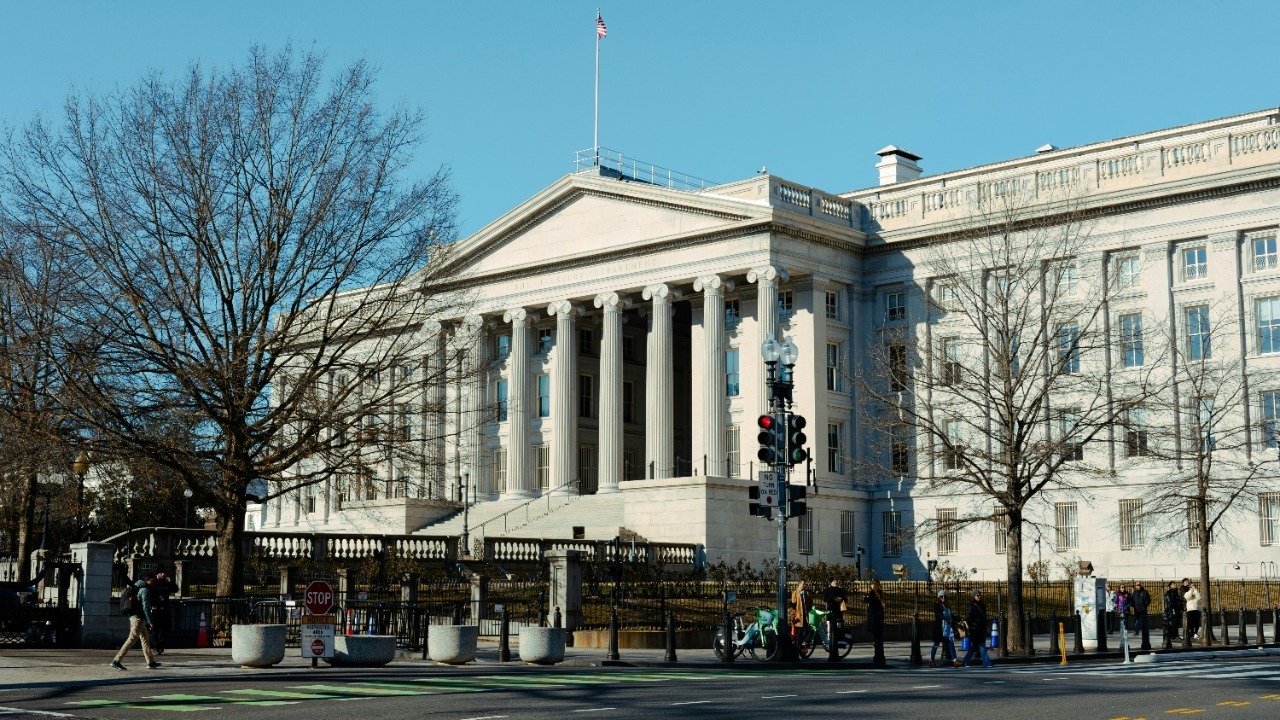
A growing chorus of fiscal analysts is warning that the United States faces a debt-driven economic reckoning, with federal deficits projected to balloon over the next decade even as stock indexes hover near record highs. The Congressional Budget Office released its latest ten-year outlook in February 2026, projecting that federal deficits and debt will worsen significantly through 2036, driven in part by recent policy changes including new legislation, tariffs, and immigration enforcement. The gap between Wall Street optimism and Washington’s borrowing trajectory has rarely been wider, and the tension is drawing sharp warnings from budget watchdogs who say the country is heading toward what one called the “granddaddy” of all economic crashes.
Record Stocks Mask a Fiscal Time Bomb
On the surface, the American economy looks healthy. The Dow Jones index closed at 49,625.97 on February 20, 2026, a level that would have seemed unthinkable just a few years ago. Investors have been riding a wave of corporate earnings and AI-fueled enthusiasm, pushing equity valuations to heights that suggest broad confidence in future growth. That optimism is visible not just in headline benchmarks but also across sectors tracked on global market dashboards, where U.S. equities dominate in size and performance. Yet the same boom that buoys retirement accounts can obscure the risks building in the federal government’s balance sheet.
The disconnect matters because asset prices can absorb bad fiscal news for years before repricing violently. When Treasury yields spike because investors demand higher compensation for holding government debt, the cost of mortgages, car loans, and corporate borrowing rises in lockstep. A stock market near 50,000 does not insulate households from the downstream effects of a government that must borrow at ever-higher rates to cover its obligations. If investors eventually conclude that Washington’s borrowing path is unsustainable, the adjustment is likely to show up first in bond markets and then in equities, where valuations that made sense under low interest rates may prove impossible to justify.
CBO Projections Paint a Grim Decade Ahead
The Congressional Budget Office’s latest baseline, released as a ten-year outlook covering 2026 through 2036, lays out projections for deficits, debt held by the public, and net interest costs under current law. The agency attributes the worsening trajectory to a combination of recently enacted legislation, tariff changes, and tougher immigration enforcement that collectively raise spending and reshape revenue. Those policy shifts compound on top of existing structural pressures from an aging population and rising health care costs, leaving the federal government with a debt path that budget experts describe as unusually steep outside of wartime or deep recessions.
Reporting from the Associated Press underscores that the February 2026 projections show both annual deficits and overall debt worsening over the next decade, with the deterioration tied directly to those policy changes. As net interest payments climb, they are projected to consume a larger share of federal revenue, narrowing the fiscal space available for defense, infrastructure, and safety-net programs. Even in the absence of a sudden crisis, this gradual squeeze could limit Washington’s capacity to respond forcefully to the next recession, pandemic, or geopolitical shock, leaving the economy more vulnerable when the business cycle inevitably turns.
Policy Choices Add Trillions to the Tab
The fiscal picture looks even more precarious when specific policy choices are tallied. According to Financial Times coverage of budget watchdog estimates, actions associated with Donald Trump’s agenda, including tariff regimes, tax provisions, and other executive measures, are expected to add roughly $1.4 trillion to the deficit over the coming decade. That estimate, cited in international financial reporting, reflects how targeted changes to trade and tax rules can ripple through the CBO’s revenue assumptions, pushing projected red ink higher even before Congress debates any new large-scale spending programs.
At the same time, the U.S. Treasury’s own financing plans reveal how quickly those policy decisions translate into concrete borrowing needs. In a recent announcement of quarterly marketable borrowing, officials detailed how much debt the government expects to issue in late 2025 and early 2026, along with the cash balances it aims to maintain. Each update signals to bond markets the scale of upcoming auctions and the persistence of elevated borrowing. If investors begin to doubt that future Congresses will rein in deficits, they may demand higher yields to absorb this supply, raising the government’s interest bill and amplifying the very pressures that sparked their concern in the first place.
Where the Debt Actually Stands
Any discussion of long-run projections needs grounding in what the government owes today. The Treasury’s Debt to the Penny database provides a daily tally of total public debt outstanding and its major components, offering a near real-time snapshot of federal obligations. Analysts pair that information with detailed spending records from federal outlay data to track how quickly borrowing is rising and which programs or policy areas are driving the increases. The trend over recent years has been consistently upward, with debt climbing in absolute terms and, in many scenarios, as a share of the overall economy.
The widening gap between federal revenue and expenditures has not been caused by a single shock, but by a sequence of decisions across administrations and Congresses. Tax reductions, discretionary spending increases, emergency pandemic measures, and tariff-related shifts in trade flows have each nudged the deficit higher. What makes the current period distinct, according to the CBO’s baseline and outside watchdogs, is that these choices are now layered onto a much larger existing stock of debt. That combination creates a feedback loop: more borrowing leads to higher interest payments, which enlarge the deficit, which in turn requires still more borrowing. Left unchecked, this dynamic risks crowding out other priorities and could eventually force abrupt policy shifts if markets lose patience.
Can the U.S. Avoid a “Granddaddy” Crash?
Whether the United States is truly headed for the “granddaddy” of all crashes depends on how policymakers, markets, and the broader economy respond over the coming decade. On one hand, the depth and liquidity of U.S. Treasury markets, reinforced by the dollar’s global reserve role, give Washington more room to maneuver than most countries enjoy. Strong productivity growth or policy reforms that boost labor supply could also improve the debt-to-GDP ratio, making a given level of borrowing easier to sustain. Equity benchmarks hovering near record highs suggest that many investors still believe the economy can grow fast enough to support current valuations and service rising federal obligations.
On the other hand, the same CBO projections and Treasury borrowing plans that reassure markets today could unsettle them tomorrow if deficits continue to overshoot expectations. A modest rise in interest rates from current levels would, over time, dramatically increase the government’s interest bill, especially if new policy initiatives are layered on top of existing commitments. Budget experts warn that waiting for a market revolt before acting would leave lawmakers with only painful options: sudden tax hikes, abrupt spending cuts, or emergency monetary interventions that risk stoking inflation. The more prudent path, they argue, is to treat today’s calm as an opportunity to adjust course by reexamining tax expenditures, entitlement formulas, and discretionary priorities before the fiscal time bomb that now ticks quietly in the background becomes impossible for markets, or voters, to ignore.
More From The Daily Overview
*This article was researched with the help of AI, with human editors creating the final content.

Grant Mercer covers market dynamics, business trends, and the economic forces driving growth across industries. His analysis connects macro movements with real-world implications for investors, entrepreneurs, and professionals. Through his work at The Daily Overview, Grant helps readers understand how markets function and where opportunities may emerge.

